By Eric Strikwerda, Athabasca University, The Conversation
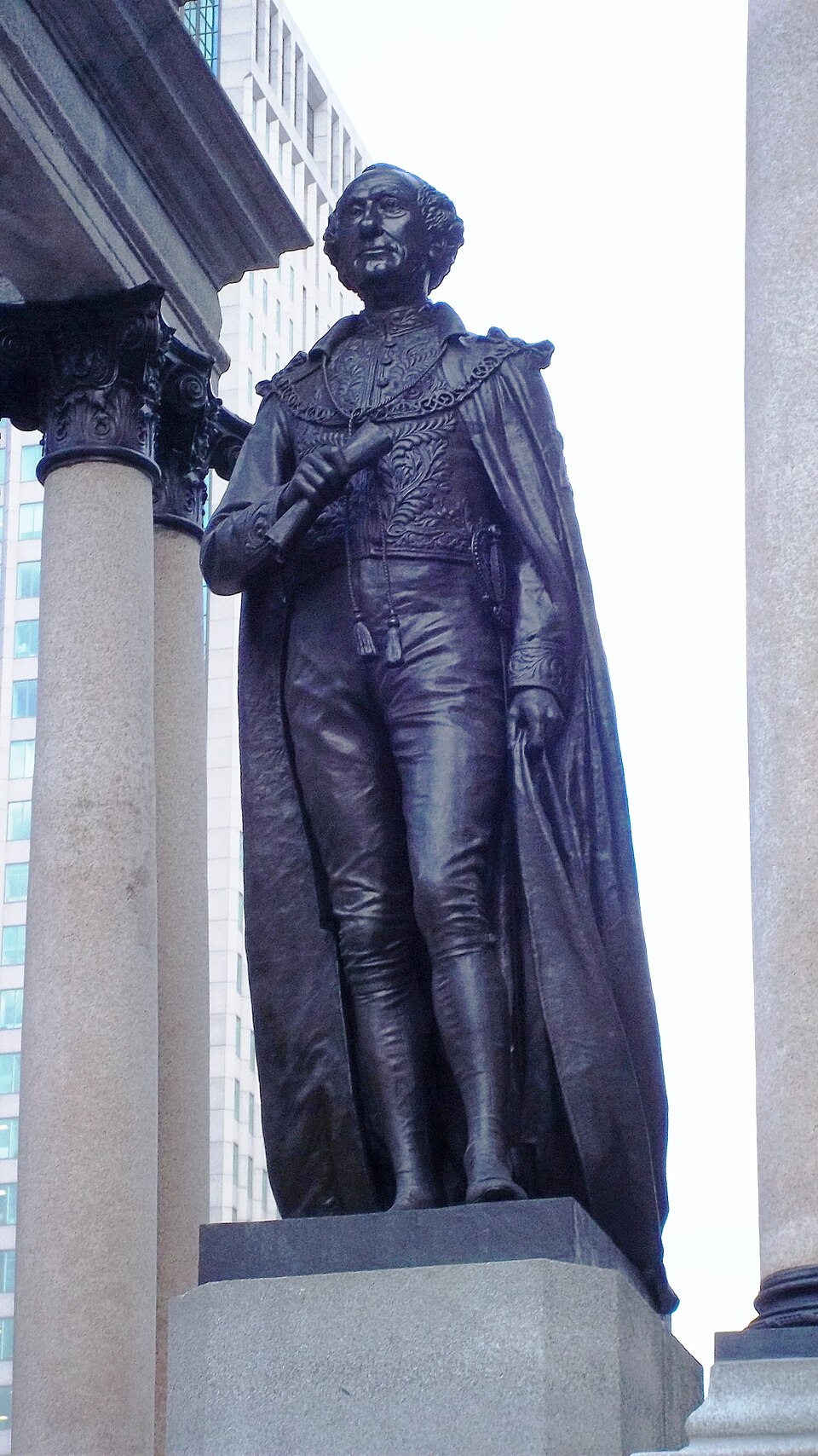
“We’re freeing John A.,” Ontario Premier Doug Ford recently announced, unveiling plans to return a statue of Sir John A. Macdonald to its place of prominence overlooking the south lawn of the Ontario legislature at Queen’s Park.
The statue’s return comes five years after activists, disgusted by the first Canadian prime minister’s racist policies, sprayed pink paint over the statue’s base.
Ford’s announcement was welcome news to the mostly conservative historians, editorialists and assorted pundits who have decried Macdonald’s “cancellation.”
Their objections have been part of passionate debates about whether racist and harmful figures from the past should be celebrated through statues, school and state institution names and public infrastructure projects.
For these conservatives, the issue is simple. Dismantling statues is dismantling Canada’s history.
On the other side of the debate are those who argue that Macdonald’s active and integral role in creating the aggressively assimilationist Gradual Civilization Act, the infamous Indian Residential Schools system, the Reserve and Pass Systems and the Indian Act were all meant to make Indigenous Peoples disappear.
Macdonald was no man to celebrate, they contend, and his statue is nothing more than a symbol of racism and Canada’s dark colonial past.
Flurries of commemoration
Both sides to the debate, of course, are correct in their assessments of Canada’s first prime minister. Like all historical figures from the past, Macdonald was a complex human being operating at a particular historical moment. And his actions had important historical implications for the way Canada developed.
Was Macdonald, as proponents of his statue suggest, a visionary nation-builder? Maybe. But he was also a racist colonizer who used his position and his power to advance clearly racist goals in the most awful ways.
And yet, the debate misses a deeper and much more interesting set of questions about how we understand Canadian history, how we describe Canada’s past and ultimately how Canadians tell stories about themselves to each other.
It’s important to recognize from where and in what historical contexts Canada’s statues, commemorations and public infrastructure names come. Statues of figures like Macdonald, as well as the naming of public buildings, bridges and roads in his honour, appeared principally at two separate times.
The first came in the late 19th century, mostly commemorating Macdonald’s death in 1891. But statues were being erected during this period amid rising nationalism. They signalled a celebration of Canada’s membership in the British Empire, then at the zenith of its power and influence.
The second flurry of Macdonald commemoration was in the mid-1960s, another moment of heightened nationalism and Canadian pride. It coincided with Canada’s centenary in 1967, the Montréal Expo that same year, a new Canadian flag and a newfound confidence in the world through its active participation in international peacekeeping efforts.
Canada was also at that time grappling with a deeply dissatisfied Québec and its place in Confederation, a state of affairs that eventually resulted in a divisive sovereignty referendum in 1980 that threatened the very fabric of Canada.
Respecting the dissent
But just as Canadians need to understand the historical contexts in which citizens of the past have celebrated people like Macdonald, so too do they need to grasp the historical contexts in which Canadians past and present have questioned his legacy.
In 2013, the Black Lives Matter movement in the United States sparked critical re-evaluations of statues of Civil War-era figures from the American South and the continued use in some southern states of the highly offensive Confederate flag, along with many other symbols of racism, division and hatred.
The release of the Truth and Reconciliation Commission’s (TRC) final report a decade ago similarly forced Canadians to confront some the darkest chapters of the country’s past.
The point often missed here is that historical markers — like the TRC Commission and the Black Lives Matter movement — themselves become artefacts of the ongoing project involving how people tell stories about themselves to themselves, what those stories say about them in the present and how they want to define themselves in the future.
A more fulsome engagement with history demands Canadians refrain from conflating the story of John A. Macdonald, the statue, with the story of John A. Macdonald, the man, any more than we’d conflate a drawing of an apple with the one on our counter.
A true examination of Macdonald
It’s not a question of who Macdonald was or wasn’t. Instead, it’s about the historical context in which the commemorations of him were installed. But it’s also part of the continuing story of how we see ourselves today.
Claims that dismantling public statues and renaming roads and schools somehow erases Canadian history are ridiculous and profoundly misunderstand how history works.
As Canada Day approaches, it’s important to remember that Macdonald’s story and legacy live on exactly where they should — in the pages of history books, museums and classrooms, where his life and times can be examined, interpreted and debated with the kind of depth and nuance that Canadian history deserves.
Eric Strikwerda, Associate Professor, History, Athabasca University
This article is republished from The Conversation under a Creative Commons license. Read the original article.