
Canada News
Mark Carney’s to-do list is short but steep

By Aaron Wherry, CBC News, RCI
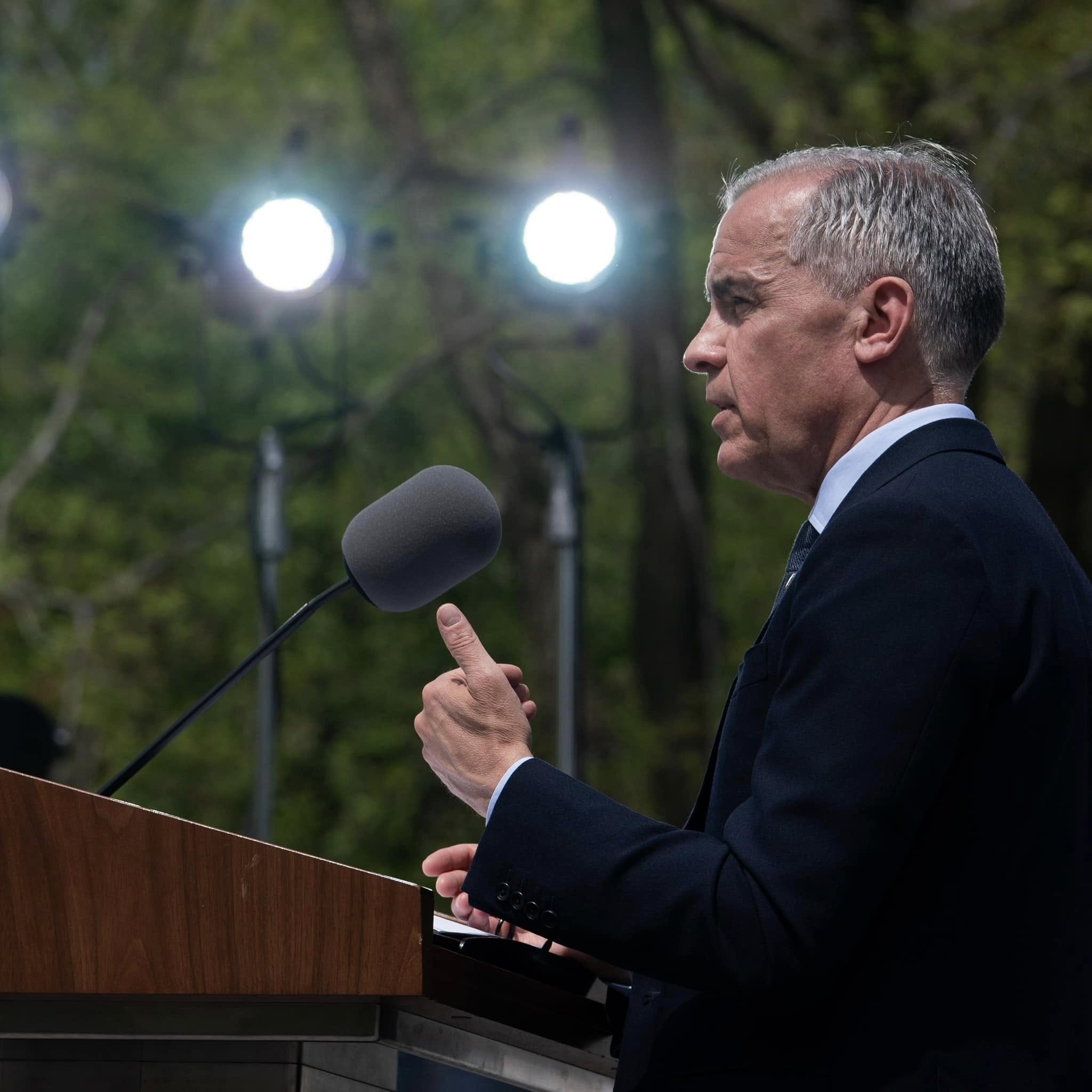
FILE: Prime Minister Mark Carney during a press conference at Rideau Hall in Ottawa on May 12, 2025. (Photo: Mark Carney/Facebook)
What can we glean from the mandate letter the PM sent his ministers?
Emerging from his cabinet’s first planning forum
— what previous prime ministers would have called a cabinet retreat
— on Tuesday evening, Mark Carney told reporters that his ministers had all been given a single mandate letter.
It reflects a unified mission,
the prime minister said of his missive. This one letter outlines the core priorities of Canada’s new government, reflecting the mandate that Canadians have given to us.
Coming in at just under 800 words, Carney’s mandate letter contrasts in potentially interesting ways with the wordier epistles that his predecessor released in 2015. But however succinct, Carney’s letter also still makes clear the sizeable challenges and aims that are now laid out before this new government.
The issuing of mandate letters to cabinet ministers is not a new practice. But until Justin Trudeau decided to publicly post a set of letters for his new ministers in November 2015, the memos containing a minister’s official marching orders were kept confidential — seen only by the ministers themselves and a handful of senior civil servants.
It has been argued (new window) that this practice of officially instructing ministers lost some of its utility once the letters were drafted for public consumption. But Trudeau’s approach still held potential value in terms of both transparency and accountability.
WATCH | Prepping for the throne speech:
At Issue | Carney sets up throne speech
At Issue this week: Prime Minister Mark Carney sets the stage for a throne speech with a mandate letter outlining tasks and priorities for his cabinet. Canada looks beyond the U.S. for allies. And, Liberal MPs will soon decide whether to give themselves the powers to order leadership reviews.
Each of Trudeau’s letters included a lengthy preamble setting out (or advertising, as it were) the government’s stated principles. For each minister, a specific set of tasks was then outlined — essentially a to-do list explaining which policy initiatives the minister was responsible for. For the most part, these items were drawn from commitments in the Liberal party’s campaign platform.
The letter issued to the health minister, for instance, contained ten bulleted points, including instructions to pursue new health-care funding agreements with provincial and territorial governments (and what those agreements would ideally include).
By the Trudeau government’s official count, that first set of mandate letters covered no fewer than 289 initiatives that ministers were to complete — an expansive list of tasks that the government later collated and tracked online in a mandate letter tracker.
In the Trudeau government’s own estimation, its ministers fared decently well at completing that first set of tasks — a judgment that was broadly supported by independent researchers who looked at the Liberal government’s promises and actions. At the same time, it was fair to ask whether 289 commitments was altogether too many commitments (subsequent mandate letters actually brought that total, by the government’s count, to 432 commitments).
Carney’s seven priorities
Instead of an itemized list of commitments, Carney’s letter centres on a list of seven priorities.
And in attempting to narrow and define the government’s focus, Carney’s list is somewhat reminiscent of the list of five priorities that Stephen Harper’s Conservatives identified before coming to office in 2006.
But however close in number, Harper’s stated goals were more straightforward. A Conservative government, he said, would pass new ethics legislation, cut the GST, impose new mandatory-minimum sentencing requirements, implement a new child benefit, and establish new wait-time guarantees for certain medical procedures. The Conservative government checked off the first four items with relative ease and then quietly stopped worrying about the fifth.
Carney’s priorities are not so tidy.
The new Liberal government will focus on: renegotiating Canada’s relationship with the United States and strengthening relations with other countries; removing interprovincial trade barriers and expediting major infrastructure projects; helping Canadians with the cost of living; making housing more affordable and catalyzing a modern housing industry; building the Canadian military and reinforcing domestic security; refocusing immigration; and reducing the cost of government operations.
On one level, Carney’s decision to outline seven broad priorities, instead of publicly charging each minister with a checklist of tasks, might give members of cabinet more room to manoeuvre — to devise and drive their own ideas and initiatives. After outlining the seven priorities of the government, Carney asks each minister to identify
both how specifically you can contribute to these missions
and
the key goals and measures of success on which to evaluate the results you will achieve.
Whether this will bring back the sort of cabinet government
that some long for remains to be seen, but Carney’s seven big priorities can also be read as seven big challenges to be met.
We must meet a series of unprecedented challenges,
Carney writes in the letter’s preamble with both a disciplined focus on core priorities and new approaches to governing.
And amid those unprecedented challenges, Carney apparently does not lack for ambition. Speaking to reporters on Tuesday, he said his government is charged to build the strongest economy in the G7, an economy that works for everyone.
Four years, if this Parliament even lasts that long, is not a long time to turn Canada into the envy of the G7. And several of the things that Carney is aiming to focus on — building major infrastructure, procuring military equipment — have been known to take time. Right-sizing the supply of housing could take the rest of the decade or longer.
But Carney is not backing away from the sense of urgency he emphasized throughout this spring’s campaign. And even just two or three years might be enough time, if used wisely, to show real progress on each of these priorities.
Without a set of itemized lists of tasks to be performed, more attention might also be paid to the actual results of the government’s actions — a focus that the Trudeau Liberals struggled to establish.
There is much to be said for political parties telling the public what they will do with power and as much to be said for expecting governments to make good on their commitments. But governing is more than a matter of checking boxes.
This article is republished from RCI.




















