

By Nicole Hassoun, Binghamton University, State University of New York; The Conversation
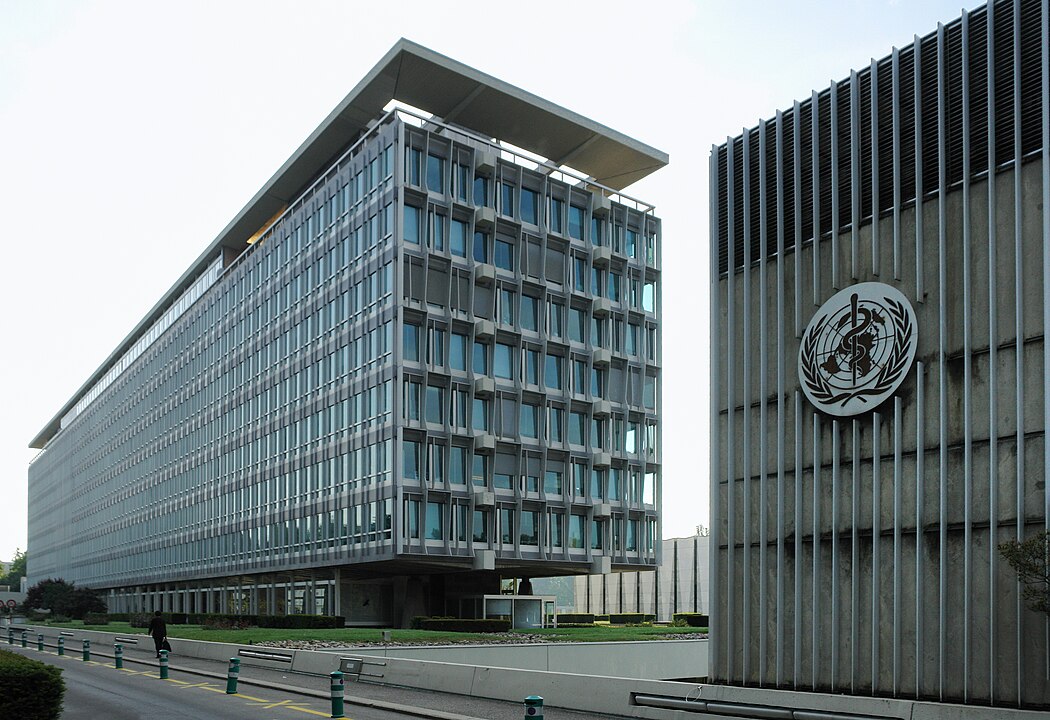
The agreement also specifies that countries and the WHO should work together to create a mechanism for fairly sharing the intellectual property, data and knowledge needed to produce vaccines and other essential health products. (File Photo By I, Yann/Wikimedia Commons, CC BY-SA 3.0)
On March 20, 2025, members of the World Health Organization adopted the world’s first pandemic agreement, following three years of “intensive negotiations launched by governments in response to the devastating impacts of the COVID-19 pandemic.” The U.S., however, did not participate, in part because of its intention to withdraw from the WHO.
Global health experts are hailing the agreement as a historic moment.
What does the agreement mean for the world, and how can it make everyone safer and more prepared for the next pandemic?
The Conversation asked Nicole Hassoun, a professor at Binghamton University and executive director of Global Health Impact, to explain the pandemic accord, its prospects for advancing global health, and the significance of the U.S.’s absence from it.
What will the pandemic agreement do?
The accord will bolster pandemic preparation within individual countries and around the world.
Countries signing onto the agreement are committing to improve their disease surveillance and grow their heath care workforces, strengthen their regulatory systems and invest in research and development. It encourages countries to strengthen their health regulations and infrastructure, improve communication with the public about pandemics and increase funding for preparation and response efforts.
It also includes new mechanisms for producing and distributing vaccines and other essential countermeasures. Finally, it encourages countries to coordinate their responses and share information about infectious diseases and intellectual property so that vaccines and other essential countermeasures can be made available more quickly.
The agreement will take effect once enough countries ratify it, which may take several years.
Why isn’t the US involved?
The Biden administration was broadly supportive of a pandemic agreement and was an active participant in negotiations.
Prior to Donald Trump’s reelection, however, Republican governors had signed a letter opposing the treaty, echoing a conservative think tank’s concerns about U.S. sovereignty.
The U.S. withdrew from negotiations when President Trump signed an executive order to withdraw from the WHO on the day he was inaugurated for his second term.
Why could the lack of US involvement be beneficial for the world?
The lack of U.S. involvement likely resulted in a much more equitable treaty, and it is not clear that countries could have reached an agreement had the U.S. continued to object to key provisions.
It was only once the U.S. withdrew from the negotiations that an agreement was reached. The U.S. and several other wealthy countries were concerned with protecting their pharmaceutical industry’s profits and resisted efforts aimed at convincing pharmaceutical companies to share the knowledge, data and intellectual property needed for producing new vaccines and other essential countermeasures.
Other negotiators sought greater access to vaccines and other treatments during a pandemic for poorer countries, which often rely on patented technologies from global pharmaceutical companies.
While most people in wealthy countries had access to COVID-19 vaccines as early as 2021, many people in developing countries had to wait years for vaccines.
How could the agreement broaden access for treatments?
One of the contentious issues in the pandemic agreement has to do with how many vaccines manufacturers in each country must share in exchange for access to genetic sequences to emerging infectious diseases. Countries are still negotiating a system for sharing the genetic information on pathogens in return for access to vaccines themselves. It is important that researchers can get these sequences to make vaccines. And, of course, people need access to the vaccines once they are developed.
Still, there are many more promising aspects of the agreement for which no further negotiations are necessary. For instance, the agreement will increase global vaccine supply by increasing manufacturing around the world.
The agreement also specifies that countries and the WHO should work together to create a mechanism for fairly sharing the intellectual property, data and knowledge needed to produce vaccines and other essential health products. If financing for new innovation requires equitable access to the new technologies that are developed, many people in poor countries may get access to vaccines much more quickly in the next pandemic. The agreement also encourages individual countries to offer sufficient incentives for pharmaceutical companies to extend access to developing countries.
If countries implement these changes, that will benefit people in rich countries as well as poor ones. A more equitable distribution of vaccines can contain the spread of disease, saving millions of lives.
What more should be done, and does the US have a role to play?
In my view, the best way to protect public health moving forward is for countries to sign on to the agreement and devote more resources to global health initiatives. This is particularly important given declining investment and participation in the WHO and the contraction of other international health initiatives, such as USAID.
Without international coordination, it will become harder to catch and address problems early enough to prevent epidemics from becoming pandemics.
It will also be imperative for member countries to provide funding to support the agreement’s goals and secure the innovation and access to new technologies. This requires building the basic health infrastructure to ensure shots can get into people’s arms.
Nicole Hassoun, Professor of Philosophy, Binghamton University, State University of New York
This article is republished from The Conversation under a Creative Commons license. Read the original article.




















