
Canada News
Gwich’in denounce U.S. Greenland rhetoric, call for Arctic cooperation

By Eilís Quinn, Eye on the Arctic, CBC News, RCI
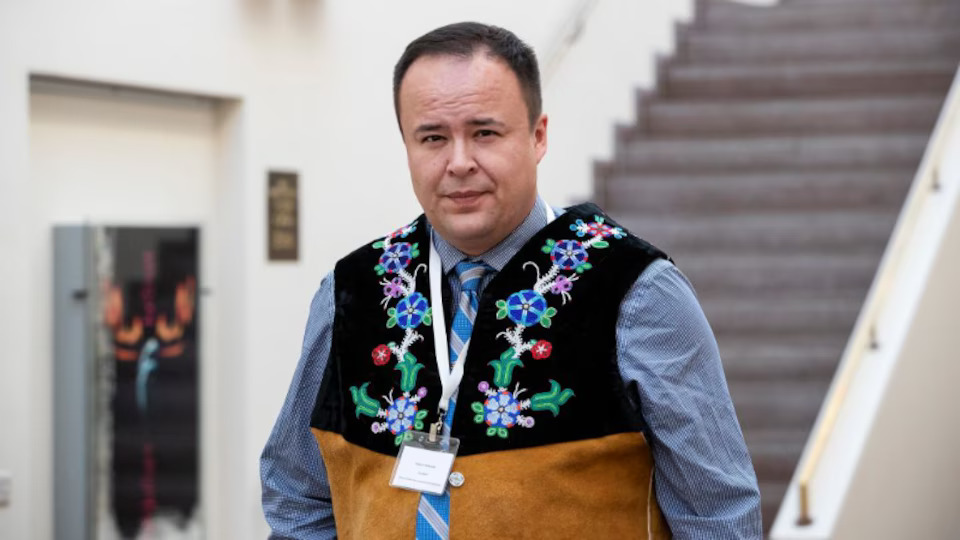
“The Arctic is facing immense challenges which require international cooperation and collaboration, not confrontation,” said Edward Alexander, co-chair of the Gwich’in Council International. (Kaisa Sirén/Ministry of the Environment Finland) Photo: (Kaisa Sirén/Ministry of the Environment Finland)
Gwich’in Council International, representing Gwich’in communities in the United States and Canada, expressed serious concern on Wednesday over ongoing U.S. claims of potentially annexing Greenland (Kalaallit Nunaat in Greenlandic).
The Council warned that such rhetoric is among several rising geopolitical tensions that threaten the stability and cooperation essential to Indigenous peoples in the Arctic.
We explicitly, and in no uncertain terms, repudiate claims from the United States of America to annex Kalaallit Nunaat over the will of its people,
Gwich’in Council International said in a statement.
“We recognize the sovereign and self-governing rights of the people of Kalaallit Nunaat, the Inuit, and the people of the Kingdom of Denmark, to decide for themselves what is in their own peoples’ best interests.
The statement from the Gwich’in Council came on the same day as a report in the Wall Street Journal (new window), which revealed that U.S. intelligence agencies had been asked to increase their efforts to monitor developments on the island, particularly in relation to U.S. overtures toward Greenland and the state of the island’s independence movement.
This development raised alarms in the international community, especially in Denmark, where Foreign Minister Lars Løkke Rasmussen quickly announced that the U.S. ambassador would be summoned (new window) for an explanation following the report’s publication.
Chorus of voices pushing back against U.S.
In an NBC interview aired Sunday, Trump stated that while it was highly unlikely
the U.S. would use military force to take over the island, he did not completely rule out the possibility, describing Greenland as critical for national and international security,
adding that something could happen with Greenland.
During a speech in the European Parliament on Tuesday, (new window) EU High Representative Kaja Kallas emphasized that decisions about Greenland’s future must be made by the people of Greenland and that respecting national sovereignty and territorial integrity remain essential for maintaining global peace.
Rocky road ahead for Arctic Council?
The heightened tensions over Greenland are coming the week before the Arctic Council two-year rotating chairmanship moves from Norway to the Kingdom of Denmark, which has made Greenlandic diplomat Kenneth Høegh its Senior Arctic Official.
The Council, made up of the eight Arctic states: Canada, Denmark (Greenland), Finland, Iceland, Norway, Sweden, Russia, United States; and the six Arctic Indigenous groups, known on the Council as permanent participants: Aleut International Association, Arctic Athabaskan Council, Gwich’in Council International, Inuit Circumpolar Council, Russian Association of Indigenous Peoples of the North, Saami Council, focuses on environment and sustainability.
Tensions among Arctic Council member states over Greenland mark the latest in a series of disruptions to the forum’s fragile unity. Established to foster environmental and sustainable development cooperation in the region, the Council’s work was significantly shaken by Russia’s 2022 invasion of Ukraine. That conflict led to a freeze in activities and a severing of communication with Moscow, with some expert groups resuming work in 2024.
Now, the Council faces further pressure amid provocative rhetoric from a U.S. member state suggesting interest in acquiring Greenland and even incorporating Canada as its 51st state. The remarks drew swift condemnation from Gwich’in Council International, a Permanent Participant, which on Wednesday called the statements a threat to Indigenous sovereignty.
Gwich’in Council International also rejects, and calls on the United States of America to refrain from threatening the annexation of Canada as the
51st State,” the organization said.
The sovereignty of Canada, which relies on Canada’s special relationship with the Gwich’in, respect for our sovereignty, and the recognition of our rights as Indigenous Peoples, must be respected to have a peaceful and cooperative Arctic.
Edward Alexander, co-chair and Head of Delegation for the Gwich’in, stressed that climate change remains the biggest threat to all Arctic nations and the Indigenous communities across the circumpolar world that unity would be needed to confront the environmental challenges ahead.
The Arctic is facing immense challenges which require international cooperation and collaboration, not confrontation,
Alexander said.
We need to cooperate to slow and halt climate change, we need cooperation to protect our environment from the tragic global implications of the Arctic wildland fire crisis and abrupt permafrost thaw, and we need to build a more peaceful Arctic built on mutual respect and norms. Lastly we need to work together to protect the salmon, the caribou, and all creatures, plants and the environment on which we depend.
This article is republished from RCI.




















