
Canada News
Canada needs an enhanced strategic approach in the High North

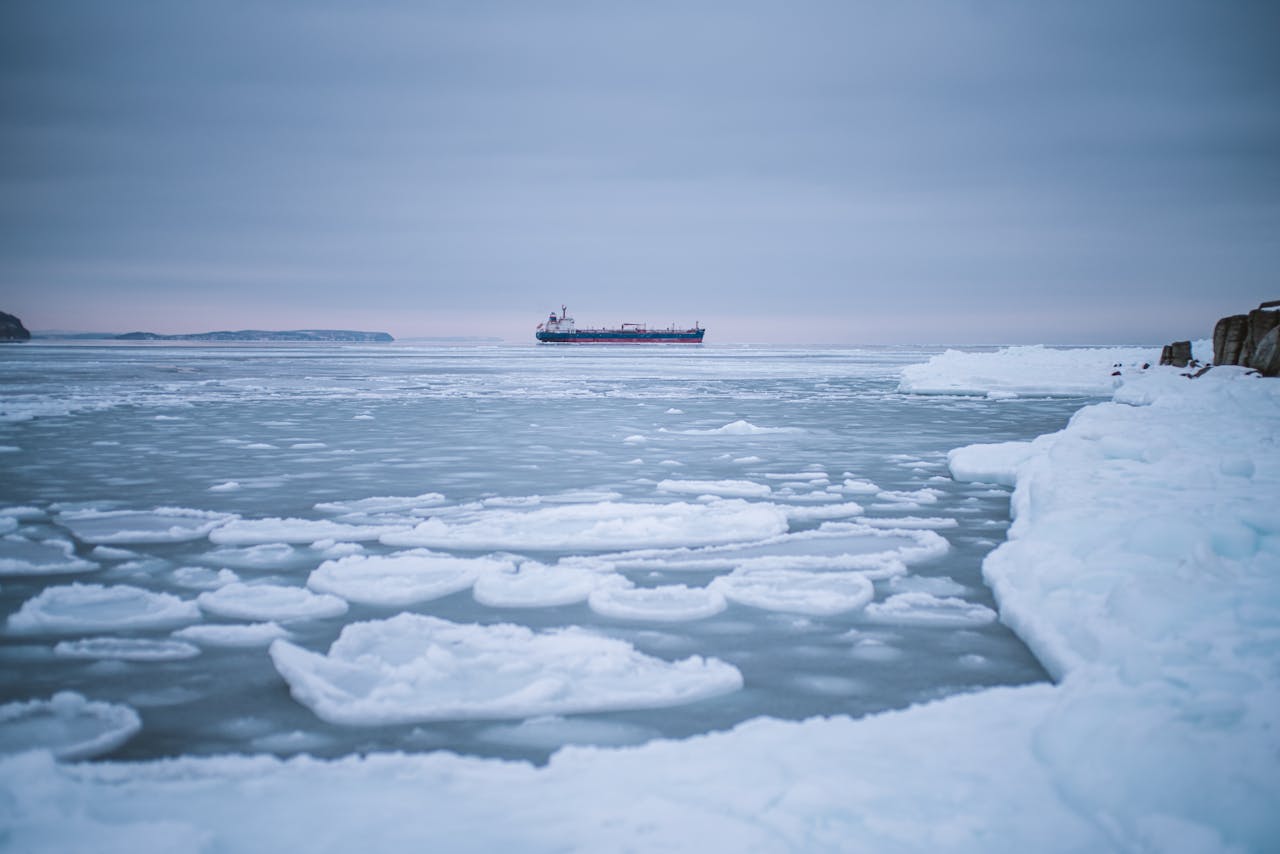
Canada, with its vast Arctic coastline, needs to take action to meet the changing situation. (Pexels Photo)
Sign up for A Stronger Canada for The Trump Era. A temporary newsletter with the latest Canada-U.S. analyses from Policy Options.
The Arctic, once an overlooked periphery, is now a central stage in the global geopolitical competition. Melting ice is opening maritime routes and unlocking valuable resources – bringing military, economic and strategic interests to the forefront for the many countries that border it and others who want to use it.
Canada, with its vast Arctic coastline, needs to take action to meet the changing situation. The federal government has made efforts to improve its defence capabilities in the region, but progress remains uneven.
Prime Minister Mark Carney has acknowledged the challenges and committed to increased defence investment. Conservative Leader Pierre Poilievre has similarly emphasized Arctic security as a national priority. Still, Canada’s military footprint remains minimal relative to its strategic exposure.
Canada failed to heed the warning signs of a key U.S. policy shift
Negotiating the Beaufort boundary with the U.S. can serve as an example to the world
There are five measures that offer a realistic roadmap. A hybrid air fleet and multi-domain surveillance network could extend Canada’s visibility and control. Seabed sensors and unmanned aerial vehicles could secure underwater routes. A nimble ground force, coupled with mobile missile units, could give Canada the ability to respond to threats without overstretching its military.
This asymmetrical model is not a shortcut or a compromise. It is a strategy built on Canada’s strengths and realities. It recognizes fiscal limitations, leverages diplomatic ties, and applies modern technologies to age-old defence challenges. Most importantly, it presents an autonomous path forward in the Arctic without disengaging from Norad or NATO commitments.
The stakes are high
Russia has led the militarization of the Arctic. It maintains a formidable presence with nuclear-powered submarines, destroyers, strategic bombers, hypersonic missiles and the world’s largest fleet of icebreakers.
The ambitions of Russian President Vladimir Putin are clear: By 2030, Russia aims to move 100 million tons of cargo through the northern sea route – a maritime corridor stretching from the Kara Sea to the Bering Strait along Russia’s Arctic coast, linking Europe and Asia through the Arctic Ocean.
This military posture supports both security and commercial goals, allowing Russia to flex its muscles in terms of regional dominance.
Meanwhile, the United States continues to treat the Arctic as a zone of strategic interest, especially in relation to Greenland and the Northwest Passage. Despite being Canada’s closest ally, the U.S. does not recognize Ottawa’s claim over the passage and has acted unilaterally from west to east, creating the potential to flank Canadian waters.
U.S. President Donald Trump recently criticized what he called Ottawa’s lack of Arctic preparedness, echoing the concerns of many defence observers.
Other northern nations could help
Canada is making some efforts to improve readiness. It is pursuing partnerships with Finland to acquire new icebreaker technology and could start talks with the United Kingdom to modernize its aircraft fleet.
Options being considered to replace our aging CF-18s include the Gripen, Rafale and Eurofighter Typhoon – alternatives that may offer greater flexibility than the more costly U.S. F-35 program.
Despite these initiatives, Canada remains at risk of being strategically encircled by U.S. and Russian dominance on both flanks, which limits Ottawa’s manoeuvring space.
Nordic nations have capable Arctic forces but they are limited in scale and unable to counterbalance Moscow independently. All of this leaves Canada with few clear paths to assert its sovereignty through conventional military means.
Replicating Russia or America’s military buildup is simply not an option. Canada does not have the budget, industrial base or time to compete on those terms.
Instead, a more tailored approach is needed. This five-point asymmetrical warfare strategy – built around affordability, agility and technological innovation – could offer Canada a credible way to defend its interests without overextending its resources.
A five-point plan
One component of this approach would be a hybrid air-defence strategy. Rather than replacing all current CF-18s, Canada could extend the lifespan of some with focused upgrades, including cold-weather modifications and modern sensors.
These jets could be supplemented with a modest fleet of long-range unmanned aerial vehicles such as the MQ-9 Reaper, which offers persistent surveillance and limited strike capacity at a fraction of the cost of manned fighters.
Beneath the surface, Canada can strengthen its monitoring capabilities without escalating tensions.
Instead of deploying underwater mines, which carry significant political and military risks, passive seabed acoustic sensors and autonomous underwater vehicles could be placed in key areas such as the Northwest Passage to provide early warning of submarine activity while maintaining a low profile.
It’s time for Canada to have a foreign policy
Surface and aerial surveillance also need enhancement. Canada should create a multi-domain monitoring network using small aerial drones, unmanned surface vessels and land-based sensors. This modular system would be cost-effective and scalable, ideal for covering large, sparsely populated Arctic areas. It could be deployed flexibly and upgraded as technologies evolve.
In terms of ground response, Canada could invest in a specialized Arctic rapid-reaction force. Building on the Canadian Rangers, this unit would be trained in reconnaissance, disruption and irregular tactics suited to harsh northern environments.
Working with Nordic partners, particularly Norway, would offer shared expertise and mutual reinforcement. While small in size, such a force would have strategic impact.
Lastly, instead of static Arctic bases, Canada could deploy mobile outposts capable of launching long-range anti-ship missiles and conducting electronic warfare. These units, delivered by air or sea, could shift locations frequently to avoid detection. Decoy installations would add to the confusion, complicating enemy targeting efforts and increasing deterrence.
It’s time to act
The Arctic’s importance will only grow as global interest intensifies. Canada must choose whether to remain reactive or to assert its position through focused, intelligent measures. An asymmetrical defense strategy rooted in practicality and designed for deterrence is a necessary step.
With decisive action, Canada can safeguard its sovereignty and play a leading role in shaping the future of the High North.
This article first appeared on Policy Options and is republished here under a Creative Commons license.




















