

By Shiva S. Mohan, Toronto Metropolitan University, The Conversation
Migrant workers have long been recognized as essential to Canada’s economy. But that recognition rarely translates into meaningful inclusion. As Canada embarks on new immigration reforms, persistent inequalities continue to define who truly belongs, and who remains excluded.
In March, the federal government announced a new national pathway to permanent residence for up to 6,000 out-of-status construction workers.
Although framed as a recognition of essential labour, the new program highlights a deeper reality: Canada’s immigration reforms continue to prioritize business and industry needs. In this instance, those needs are in housing and construction.
This selective approach reveals deeper patterns in Canada’s immigration system, often described as a hierarchy of deservingness. This framework assigns greater value to certain types of labour, while sidelining others. This sidelining is often based on race, gender and class and limits access to recognition and rights for all essential workers.
Former Immigration Minister Marc Miller estimated that between 300,000 and 600,000 out-of-status people were living in Canada as of 2024. The new construction worker pathway, while important for some, will address only a tiny fraction of this population.
Political and industry priorities
With a federal election on the horizon, the construction worker pathway is as much a political move as a policy reform.
The program expands on a pilot that granted permanent residence to approximately 1,365 people and their families in the Greater Toronto Area before closing in December 2024.
The current national rollout of the program reflects public and industry pressure to address Canada’s housing crisis. Housing has become a top priority for governments across the country.
Developers and industry groups, such as the Canadian Home Builders’ Association, have long lobbied for faster housing construction and more skilled trades workers. Their advocacy, combined with widespread concern over affordability, made it politically attractive to prioritize construction labour rather than implement broader regularization efforts.
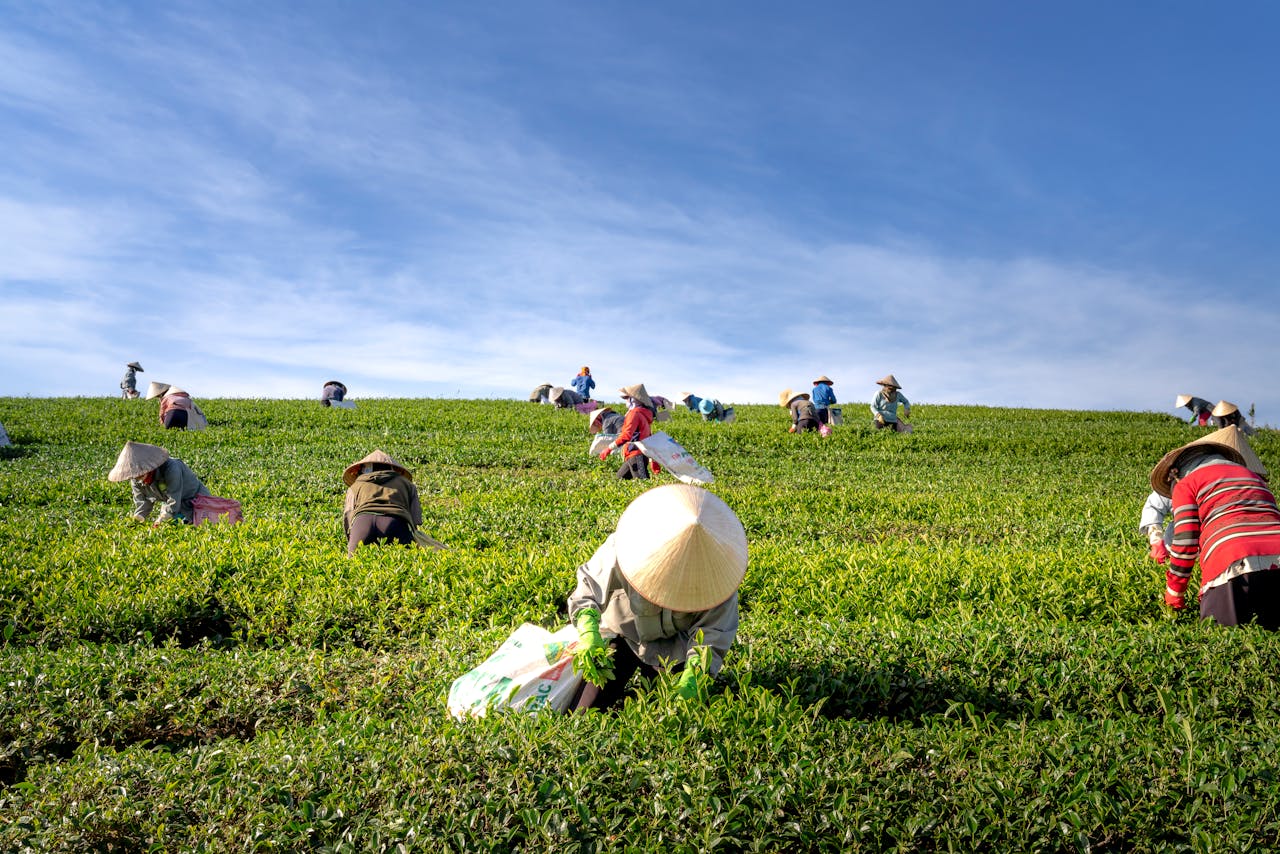
But this approach exposes who is left out. Sectors like caregiving, domestic work and agriculture, largely dominated by racialized and feminized labour continue to be excluded from clear and inclusive pathways to status.
Canada’s low-wage economy has historically depended on the labour of racialized and immigrant women. Migrants in these sectors, often work in private or hidden spaces, making their labour less visible and politically legible.
Caregiving and domestic work in Canada have historically been undervalued. It is often framed as natural extensions of women’s roles and systematically marginalized in immigration policy through programs like the Live-in Caregiver Program.
Fragmented, insufficient system
Research confirms that Canada’s approach remains fragmented and insufficient. As part of my work with MIrreM, an international project studying irregular migration and regularization policies, we found that Canadian programs are often small, sector-specific and constrained by narrow eligibility criteria.
New federal government Home Care Worker Immigration pilots offer another highly competitive pathway to residency.
But these programs remain narrowly targeted, restricted and quickly capped, with application limits often reached on the same day they open. They also provide little relief for the many out-of-status caregivers already living and working in Canada.
Other countries have demonstrated that large-scale, inclusive reforms are possible, offering Canada a model to follow.
Spain’s 2005 regularization program successfully granted legal status to 700,000 people. The Spanish assessment recognized employment records, community ties and long-term residence. This model shows that broad, fair regularization strategies can balance administrative efficiency with political feasibility.
Meanwhile, Canada’s fragmented reforms exclude most out-of-status critical workers. And it leaves them without any sustainable pathway to status, prolonging their vulnerability and insecurity.
A comprehensive immigration strategy needed
Canada urgently needs a transparent, fair and scaleable immigration strategy. It must be one that values people’s contributions, not just the immediate needs of businesses.
Cleaners, caregivers, farm labourers, food service workers and others deserve the same recognition and opportunity as those in construction.
A comprehensive regularization strategy would not only uphold dignity and fairness. It would also strengthen Canada’s economy, improve labour protections and promote social inclusion.
As Canadians prepare to head to the polls, the incoming government faces a critical choice.
It can continue with piecemeal, politically convenient reforms that leave most out-of-status workers behind. Or it can commit to a broad, rights-based regularization strategy that recognizes the full social fabric of those who sustain this country.
Shiva S. Mohan, Research Fellow, Canada Excellence Research Chair in Migration & Integration program, Toronto Metropolitan University
This article is republished from The Conversation under a Creative Commons license. Read the original article.




















