

By Craig Jackson, Birmingham City University, The Conversation
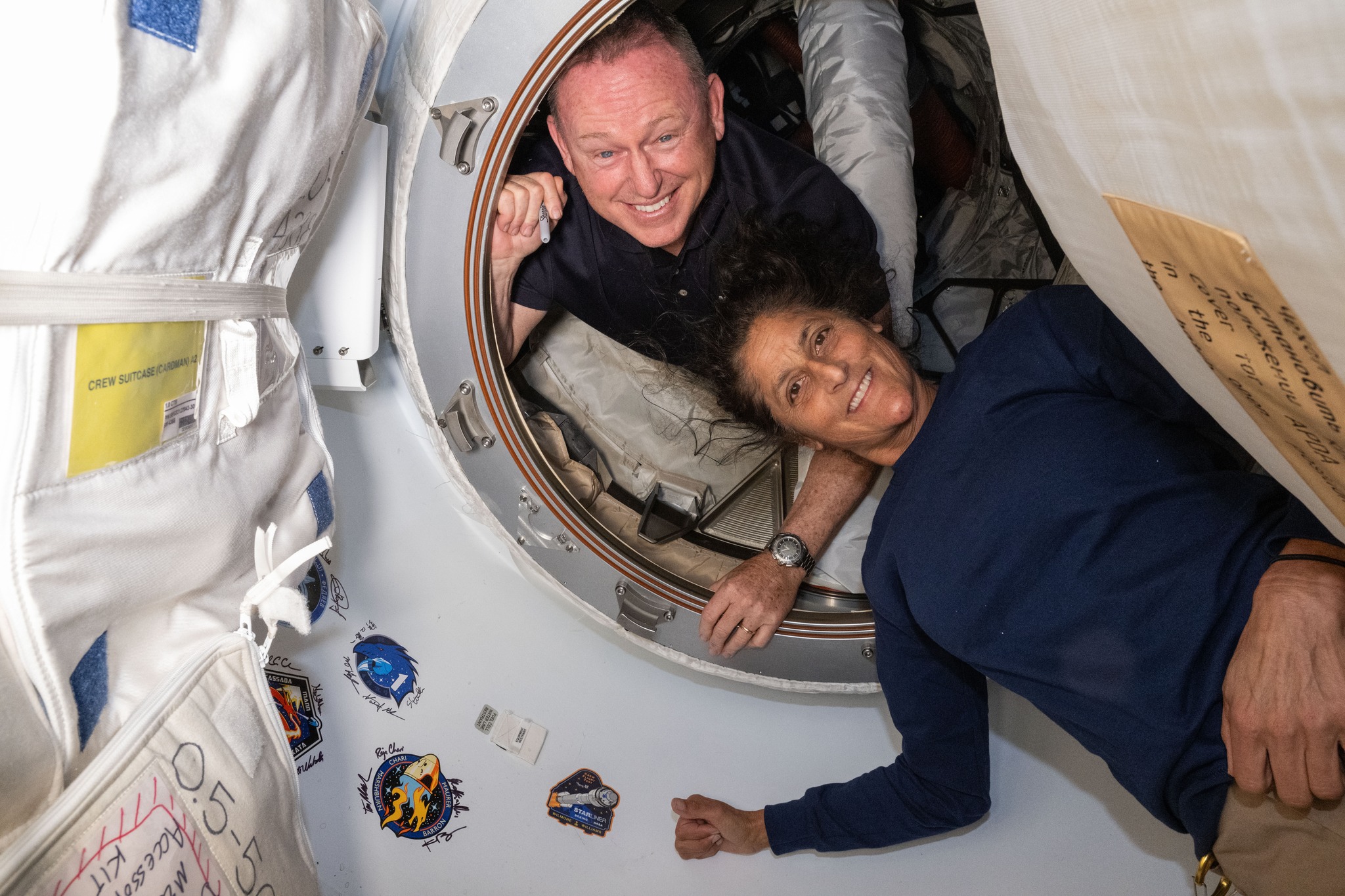
US astronauts Sunni Williams and Barry Wilmore have been stranded in low earth orbit onboard the International Space Station for nine months. They are now finally due to return to Earth. Their planned return from their one week mission was abandoned due to concerns with the return vehicle, the Boeing Starliner-1, and this resulted in them being in space for 290 days.
Wilmore and Williams do not hold the record for the longest stay in orbit, which belongs to cosmonaut Valeri Polyakov, who spent 437 continuous days on the Soviet Mir space station. Nine other US astronauts have spent more than 200 days each in orbit during a single spaceflight – but Wilmore and Williams do hold the record for the longest unplanned spaceflight among US astronauts. Could the unplanned nature of their extended trip produce effects not seen in other planned long-term spaceflights?
The risks and hazards of space flight are well understood by Nasa and referred to as “RIDGE” – short for Radiation, Isolation and confinement, Distance from Earth, Gravity effects and hostile Environments. Aerospace medicine takes such issues seriously.
Some physical effects include blood clots and pooling, reductions in bone density, poor digestion, lower nutrient absorption, musculoskeletal atrophy (muscle and bone loss), and poorer cardiovascular function due to reduced blood pumping in zero gravity. Other impacts include changes to the eyeballs due to the pooling of fluids, pooled cerebrospinal fluid around the skull area, and a semi-permanent feeling of congestion.
The reduced sense of smell may be a blessing, as many space capsules develop an unpleasant smell. Physical effects from fluids can be improved, but not entirely negated, by cuff compression (a fabric sleeve that compresses an area of the body) to relieve pain and swelling. Musculoskeletal atrophy can be reduced with the help of an aerobic treadmill and resistive exercises to help maintain the muscles and cardiovascular function.
Exposure to radiation is a serious concern, and longer exposures can increase the likelihood of astronauts developing some cancers later in life. The health of Wilmore and Williams will be monitored for many years to come.
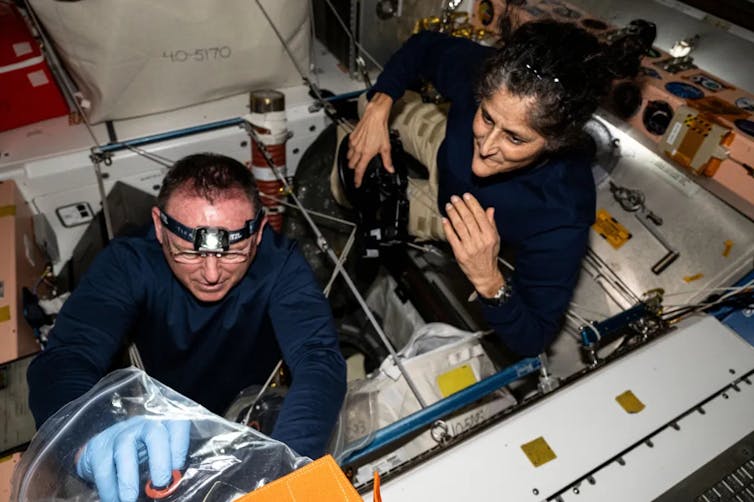
While stranded, Wilmore and Williams will have been providing vital data to help measure the impacts of prolonged stays – every bladder and bowel movement they had will have been weighed and checked for any signs of illness and to monitor changes brought about by their unplanned extension.
On their return to Earth, they will require gentle physiotherapy to regain muscle function and strength, and for cardiovascular rehabilitation, paced carefully due to the physical fatigue and limitations they will suffer for a few weeks. Dizzy spells, reduced muscle function, and visual disturbances will be common and even walking will take some practice. Their skin will be “baby soft” after nine months of not having their clothes rub against their bodies.
Of more interest may be the psychological challenges they face, from their concerns over the “near miss” by not returning to Earth in the vehicle they arrived in because Nasa decided it was too risky, through to having to live in confined quarters with others for so long, with a lack of privacy, and enforced companionship.
Confinement in restricted space, isolation and prolonged separation from family means it is more likely that behavioural problems or psychiatric conditions may develop.
Problem solving mentality
Behaviour in others that was initially a minor annoyance can quickly become serious sources of stress and irritation during enforced confinement. Astronauts are selected and screened based on temperament, personality, aptitude and their ability to cope when things go wrong. A problem solving mentality and a will to live, coupled with an ability to follow commands and maintain order in the most difficult of circumstances are what makes astronauts better than most of us.
They are trained to cope under any situation, such as crash-landings in deserts, or technical failures on board the spacecraft. But despite excellent training, human fallibility and failings will emerge given time.
Astronaut training also instils the importance of resilience, despite the most trying circumstances, and they will have been trained to keep their fears and anxieties hidden for the benefit of the mission. It might only be after their return that Wilmore and Williams may express their relief. Depression and anxiety can be common after returning to Earth according to others who have been there, with Buzz Aldrin admitting it happened to him and others in his 1973 autobiography Return to Earth.
Nasa
They may have experienced feelings of abandonment and questioned why they could not be rescued sooner, or may have developed an understandable lack of trust in technology, and a lack of faith in their fellow mission crew members. They will no doubt have missed important dates with their families, experienced homesickness and possibly even questioned if they could last until rescued.
Video-link contact with family will have kept them going but will have also been painful and difficult at the same time. Knowing that their families are worried about them, yet equally unable to do anything about it must have been particularly difficult. Although keeping themselves busy as a distraction will have helped, there would have been downtime when their worries must have been almost overwhelming.
Sleep disturbances and the inability to get regular sleep to allow their brains to rest will have led to cumulative fatigue – both physical and mental. Some astronauts struggle to ever get used to sleeping in space – resulting in lack of performance in the sufferer.
Being stranded on the ISS and unable to get back home while being able to see home fly by with every rotation of the Earth presents a unique form of frustration. One positive effect reported by many astronauts is the “overview effect” where a sense of peace and oneness with the planet is experienced when viewing the Earth from a whole new perspective. The overview effect seems to have a permanent impact, staying with astronauts for the rest of their lives.
A complication in understanding any psychological effects of spaceflight is that many astronauts hope to continue their careers and have more missions, and therefore may not be honest about any negatives they experienced. With Nasa planning missions to Mars at some point in the future, the unique experiences of Wilmore and Williams will be useful to behavioural scientists planning such future missions and trying to understand the best psychological characteristics for selecting astronauts for long term spaceflights.
Craig Jackson, Professor of Occupational Health Psychology, Birmingham City University
This article is republished from The Conversation under a Creative Commons license. Read the original article.




















