

By Ali Asgary, York University, Canada, The Conversation
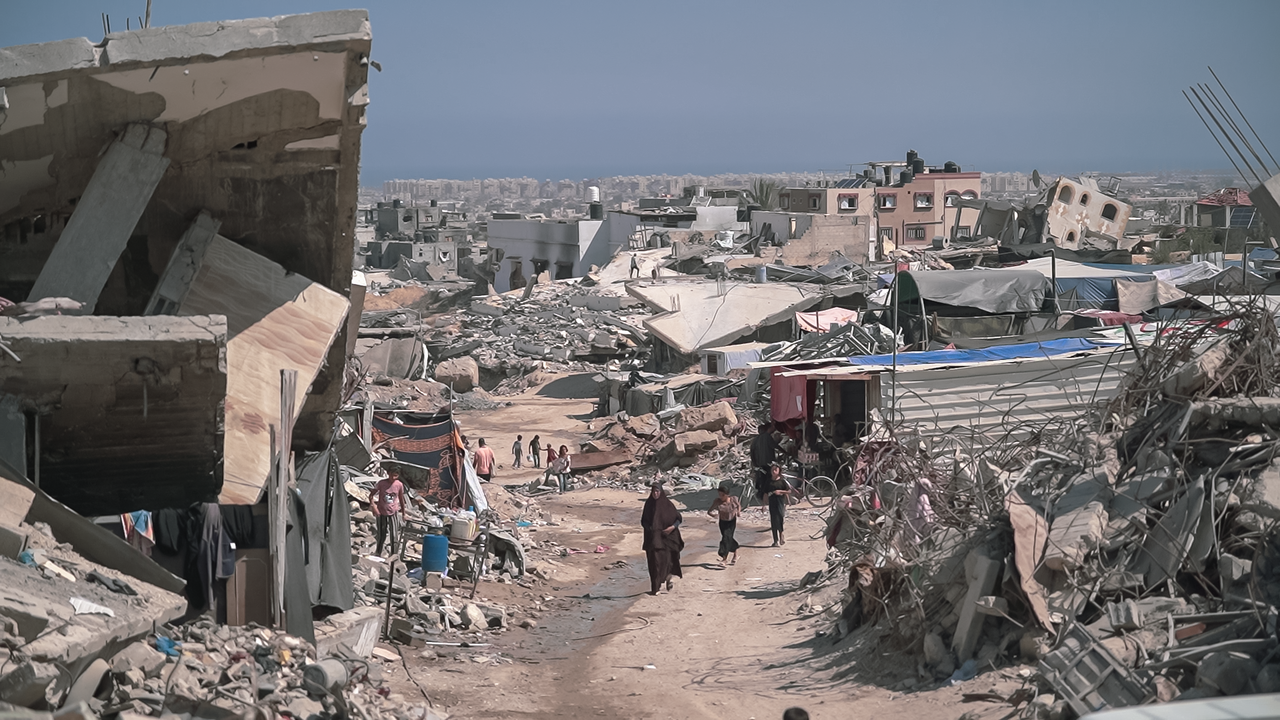
There have been many conversations around U.S. President Donald Trump’s Gaza proposal to permanently displace Palestinians from Gaza to neighbouring countries and turn the strip into a luxury resort development. Criticisms of Trump’s comments often focus on the proposal’s illegality, immorality and impracticality.
However, little has been discussed from the perspective of post-disaster and post-war reconstruction. Post-conflict reconstruction, as part of post-disaster reconstruction studies, has a very long history, scholarly literature, lessons learned and is one of the well-studied phases of disaster and emergency management.
Where to rebuild
When it comes to where to rebuild or reconstruct after disasters, including human-made disasters such as war and conflict, there are three main options:
1) reconstruction in the original location;
2) reconstruction in a new location; and
3) reconstruction and integration in existing settlements.
Each of these approaches has its advantages, disadvantages and challenges. One of the key principles of post-disaster recovery and reconstruction is minimizing post-disaster relocation.
While a significant majority of post-disaster reconstruction happens in the original locations, there has been reconstruction and resettlement to new locations and beside or inside existing settlements.
For example, after the 1974 conflict in Cyprus, the city of Famagusta was abandoned and residents were relocated to new areas. Relocation after the 1995 volcano eruption that buried Plymouth in Montserrat is another example. After the 1990 Manjil earthquake in Iran, many villages were relocated and rebuilt in new locations.
Rebuilding in the original location
Studies show that reconstruction in the original location is generally the most preferred and effective option. People impacted and displaced by war and disasters usually prefer to live in their original community.
In some cases, reconstruction in the original location may still require some forms of temporary resettlement. This temporary relocation is a preferred option when the affected areas do not have enough space or ability to support the population during the reconstruction period, particularly during debris removal and infrastructure restoration.
Past reconstruction efforts in developed and developing countries, show that recovery and reconstruction are more effective, democratic and faster when the impacted population is in charge of the reconstruction process, and remain close to their damaged homes.
The closer a temporary settlement is to the reconstruction site, the better. Proximity allows the impacted population to participate effectively, monitor and benefit from the reconstruction process without distance and accessibility barriers.
Rebuilding in new locations
Reconstruction in a new location is usually considered as one of the last options when rebuilding in the original place is not possible due to various hazards like landslides, earthquakes, tsunamis, hurricanes, flooding or volcanos.
This usually occurs when mitigation measures are neither possible nor feasible. This option requires relocating the impacted population and rebuilding everything from scratch. Its success very much depends on the availability of land, resources and the willingness of the impacted population to relocate.
Even when relocation is the only viable option, impacted people must be fully involved and given discretion regarding their place of relocation. Involuntary resettlement programs are impracticable. Even when the population is displaced, studies show that people return to their original homes if they can.
Rebuilding near existing settlements is an extension of this option except that instead of rebuilding in a new location, reconstruction happens beside existing settlements to minimize infrastructure costs.
This option can still be challenging. Implementation can be very complex even when new settlements are in the same country or area. Reintegrating people into a new place, even when they are willing to be relocated, requires many livelihood support initiatives, land availability, legal frameworks for land distribution and dispute resolution.
Rebuilding options for Gaza
Trump’s proposal is close to that last option, with three major differences. The first difference is that there is no consultation with Palestinians in Gaza.
The second difference is that the impacted population will be forcefully and involuntarily relocated to settlements in other countries (Egypt and Jordan).
The third difference is that the United States would “own” Gaza, and rebuild it for other purposes and uses, not for the benefit of Palestinians.
As mentioned above, one key justification for rebuilding in a new location is that the original place is not permanently safe. Trump’s proposal assumes that Gaza is not safe for Palestinians but somehow safe for others.
Post-disaster and conflict reconstruction is not just a physical reconstruction project. Rather, it is a complex, multidimensional process, with potentially very high negative impact if not properly planned and implemented.
Top-down approaches in post-disaster recovery and reconstruction often fail because these approaches ignore the complexity of the built environment, the local conditions, and the needs of the affected population.
Displacing entire populations, their economic activities and their social networks and relations can have significant impacts — direct and indirect — on the population and on governments. Community relocation fails because it disrupts social networks, and increases negative sentiments and dissatisfaction with living conditions in new location.
Post-war reconstruction programmes must be multi-dimensional and based on a clear understanding of local conditions and careful consultation with the affected people. The alternative to large-scale resettlement is to reduce the risks people face in their current location.
In the past, international solidarity has played an important role in reconstruction. Such solidarity increasingly exists for the Palestinians of Gaza, and with that, rebuilding in the same location can still be a viable and preferred option.
Ali Asgary, Professor, Disaster & Emergency Management, Faculty of Liberal Arts & Professional Studies & Director, CIFAL York, York University, Canada
This article is republished from The Conversation under a Creative Commons license. Read the original article.




















