By Kenneth Haggett, Saint Mary’s University; Eugena Kwon, Trent University; The Conversation
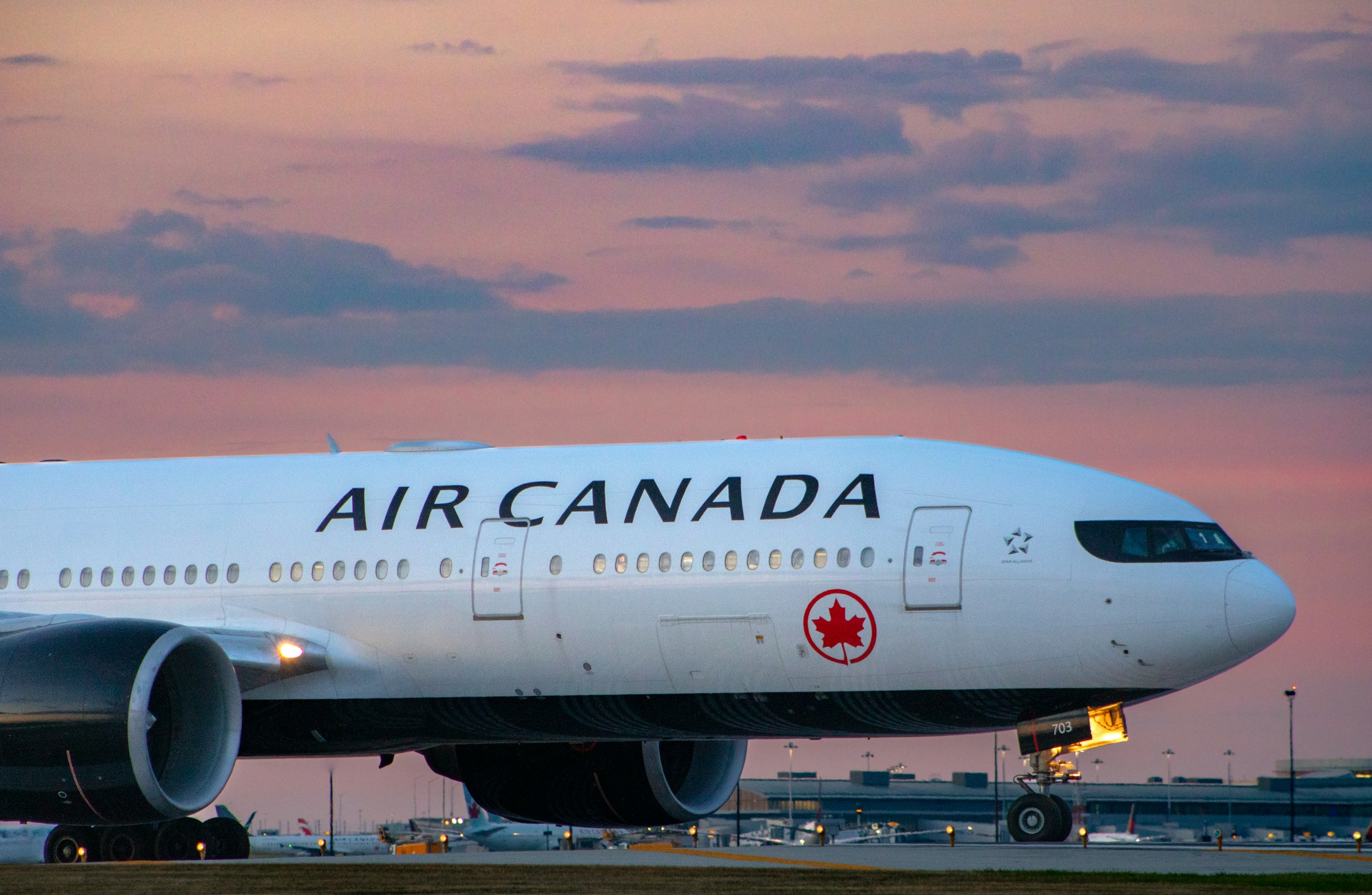
Flight attendants in Canada work approximately 35 uncompensated hours per month, according to CUPE Airline Division President Wesley Lesosky. (File Photo: Adam Khan/Unsplash)
Canadian flight attendants and their union, CUPE’s airline division, have faced chronic workplace issues for the past four decades. Notably, their union has been pushing the federal government and airlines for equitable pay since 2022.
A key development came in June 2024 when Conservative MP Lianne Rood proposed Bill C-409 to the House of Commons, which would compensate attendants for training and ground time, which includes tasks like aircraft preparation, boarding, deplaning and safety demonstrations.
However, the Conservative Party of Canada did not consult with CUPE’s airline division in tabling Bill C-409, and CUPE has expressed their uncertainty regarding the Conservative Party’s support.
In October 2024, NDP MP Bonita Zarrillo tabled Bill C-415, which goes further by requiring attendants to be paid for all hours worked at their full rate of pay. CUPE and the NDP Party have collaborated to push for this bill.
The issue of unpaid ground time first gained media attention in May 2022 but has been a long-standing concern among flight attendants.
Industry labour issues
Flight attendants in Canada work approximately 35 uncompensated hours per month, according to CUPE Airline Division President Wesley Lesosky.
Attendants are only paid while the aircraft is in the air, meaning ground tasks and delays are unpaid. Flight attendants may work a 10- to 12-hour shift, but only be paid for six to eight hours.
In the past, attendants were compensated well enough to cover ground duties, but stagnant wages and the current cost-of-living crisis in Canada have left attendants poorly compensated.
Though the union primarily focuses on organizational inequities resulting in unpaid ground time, flight delays are a major cause of such extended, unpaid hours by prolonging attendants’ duty time.
While some negotiations have been reported between airlines and the union, such as Air Transat and Air Canada, few deals have been made, leaving flight attendants uncompensated for ground duties.
Unions mobilize against unpaid ground time
To call public attention to the issue, the union staged demonstrations in April 2023 and May 2024.
While the union has sought to avoid taking strike measures — likely due to non-strike provisions in collective agreements — it could legally take job action after March 31 if negotiations fail. Union members could then vote to strike.
CUPE’s airline division began to renegotiate union agreements with Air Canada in mid-December, ahead of the March 2025 contract expiration. The union’s primary focus is to make better bargains with employers surrounding unpaid ground time. Ideally, new agreements would compensate flight attendants for all hours worked, not simply time spent in the air.
A Feb. 3 update from the union reveals that, while negotiations are steadily progressing, the process remains lengthy and complex. To strengthen its position, the union has commissioned legal and research professionals to aid in the negotiation of benefits, pensions, wage increases and scheduling changes, among others.
As sociologists focusing on labour relations, we conducted a literature review on historical trends within the Canadian airline industry, digging deeper into structural issues leading to unpaid ground time.
Our research has found that the neoliberal shifts of the 1980s are a major determinant of attendants’ deteriorating working conditions. Over time, rising corporate austerity has placed attendants’ wages on the back burner.
Structural roots of unpaid ground time
The issue of unpaid ground time is not an isolated issue in the airline industry, but a byproduct of broader economic and labour trends.
Our findings highlight how neoliberal economic policies — particularly the wave of deregulation and privatization in the 1980s — have strengthened corporate power while weakening unions’ bargaining capacity.
Founded in 1948, Canada’s first flight attendant union, the Canadian Air Line Flight Attendants’ Association (CALFAA), focused on addressing attendants’ health, safety and wage concerns.
But with the neoliberal push to deregulate and privatize the industry, CALFAA’s challenges were amplified. In response, CALFAA voted to merge with CUPE — Canada’s leading union — to extend their influence, becoming CUPE’s airline division.
Yet the growing emphasis on corporate profit continues to erode union power to secure and maintain fair pay and equitable workplace standards. Bargaining processes have become increasingly difficult, with arbitrators often favouring corporate interests.
State-imposed anti-strike provisions from previous years have curtailed unions’ ability to strike against unfair conditions. Successful airline lobbying has also threatened workplace safety, as indicated in a 2015 case of pilot duty time.
As airlines continue to compete in a “race to the bottom” to minimize expenses and maximize profit, flight attendants continue to face unpaid labour issues. Federally supported through bailouts and bankruptcy protections, airlines have been pandered to at the expense of airline workers.
A lack of state and corporate response to the issue at hand indicates the prioritization of austerity over Canadian flight attendants’ financial well-being. Without meaningful policy changes, key issues like unpaid ground time will remain chronically neglected.
Looking ahead
Though unpaid ground time is presented as the major issue within the workplace, the extensive, unpaid labour required of flight attendants can lead to poorer mental health, chronic fatigue and other health concerns that pose risks due to their impact on attendants’ ability to perform safety duties.
With contract negotiations underway, CUPE’s airline division has an opportunity to push for better working conditions and pay structures that reflect all hours worked.
Canadian airlines must address the issue of unpaid labour and, ultimately, implement more equitable workplace standards for flight attendants.
Whether airlines and the federal government will indeed act on these demands remains to be seen. Yet the growing pressure from unions and political figures suggests the fight for fair pay is far from over.
Lauren Cormier, an undergraduate student in sociology at Trent University, co-authored this article.
Kenneth Haggett, Master’s Student, Women and Gender Studies, Saint Mary’s University and Eugena Kwon, Assistant Professor of Sociology, Trent University
This article is republished from The Conversation under a Creative Commons license. Read the original article.