Business and Economy
The three-legged stool is the way to net zero by 2050

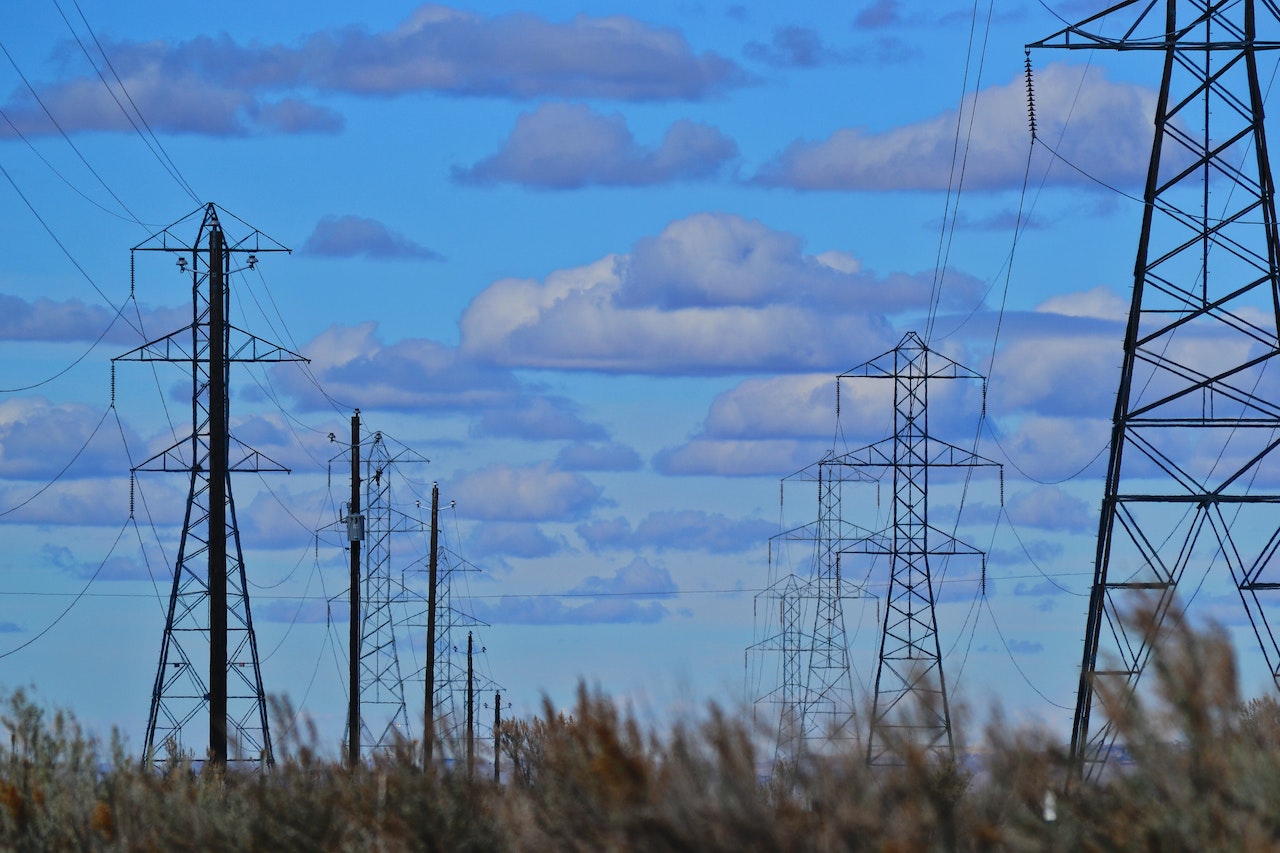
The balance between emissions and the absorption of carbon is generally referred to as a condition of net-zero emissions. (Pexels photo)
Given the mounting evidence confirming the lack of efficacy of carbon pricing in Canada, it is unsurprising that both Liberal leadership frontrunners Mark Carney and Chrystia Freeland have recently stated they would end Justin Trudeau’s flagship program. So, is there a more effective way to reduce Canada’s greenhouse gas emissions (GHG)?
Carney says he’d create incentives to “reward people for green-initiative purchases,” while Freeland promises to “make sure big polluters pay” and develop a plan in conjunction with the provinces. These are both steps in the right direction.
But they don’t go far enough.
There are three key elements essential to achieving this goal – generate electricity from renewable sources; increase the electrification of the economy; and reduce its emission intensity, meaning the ratio of our GHG emissions to our gross domestic product. It’s a three-legged stool.
The 2025 Paris Agreement proposed a limit on the increase in global temperatures and a mechanism to achieve it.
The target is to keep the overall increase in worldwide temperatures under 2 degrees C above pre-industrial levels.
Building on Canada’s electrical advantage
The proposed mechanism to meet this target (set out in Article 4) is “to reach global peaking of greenhouse gas emissions as soon as possible…to achieve a balance between anthropogenic emissions by sources and removals by sinks of greenhouse gases in the second half of this century.”
The balance between emissions and the absorption of carbon is generally referred to as a condition of net-zero emissions. Many countries, including Canada, have committed to achieving it. It is also agreed that this condition should be met by 2050.
The Trudeau government set out its pathway to net-zero emissions in Canada’s Energy Future, which forecasts greenhouse gas emissions declining from about 700 million tonnes of carbon dioxide equivalent (MtCO2e) at present to 165 MtCO2e in 2050, at which time they are balanced by several negative-emission technologies.
These include changes to land use and forestry practices; bioenergy, carbon capture and storage; and direct air capture.
But can Canada really reduce its GHG emissions by 76 per cent over the next 25 years?
The three-legged stool provides the solution. Each element is essential. If any of them fails, the goal cannot be achieved.
The first leg is familiar. Electricity – the most adaptable and powerful of all forms of energy – must be generated from sources that produce no carbon emissions.
That means renewable sources, primarily solar, wind power, geothermal, hydropower or nuclear. This transition to carbon-free sources of electricity must be fully completed by 2050.
The second leg is the electrification of the economy. It makes little sense to generate electricity from carbon-free sources if the economy still partially runs on fossil fuels. The goal should be to reduce the use of fossil fuels to almost zero.
The third leg is the most interesting but the least well-understood. The emission intensity of an economy is the ratio of its GHG emissions to its gross domestic product.
This has been decreasing for many industrial countries, including Canada, as solar energy and wind power replace fossil fuels, as economies electrify, and as industrial operations and manufacturing processes become more energy-efficient.
Its importance lies in the crucial fact that the value of the emission intensity factor determines the minimum possible level of a country’s greenhouse gas emissions. Figure 1 shows the emission-intensity factors for Canada, the U.S. and EU27 from 2000 to 2023.
!function(e,n,i,s){var d=”InfogramEmbeds”;var o=e.getElementsByTagName(n)[0];if(window[d]&&window[d].initialized)window[d].process&&window[d].process();else if(!e.getElementById(i)){var r=e.createElement(n);r.async=1,r.id=i,r.src=s,o.parentNode.insertBefore(r,o)}}(document,”script”,”infogram-async”,”https://e.infogram.com/js/dist/embed-loader-min.js”);
The goal is to reduce this factor to the lowest possible value, although this metric cannot fall to zero. That’s a physical impossibility.
The complexity of the policies required to drive a country’s GHG emissions down a path to net zero has shown that setting a price on carbon emissions, while useful, is inadequate on its own to handle the task.
In Canada, carbon pricing in Quebec, Ontario and British Colombia has been largely ineffective in reducing GHG emissions in those provinces over the last couple of decades.
Only a co-ordinated set of policies involving regulation, incentives and disincentives will be effective in reducing GHG emissions to the degree necessary to arrive at net-zero emissions.
The policies essential to move the Canadian economy down a path to net-zero emissions can therefore be summarized in the form of a policy matrix. Table 1 is illustrative only.
!function(e,n,i,s){var d=”InfogramEmbeds”;var o=e.getElementsByTagName(n)[0];if(window[d]&&window[d].initialized)window[d].process&&window[d].process();else if(!e.getElementById(i)){var r=e.createElement(n);r.async=1,r.id=i,r.src=s,o.parentNode.insertBefore(r,o)}}(document,”script”,”infogram-async”,”https://e.infogram.com/js/dist/embed-loader-min.js”);
Carbon pricing is divisive and controversial, but it should not be abandoned entirely. A cap-and-trade system, however, is preferable to the current tax on carbon. While more onerous to manage, a cap-and-trade system linked to the Quebec and California program is less likely to be contentious.
In addition, government agencies have a vitally important supportive role to play, including, among other things:
- Managing the cap-and-trade program and compliance with regulations.
- Managing the programs providing incentives and imposing disincentives.
- Funding research and development (R&D) programs to improve energy efficiency, enhance EV battery performance, recycling, repowering wind turbines, and the electrification of heavy industry and mining.
- Expediting the permitting process for renewable electricity, particularly wind power.
- Extending and expanding the high-voltage direct-current electricity transmission network east to west.
- Expanding pumped hydropower storage and utility-scale battery storage.
Canada can still meet its 2050 net-zero emission target but only if it designs and deploys a co-ordinated portfolio of policies that focus on carbon-free power generation, the electrification of the economy, and reduced emission intensity – the three-legged stool.
This article first appeared on Policy Options and is republished here under a Creative Commons license.