

By George S. Rigakos, Carleton University; The Conversation
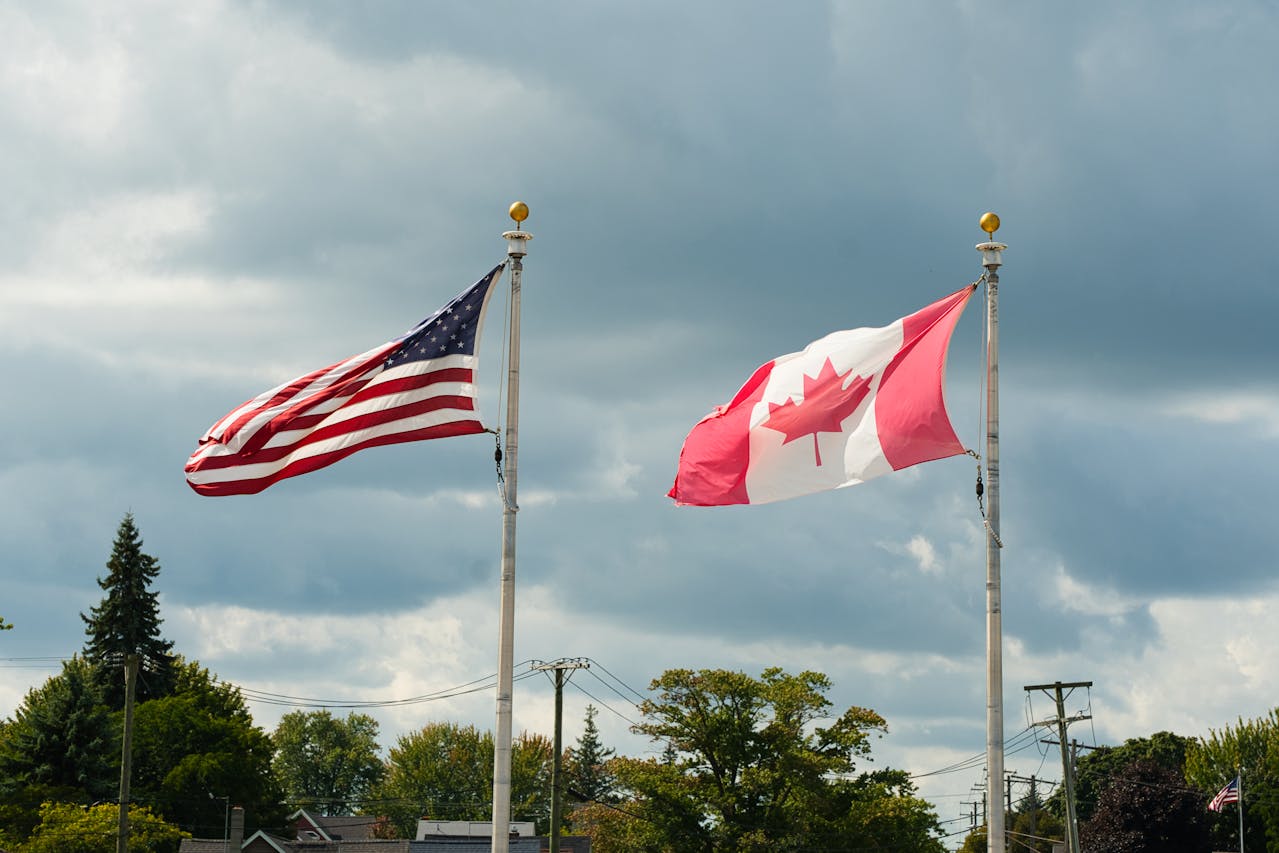
The international response of any American attempt to forcibly annex Canada would likely be swift and severe. (Pexels Photo)
The notion that Canada could become the 51st state of the United States, as U.S. President-elect Donald Trump has proposed, is not only unrealistic, but would also signal the collapse of American global hegemony and the disintegration of the U.S. as a unified nation.
The assumption that Canada could be annexed “peacefully” betrays a fundamental misunderstanding of Canadian nationalism and the broader geopolitical context.
While Canadians are often stereotyped as polite, they are also deeply patriotic and fiercely protective of their sovereignty. Canadians are more nationalistic than their American neighbours and place high value on their institutions.
Any forced integration would invariably be violently opposed by Canada and quickly devolve into a nightmare scenario for both nations.
Seismic international backlash
The international response of any American attempt to forcibly annex Canada would likely be swift and severe. Commonwealth nations could provide economic and logistical, if not direct military, support to Canada.
Public opinion in allied nations like Australia, New Zealand and the United Kingdom strongly support solidarity with Canada via the concept of the CANZUK alliance. This means even hesitant governments would face domestic pressure to act.
Even in the absence of direct international military support, there are a plethora of old and new adversaries of the U.S. that would eagerly enlist in a Canadian foreign legion.
Well-armed and well-financed hostile nations such as Russia, China, Iran and North Korea would undoubtedly seize the opportunity to exploit any new U.S. vulnerability. This could end up escalating conflicts in the Middle East, Taiwan and Ukraine, but other hotspots would likely emerge.
Attacks on U.S. overseas personnel would skyrocket as the North Atlantic Treaty Organization (NATO) forces — if the alliance still existed — would do little to support a now hostile and unpredictable U.S. military pariah. The U.S. will have attacked a fellow NATO member at a time when the alliance was already growing weary of American dominance.
Canada-U.S. warfare
Domestically, the peaceful Canada-U.S. border would be transformed into a staging ground for attacks on American infrastructure and military assets.
While a direct confrontation with the U.S. military would be strategically unwise for Canada, a long-term guerrilla resistance campaign would likely emerge. Canadian military personnel — both serving and retired — would leverage their integration in NATO, the North American Aerospace Defense Command (NORAD) and the Five Eyes network to do this.
Additionally, contrary to what stereotypes might suggest, Canada ranks among the most heavily armed nations in the world. With an estimated 12.7 million weapons in civilian possession, many of these could be repurposed for hit-and-run operations against U.S. positions.
Historical Canadian wartime ingenuity would focus on decimating U.S. physical and cyber infrastructure and communication networks, making occupation unsustainable and prohibitively costly.
The U.S. would find itself engaged not only in an incessant northern insurgency, but also in managing global instability on an unprecedented scale. Its world dominance, already purportedly waning, would be over in a matter of weeks.
A new American civil war
An attempted annexation would not only provoke resistance in Canada, but also ignite widespread unrest in the U.S. Polling consistently shows Americans strongly oppose unnecessary wars and that the U.S. should “mind its own business internationally.”
This public attitude would likely translate into many governors, especially in border states, opposing annexation. Combined with existing partisan divides, this would likely shatter U.S. political unity and inevitably lead to armed secessionist movements.
The U.S. military would also face significant challenges from within. Disillusionment among service members asked to fight against a neighbouring, allied democracy could lead to defections, refusals to serve or even active participation in resistance movements.
History shows that insurrections require only a small, committed percentage of the population — about 3.5 per cent — to have a chance at success, meaning even a relatively small group of armed American dissenters could prove disastrously disruptive.
Compounding the problem for the U.S., tens of millions of Americans are already discontent with their government and view the incoming Trump administration as an existential threat to democracy.
Combined with potential military defections, festering secessionist movements and an already highly polarized American electorate, there are a plethora of potential allies for a co-ordinated Canadian resistance effort. Annexation would thus catalyze a new civil war with intergenerational repercussions.
New sovereignties
Any annexation scenario would also likely lead to the rise of new sovereignties within both Canada and the U.S. For example, Québec’s francophone population would likely ally with Canada initially to preserve its culture and language. A U.S. occupation force’s assurances about future autonomy would surely ring hollow.
There are also Indigenous nations that straddle the U.S.-Canada border, including the Blackfoot Confederacy and Eastern Woodlands Indigenous Peoples. They could seize on the opportunity to assert their own sovereignty and a Canadian government in exile would likely recognize and support these claims to solidify alliances.
Annexation would also require the U.S. to absorb more than 40 million people with distinct political, cultural and economic systems. This would necessitate an enormous expansion of the U.S. police state to manage dissent and secure vulnerable infrastructure. The U.S. military has historically proven woefully inept in pacifying foreign populations.
Canadian expatriates in the U.S. — numbering in the hundreds of thousands — and working in key economic and cultural sectors ranging from Wall Street to Silicon Valley and Hollywood would undoubtedly become vocal opponents of annexation, further stoking domestic unrest. Social media would magnify scenes of resistance and repression, sparking the greatest international public relations crisis in U.S. history.
Assured mutual destruction
Ultimately, the forced annexation of Canada as the 51st American state is not only unrealistic, but dangerously destabilizing. Canadians’ deep nationalism and history of resistance would ensure fierce opposition, while international backlash and domestic unrest in the U.S. would amplify the chaos.
Far from achieving any gain, annexation would fracture U.S. unity, erode freedoms and mark the collapse of its global influence. The costs of managing an extended occupation — both domestically and abroad — would stretch its military and economic resources to the breaking point.
Canadian politeness should never be mistaken for weakness; military history proves that Canada’s resolve is unyielding, and any attempt to undermine its sovereignty would end in mutual destruction for both countries.
George S. Rigakos, Professor of the Political Economy of Policing, Carleton University
This article is republished from The Conversation under a Creative Commons license. Read the original article.




















