

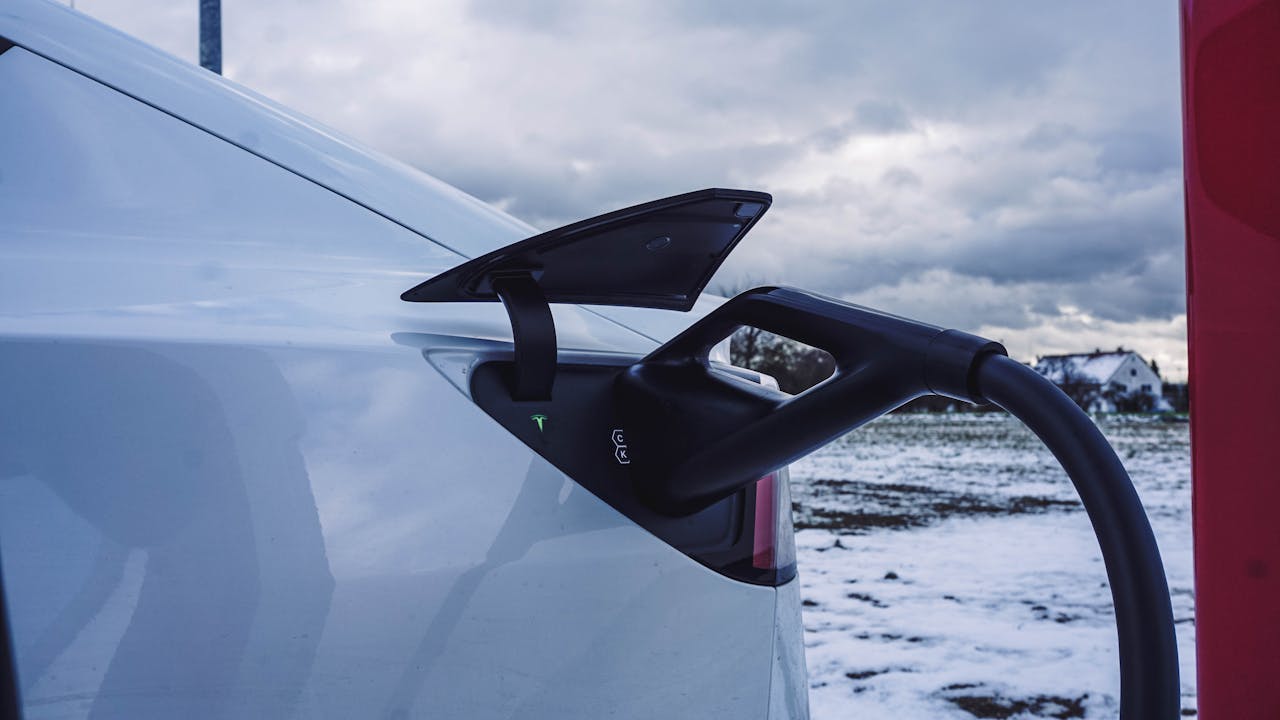
In the first quarter last year, hybrids accounted for 6.8% of all car sales. In the same period this year, their share has almost doubled to 13%. (Pexels Photo)
Just last year, data suggested plug-in hybrid cars were on the way out in Australia. But they’re back. New data shows plug-in hybrids and conventional hybrids combined have overtaken battery electric vehicle sales in the first quarter of 2024. The trend continued during April and May.
In the first quarter last year, hybrids accounted for 6.8% of all car sales. In the same period this year, their share has almost doubled to 13%. Similar trends have been reported in international markets.
This is concerning. Although hybrids are cleaner than traditional petrol and diesel cars, they still burn fossil fuels and produce more emissions than their manufacturers claim. They’re no match for zero-emissions battery electric vehicles.
So why do consumers want hybrids? Let’s find out.
What makes a hybrid?
Two types of hybrid vehicles are proving to be popular with consumers.
- Conventional hybrids: these combine an internal combustion engine with an electric motor and battery. They use regenerative braking to convert energy created from braking into electrical power to recharge the battery. You cannot plug them in – the only way to get energy into the car is by filling them up with petrol or diesel. The advantage is they drive further on a tank of petrol or diesel than a traditional car.
- Plug-in hybrids: these vehicles also combine an internal combustion engine with a larger electric engine and a battery. The difference is you can charge their batteries directly using a power outlet. Plug-ins also use regenerative braking to recharge the battery. They can drive on battery power alone but the fuel engine kicks in when the battery level drops or if more power is required.
Both types of hybrid are cleaner than traditional internal combustion counterparts. But they are not as clean as battery electric. They have been found to run more often on their petrol or diesel engines than their electric motors and produce substantial emissions.
By contrast, battery electric vehicles run only on an electric motor and batteries. They produce zero emissions while driving, and can – if charged off your solar array or green power – be extremely low emissions to charge. You never need to fill up at a petrol station. You can often charge them at home, or at public chargers.
Why are hybrids so popular right now?
It’s not by chance. Hybrids are being heavily promoted by carmakers as a transitional step to cut emissions from transport. Notably, Toyota, the world’s largest carmaker, is sceptical of battery electric vehicles and is instead focusing on hybrids until, it says, public chargers are widespread and electric cars are cheaper.
Plug-in hybrids are particularly popular in Europe. In 2022, they made up two-thirds of sales in Greece and more than half in Belgium, Spain, Italy, and Finland. The average across the European Union was 44%.
Hybrids have also become popular for a number of other reasons.
For one, they are cheaper than battery electric. They’re also cheaper to run than internal combustion vehicles.
But there are other factors at work. Hybrids reassure drivers worried about the range of electric cars. Drivers see the internal combustion engine as a backup. They also have stronger torque and acceleration than traditional cars.
This, for many drivers, is enough to offset their disadvantages, which include a higher purchase price than traditional cars. For plug-in hybrids, there’s another consideration – the large battery often means there’s less boot space, often resulting in no spare tyre. And then there’s the emissions.
Hybrids are not much cleaner
Hybrids – especially plug-ins – have been found to produce more emissions and cost more to run than their manufacturers claim.
Recent real-world tests on a sample of 123,740 plug-ins in Europe showed their carbon dioxide emissions were, on average, 3.5 times higher than the laboratory values reported by manufacturers. Why? Because in practice, plug-ins weren’t being charged and driven in electric mode as frequently as expected.
In the lab, average emissions for plug-ins was about 40 grams per kilometre. When experts tested new plug-in hybrids, they found average real-world emissions were vastly higher – 139 grams per kilometre. That means they’re only 23% lower than petrol and diesel cars, which emit an average of 180 grams per km.

European real world testing has shown plug-in hybrids run much more like fossil fuel vehicles than electric. WLTP refers to standardised laboratory testing. European Commission, CC BY
These test results also show large differences in average fuel consumption. The yearly cost of fuelling plug-ins was nearly double what manufacturers claimed, costing European plug-in drivers on average A$960 more a year on fuel.
In reality, this means plug-in hybrids are not being driven as electric cars – they’re largely driven as fossil-fuel burning vehicles.
What does this mean for Australian drivers?
Hybrids came under the spotlight in 2022, when the Greens and independent senator David Pocock jointly opposed the federal government’s Electric Car Discount Bill – because it included plug-in hybrids in the list of vehicles exempt from fringe benefits tax.
They argued plug-ins are effectively a fossil fuel technology which should not be subsidised. Labor eventually agreed to end the subsidies for plug-in hybrids from April next year.
Labor also committed $14 million to fund a local real-world fuel testing program for 200 models.
The testing began in the second half of 2023. Initial tests of five hybrid models have revealed similar trends to Europe, though not as extreme. Fuel consumption of these models is up to 12% higher than laboratory tests.

These are the early results from Australia’s real-world emissions and fuel consumption testing of hybrids. Grey shows laboratory (WTLP) results, yellow shows real world results. Australian Automobile Association, CC BY
The road ahead
Are hybrids a waste of time and resources? Not necessarily. Many drivers are sceptical of battery electric vehicles, find them too expensive, or are worried about being caught away from a charger. For these drivers, hybrids may make sense.
But we cannot spend too long on these transition vehicles. Electrifying our vehicle fleet alongside boosts to public transport, cycling and working from home can help rapidly cut emissions from transport – a sector whose emissions are steadily growing.
By 2030, the International Energy Agency forecasts the cost of most electric cars will be comparable to their petrol counterparts due to falling prices. Top Chinese brands such as BYD are already approaching this.
As we approach price parity and charging infrastructure becomes more common, it’s likely more and more drivers will feel comfortable leaving fossil fuels behind for good. 
Hussein Dia, Professor of Future Urban Mobility, Swinburne University of Technology
This article is republished from The Conversation under a Creative Commons license. Read the original article.




















