
News
V&A’s decision to loan looted Asante gold back to Ghana has implications for other British museums

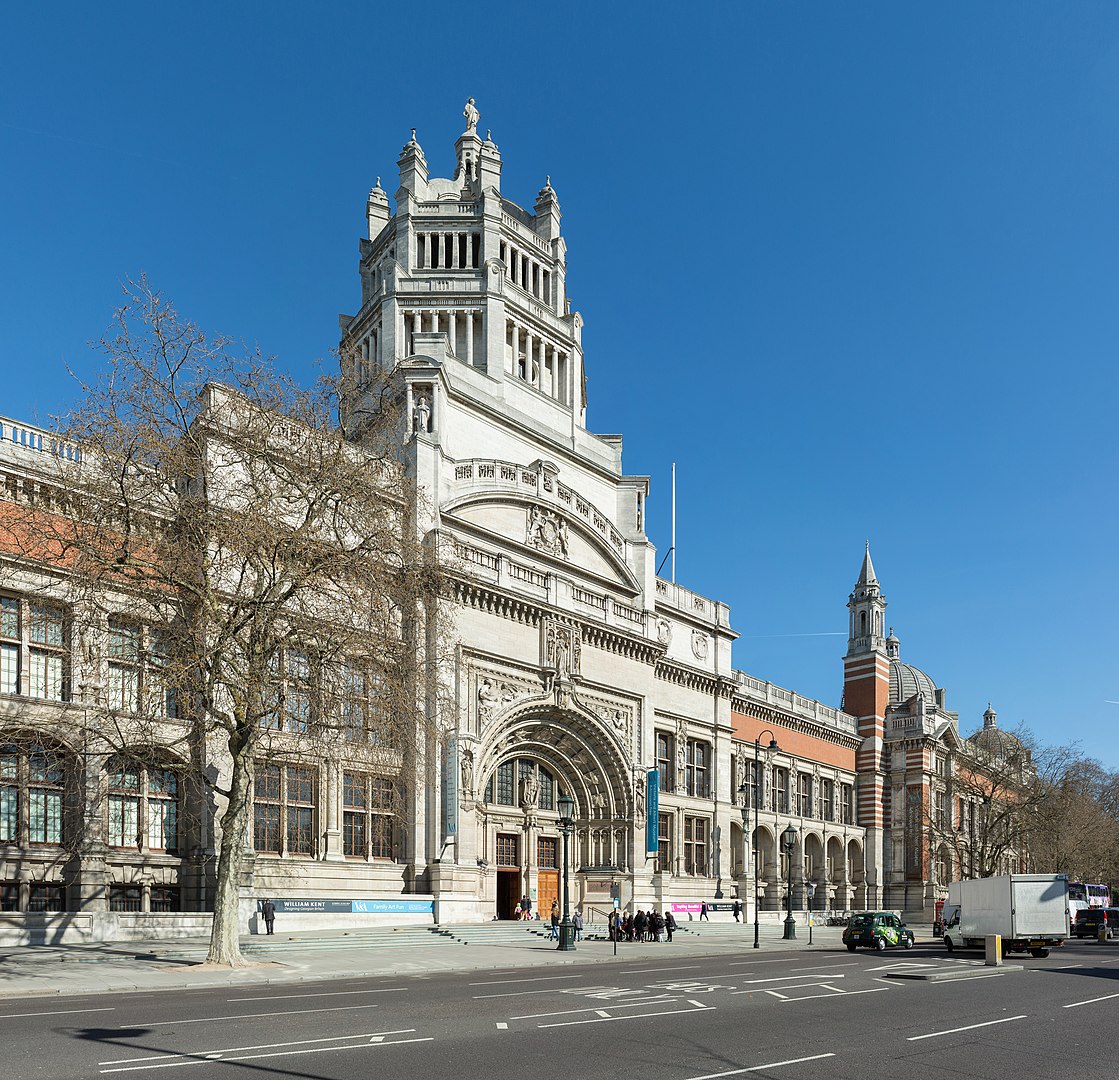
FILE: The southern entrance of the Victoria and Albert Museum in London, England. (Photo By Diliff/Wikimedia Commons, CC BY-SA 3.0)
The Victoria and Albert Museum (V&A) has announced a loan agreement with the Manhyia Palace Museum in the Asante region of Ghana to return gold and silver royal regalia that were looted from the country by the British in 1874 and 1895. The decision was announced on the 150th anniversary of a sequence of wars of aggression, waged by the British empire against the Asante kingdom in Africa’s Gold Coast (modern day Ghana).
This agreement is part of a renewable framework of exchanges agreed not with the Ghanian government but with the current monarch of the Asante kingdom, a constitutionally protected region of the state of Ghana. The exact length of the agreement is unclear but most accounts suggest that this is a three-year deal.
The agreement concerns 17 objects held at the V&A and 15 objects from the British Museum collection. These include a sword of state and a gold peace pipe.
British forces took the treasures when plundering the Asante capital Kumasi during the third and fouth Anglo-Ashanti wars (1873–74 and 1895-96). The looting was an act of opportunism but also served a political function to humiliate the residents of the Asante kingdom.
Today, these artefacts are seen in Ghana as missing parts of the country’s national heritage. They bear great spiritual value for the Asante people.
The director of the V&A, historian Tristram Hunt, presented this loan deal as a template for the solution to the “contested colonial heritage” of items in European museums. Hunt suggested that contemporary Asante goldsmiths could be commissioned to create artworks that would “fill the gap” left in the collection by the loaned artefacts.
The V&A has been at pains to argue that this deal and other similar initiatives do not constitute repatriation agreements. This is important because such an agreement would contradict the National Heritage Act of 1983, which prohibits national museums from repatriating antiquities in their collection.
The agreed framework of exchange allows the state of Ghana to reap the benefits of the temporary return of the Asante treasures without having to make concessions on the question of legal ownership of the artefacts. In short, having the treasures return to Ghana on a loan deal with a regional partner allows the Ghana state authorities to continue arguing for repatriation and restitution.
This is perhaps why Hunt argued that this partnership “allows us to move beyond the Parthenon sculptures debate – a reference to the requested repatriation of several sculptures extracted from the Parthenon in Greece in the early 1800s.
How the agreement might impact other cases
This agreement suggests that since national museums in the UK are banned from returning controversial cultural artefacts to their places of origin, loan deals and dynamic exchanges are the way forward.
The British Museum and the Greek government currently pursue this line of thinking. Despite the recent diplomatic episode in which Rishi Sunak cancelled a scheduled meeting with the Greek prime minister in response to the latter’s comments about the Parthenon sculptures, the Greek government has changed its approach on the Parthenon marbles question.
Officials are now presenting the problem not as one of ownership and restitution but as one of reunification. This means that they are open to solutions along the lines of the Asante case. But the key difference is that in the Greek case the agreement would have to be between two national museums – the British museum and the Parthenon Museum – with the involvement of the Greek state. The extent to which such a solution would be popular with the Greek public remains to be seen.
This deal may have implications for other cases around the world. The other obvious example is that of the Benin bronzes – a cluster of 16th century statues looted in 1897 from the west African kingdom of Benin, now part of the Nigerian state – currently held in the British Museum. Despite the complex Nigerian cultural politics the Asante loan agreement will impact the debate on the status of these artefacts.
“Renewable cultural partnerships” – an elegant term to describe loans – are by no means enough. The elephant in the room is the existing legal framework, forged in period of decolonisation and diminishing western influence, that forbids the repatriation of antiquities.
Over 60 years on from when a ban on repatriation was first introduced, the world is a different place. Big European museums have nothing to fear from repatriation requests and agreements. The enormity of their collection guarantees that there will almost never be a void to fill.

Looking for something good? Cut through the noise with a carefully curated selection of the latest releases, live events and exhibitions, straight to your inbox every fortnight, on Fridays. Sign up here.
Georgios Giannakopoulos, Visiting Research Fellow, Centre for Hellenic Studies, King’s College London/ Lecturer in Modern History, City, University of London
This article is republished from The Conversation under a Creative Commons license. Read the original article.




















