Canada News
Chronically ill and disabled Canadians need a say in health-care reforms

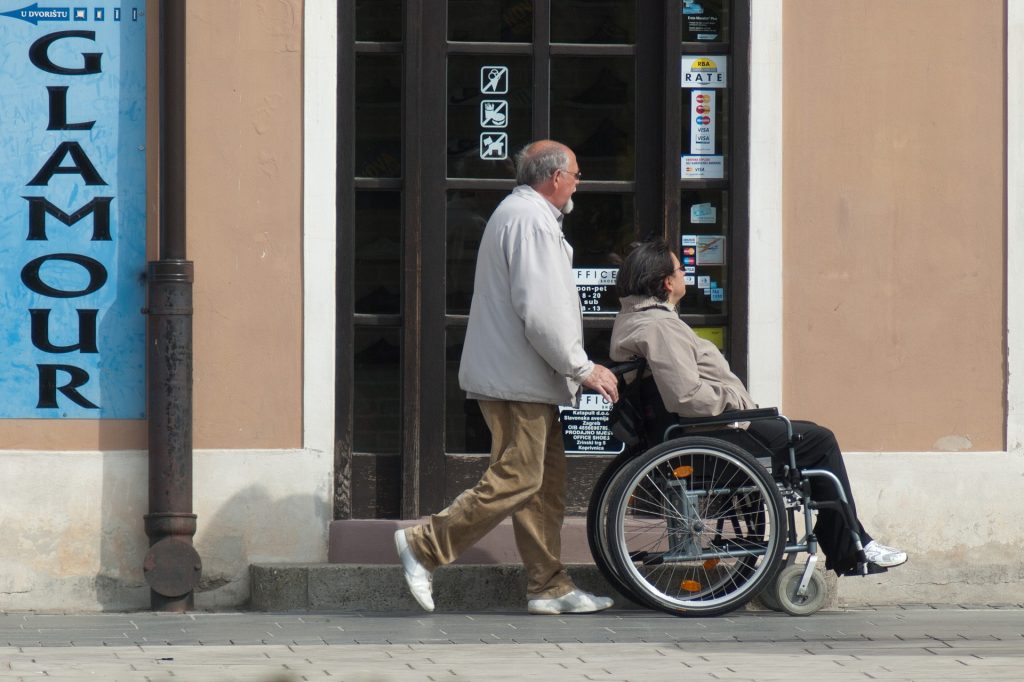
Too many people are harmed by the inefficiencies of the health-care system because their conditions are not considered fatal. (Pixabay photo)
(Version française disponible ici)
Recently, I learned what it meant for a family member to be diagnosed with breast cancer. Overnight, her life turned into a dizzying schedule of doctors’ appointments, surgery, chemotherapy and medication. The hospital became a second home of sorts, its staff moving mountains in their effort to save her life.
Our provinces’ health-care systems know how to take care of (most) people with cancer and other acute health problems that pose the risk of imminent death. It may not always work smoothly or pristinely, but it has the capacity to make life-saving gestures.
Where our health-care network struggles most is when it comes to taking care of the nearly half of Canadians with some kind of chronic pain or illness, and the 27 per cent with at least one disability.
These health conditions may not necessarily lead to the immediate risk of perishing. They do, however, cause a continuously declining quality of life that sometimes makes us feel like yeeting ourselves off this mortal plane.
This includes conditions such as fibromyalgia, endometriosis, chronic depression, PTSD, sciatica, chronic pain and autoimmune diseases such as lupus and multiple sclerosis.
Together, these health problems affect millions more Canadians and cost Canadian society billions more than cancer does, but they garner comparatively little attention, empathy or funding because they are not considered fatal.
It is no coincidence that the health of nations is measured using birth rates, cancer stats, death tolls and life expectancy, but not quality of life. There is always an emergency that takes precedence, knocking people with chronic illnesses further and further down the list.
If we hope to have a public health-care system that takes care of all of us, we need to listen more intently to the people who are most harmed by its inefficiencies: chronically ill and disabled Canadians.
As a person living with multiple disabling conditions, I am intimately acquainted with how systemic failures force Canadians to fly in a medical holding pattern until we are finally sick enough to land effective care.
That’s why I laughed when Canada’s largely white, male Commons standing committee on health said it would conduct a study on women’s health.
Maybe I am overly jaded by my experiences. It took 24 years of doctors’ appointments for my intense pelvic pain to be diagnosed as stage-four endometriosis and adenomyosis, and a near-concurrent 22 years to finally get the X-ray that showed my back pain was owing to a broken facet joint and two slipped lumbar vertebrae incurred during high-school volleyball drills.
Over those decades, I was told that providing me with appropriate care would be too burdensome for the system. Perhaps, they said, all I needed were some antidepressants and a treadmill.
So, I was unsurprised when during the Nov. 29 parliamentary health committee meeting on endometriosis, Liberal MP Marcus Powlowski, a medical doctor by training, jokingly admitted to receiving at most an hour of endometriosis training in school before suggesting to the committee that the condition may be over-diagnosed.
Those who straddle the political and medical realms should know where the cracks are. But so often it is those very people who are least likely to notice or acknowledge them.
Political systems and medical systems mirror each other because they are both founded on, and continually shaped by, entrenched paternalism: our System Daddy likes to be the hero but hasn’t got the patience or capacity to meet our daily needs.
So often, it likes to tell people what’s good for them — socially, medically, educationally, economically — without actually helping them. And to that end, we like to talk about people with disabilities, but rarely with them.
There’s a saying in the disability justice movement: nothing about us without us.
It came after generations of policies and decisions made by people in power who assume they know what disabled people need because of what political and medical systems say about them.
Unfortunately, what those people in power have to say is often disappointing at best, especially in a country where 41 per cent of people living in poverty are disabled, the majority of them women.
Making real systemic change in health care requires that our leaders listen to people with chronic health problems because they are the canaries in the coal mine. Disability is not the exception; it is an everyday part of life.
The reality is that if you’re not disabled today, you might be tomorrow. And even if you never become disabled, you surely know or eventually will know and love someone who is.
That’s why it is in all Canadians’ interest to improve the system for those who live with complex and often misunderstood conditions. We are all at risk of developing health issues that can expose us to inadequate care, inequitable access to help and a declining quality of life.
This article first appeared on Policy Options and is republished here under a Creative Commons license.