
News
India seeks stronger ties with South Asian governments, snubbing ethnic minorities again

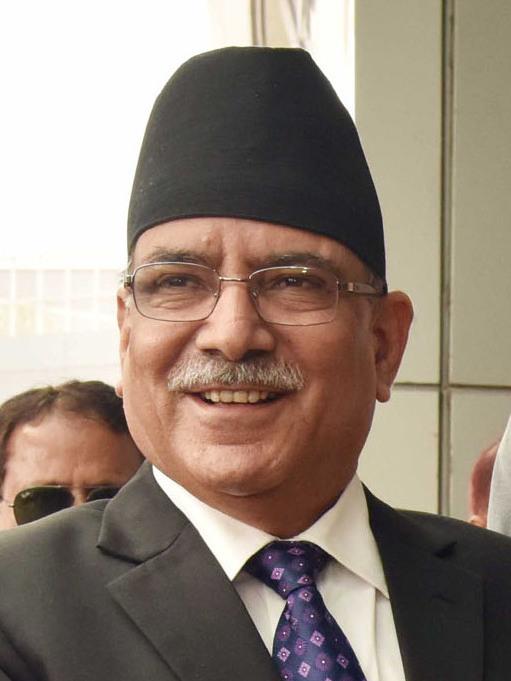
The Prime Minister of Nepal, Mr. Pushpa Kamal Dahal being received by the Union Minister for External Affairs, Smt. Sushma Swaraj, on his arrival, in New Delhi on September 15, 2016. (Photo By Ministry of External Affairs (GODL-India), GODL-India/Wikimeda Commons)
India’s regional politics are shifting. It is seeking to strengthen ties with South Asian ruling elites, including in Nepal and Sri Lanka, while ignoring ongoing ethnic uprisings in those countries in the hopes of securing its geopolitical interests.
The Indian government’s opposition to ethnic rights within its own borders is well-documented. In 2019, for example, Narendra Modi’s government decided to revoke Jammu and Kashmir’s special status as an autonomous region, a move recently upheld by India’s Supreme Court.
Jammu and Kashmir lost their constitution, flag and criminal code, and has been turned into two federally administered territories. India has also failed to manage ethnic conflicts in other territories, including Tamil Nadu, Punjab and Nagaland.
Indian hypocrisy
Ironically, the Indian government backs ethnic movements in other South Asian countries. It supports or has supported the Madheshi movement in Nepal, the Bengali liberation war in Pakistan and Tamils in Sri Lanka.
Because of its domestic record on ethnic rights, however, India lacks any moral authority to support them elsewhere. Instead, it’s now pursuing a policy of pleasing the ruling elites in its neighbourhood, which it hopes will serve its national aspirations to become a regional powerhouse like China.
So far, that policy has had a limited payoff.
India has been making amends to Nepal since 2015, when it imposed a blockade and obstructed the transportation of petroleum products to Nepal. It wanted to force the Nepalese government to incorporate Madheshi demands in the Nepali constitution.
Nepal refused and, instead, tabled its constitution without addressing Madheshi concerns. It also signed trade and transit agreements with China to minimize Nepal’s dependence on India.
In response, India quietly withdrew its sanctions, and has since
refrained from pressuring Nepalese authorities. The ruling elites and Madheshi leaders were critical of India’s interference.
In short, India paid a high strategic price for the blockade.
Past Indian missteps
India has had similar missteps in the past.
It involved itself in the ethnic conflict in Sri Lanka in the early 1980s, irritating both government officials and insurgents. India ultimately stepped aside, and Sri Lanka overcame its ethnic strife with Chinese military and financial assistance.
In 1971, India intervened in the ethnic conflict in Pakistan when Bengali Muslims pursued independent statehood to become modern-day Bangladesh. This support escalated already tense Indian-Pakistani relations.
Even after Bangladesh’s independence, ethnic tensions persisted. Jumma peoples fought against the Bangladesh government’s decision to transfer Bengali Muslims to the Chittagong Hill Tracts, the contested homeland of Indigenous minorities. India supported their struggle by providing refuge to the displaced Jumma people in its Tripura state.
All of these efforts — past and present — to support ethnic movements in neighbouring countries have failed to help India achieve major player status in the region. Instead, they resulted in tense relations with ruling governments for years.
Appeasement efforts
That’s why India is in the process of mending ties with the ruling elites in South Asia. Its support for the governments of Sri Lanka and Nepal gives some hints about its future direction.
Sri Lanka has been facing global criticism for failing to prosecute war crimes and human rights violations that occurred during 25 years of ethnic conflict. The United Nations Human Rights Council demanded in 2023 that the government act promptly to address gross human rights violations.
While India supported previous UN resolutions on this issue in 2012 and 2013, it consecutively abstained from supporting the last two resolutions, indicating a shift in the Indian approach towards Sri Lanka’s ethnic tensions.
Likewise, India has stayed silent about the Madheshi demands in Nepal since 2015, and Indian parliament has passed resolutions that focus on mending ties with Nepal.
These gestures are part of an Indian policy to prioritize the neighbourhood in its foreign relations. Based on this policy, India can be expected to seek stronger ties with other neighbouring countries too.
India’s gains, minorities’ losses?
These initiatives may help India minimize China’s influence in the region, but minorities will lose global backing.
South Asian ethnic movements have not received significant international attention and support.
In the past, most of the support was coming from India. In the absence of Indian backing, ethnic minorities lack substantive global allies, which their governments can capitalize upon to further ignore or oppress them.
Hari Har Jnawali, Instructor, Global Governance, Wilfrid Laurier University
This article is republished from The Conversation under a Creative Commons license. Read the original article.




















