
News
Why Colombia sees legalising drugs as the way forward. Here’s what’s being proposed

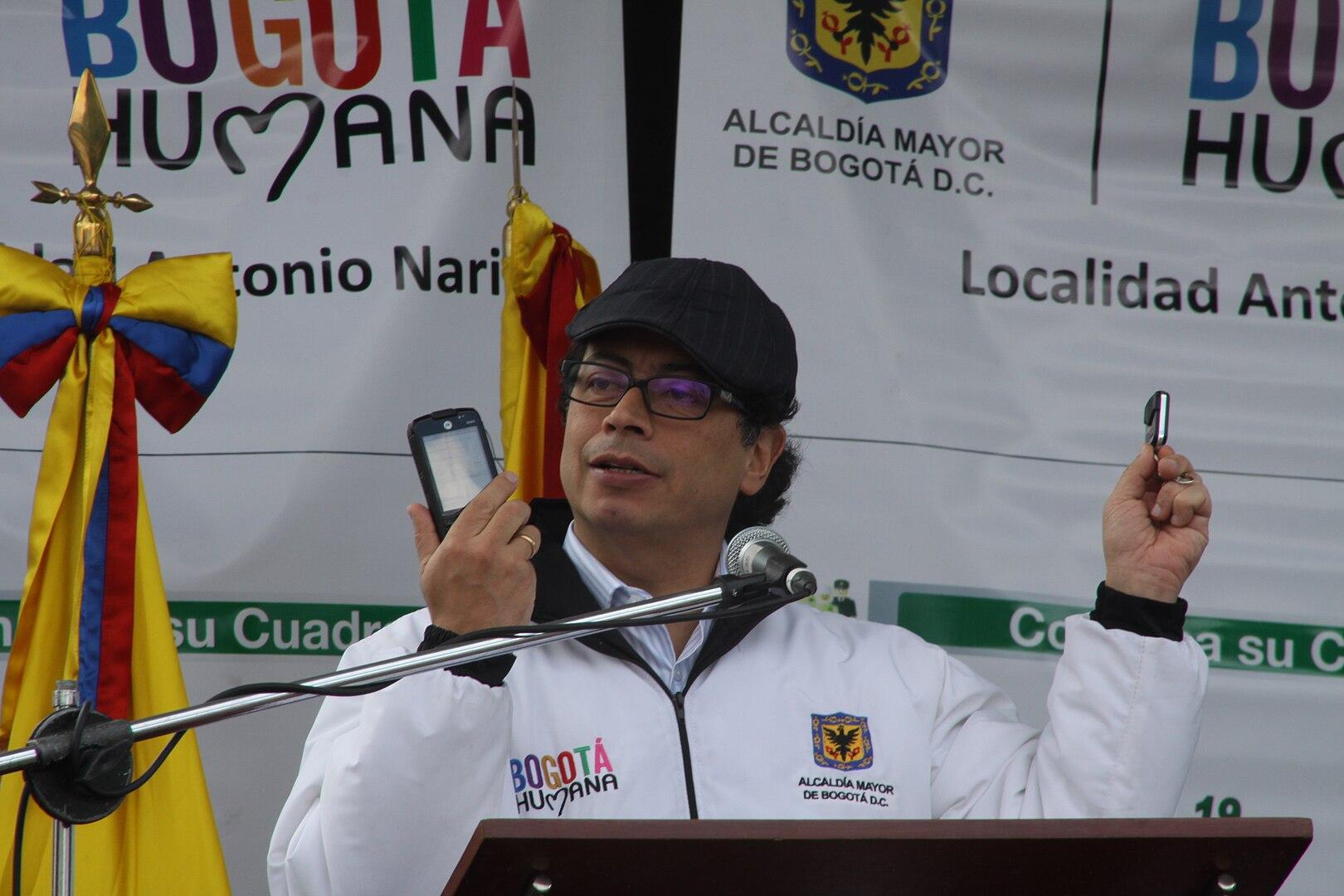
Colombia’s president Gustavo Petro in 2012. (Photo By National Police of Colombia – This image was sourced from the Flickr gallery of the National Police of Colombia., CC BY-SA 2.0)
Another drug war has begun in Latin America. The newly elected president of Ecuador, Daniel Noboa, has declared a state of emergency and the military is being used to tackle violence and drug trafficking in a country that is part of the transnational cocaine smuggling trade.
Ecuador will probably realise what other countries in Latin America have done: military solutions to the illicit drug problem do not work.
For decades, the Colombian government has confronted powerful drug cartels and drug-related violence with a policy guided by a series of UN treaties that prohibit drugs and oblige governments to prosecute recreational drug use and production. These treaties are known as the “drug prohibition regime”. Under the mantle of these treaties, the US has pushed Latin American governments to implement tough laws on drug use, and crackdown on drug cartels in an attempt to tackle drug trafficking and drug addiction.
Governments, such as Mexico, Colombia, El Salvador and Honduras, have used their armies against drug cartels since the 1980s. However, the use of the military in the region, with operations supported by the US Drug and Enforcement Agency, has not prevented an increase in violence in the region. In the case of Mexico, researchers have found a relationship between the deployment of the military in anti-drug operations and the rise of homicides since 2007. Moreover, drug addiction has not reduced in the US (one expected outcome of the “war on drugs”).
Nowadays, Latin America and the Caribbean is the most violent region in the world. According to the 2023 report of the UN Office on Drugs and Crime (UNODC), 34% of the homicides on the planet during 2021 happened in the Americas. Many of these homicides relate to the global war on drugs.
Some Latin American administrations have started to push back against policies that make drugs illegal. For example, Bolivia legalised indigenous production of coca crops in 2011. Uruguay and Jamaica legalised some purchases of cannabis in 2014 and 2015 respectively. Mexico and Colombia are discussing cannabis regulation.
Some of these governments, including Colombia, Mexico and Bolivia, tried to put forward a plan for a new global approach to drug use in 2016 at a UN general assembly special meeting but proponents of this failed to convince other countries to allow all types of drug decriminalisation. However, the assembly did reach an agreement to allow countries to regulate the medical uses of some previously illegal drugs such as cannabis. Now, these countries led by Colombian president Gustavo Petro will call for a new UN meeting to try to get more support for a new approach to the “war on drugs”.
Colombia’s role
Since the early 1960s, Colombia has been the epicentre of the global war on drugs. Infamously known as the centre of production of cocaine trafficked by regional criminal organisations, this country is experimenting with a peace process on two fronts: first, with the guerrillas, and second, with the drug cartels.
Petro was elected with the promise to reduce the endless problem of violence. In September 2023, Petro asked his Mexican counterpart, President Andrés Manuel López Obrador, to help convene a new UN meeting to overhaul the international approach to illegal drugs. Petro was also responding to pressure from global research showing the existing policy was not working. For example, public health experts in The Lancet have argued that making drugs illegal has failed to stem drug use.
There is a longstanding debate about whether proposing the end of drug prohibition – and the war on drugs as a consequence – will stop violence and reduce harmful addiction. From 2011, a group of former world leaders and intellectuals (such as former presidents of Mexico and Colombia, César Gaviria, Juan Manuel Santos and Ernesto Zedillo) have pushed for the end of drug prohibition. The data seems to back up their claims that prosecuting drug consumption and production is not reducing addiction. According to the Global Burden of Disease Data, from the Institute For Health Metrics and Evaluation, since the late 1990s, the number of drug users with drug dependence has increased from 40 to 50 million users yearly around the world, despite the “war on drugs”.
But Petro faces an uphill battle to gather support to challenge the drug prohibition regime. In September 2023 Latin American governments signed the Cali declaration, calling for a UN assembly on the global drug problem to be held in 2025, one year before Petro’s presidency ends. But the US, which is experiencing a fentanyl opioid epidemic, is not likely to be positive about making more drugs legal.
US president Joe Biden is less prone to tackle drug policy with police prosecution and his approach includes alternatives such as treating addicts in health clinics instead of incarceration. If in November Donald Trump wins the presidential election, drug policy is likely to be more militarised than ever. The former president explored using US military force in Mexico to tackle fentanyl smuggling through Mexico.
López Obrador helped to organise the September 2023 Cali conference, but domestically he is not pursuing drug legalisation policies. He has deployed the Mexican military to reinforce drug confiscation of fentanyl after pressure from the US government.
Petro might find an ally in Argentina’s new president, Javier Milei. The new Argentinian president has declared he favours drug legalisation, inspired by his libertarian position. However, Argentina is facing increasing crime rates in some regions and this security challenge might dissuade him from pursing drug legalisation.
Beyond the Americas, some European countries might back the initiative, such as Portugal which decriminalised personal possession of all drugs in 2001. There, possession results in confiscation or a fine, but not imprisonment.
If political factors align, Petro might edge forward with his plans to tackle the global war on drugs differently. However, international tensions and the recent war in Ecuador have complicated the scenario. Hopefully, scientific evidence may force countries to consider new options.
Raul Zepeda Gil, Lecturer in Development Studies, University of Oxford
This article is republished from The Conversation under a Creative Commons license. Read the original article.




















