
News
DOH to kids, parents: Fireworks are not toys

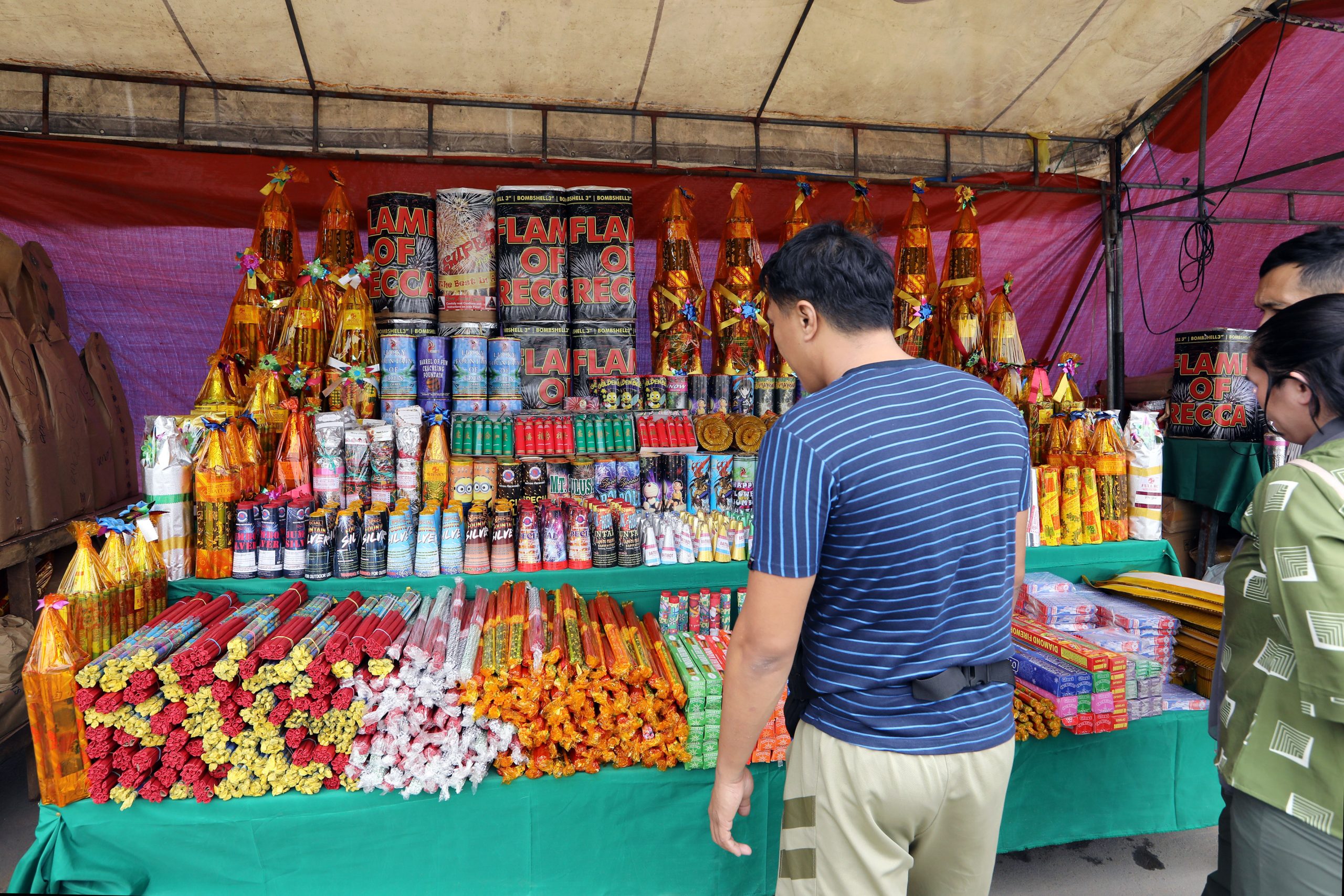
FILE: People check out the various firecrackers for sale at a stall along Marikina-Infanta Highway in Antipolo City on Thursday (Dec. 29, 2022). Many Filipinos have been trooping to firecrackers stalls days ahead of the New Year’s Day revelry. (PNA photo by Joey O. Razon)
MANILA – The Department of Health (DOH) on Wednesday reminded families that fireworks are not toys or things to play around with as it reported new injuries involving two teenagers who lost their fingers.
In its latest case bulletin, the DOH recorded 23 additional fireworks-related injuries (FWRI) ranging from 6 to 55 years old, mostly males, from Dec.
21 to 27.
“The new cases include two new amputations, both involving the illegal Pla-pla lit by male teenagers who lost their fingers,” the DOH said. “One amputation case yesterday was misreported, hence the total number of amputations this season is now six.
”
The DOH reminded the public that parents and older siblings should set an example for the young men in their families to ensure every family member has complete hands and fingers.
Currently, the FWRIs have reached 75 and about 96 percent happened at home and on the streets, mostly by males with active involvement.
The new FWRIs occurred at home and on the streets with 61 percent or 14 cases due to illegal fireworks, and 57 percent or 13 cases with active involvement or those who used/lit the fireworks.
Under the Philippine National Police list the prohibited firecrackers are Watusi, Piccolo, Poppop, Five Star, Pla-pla, Lolo Thunder, Giant Bawang, Giant Whistle Bomb, Atomic Bomb, Super Lolo, Atomic Triangle, Goodbye Bading, Large-size Judas Belt, Goodbye Philippines, Goodbye Delima, Bin Laden, Hello Columbia, Mother Rockets, Goodbye Napoles, Coke-in-Can, Super Yolanda, Pillbox, Mother Rockets, Boga, Kwiton, Kabasi, all overweight and oversized firecrackers and pyrotechnic devices (FCPD), all imported finished products, other unlabelled locally made FCPD products, and other types of firecrackers with other brands/names equivalent to those that are prohibited.
Most of the cases are from the National Capital Region with 30 or 40 percent of the tally; Central Luzon with 9 or 12 percent, and the Ilocos Region with 6 or 8 percent.
Six out of every 10 cases of FWRIs are due to illegal fireworks.




















