
News
The media must stop enabling Trump’s attention-seeking use of fascist rhetoric

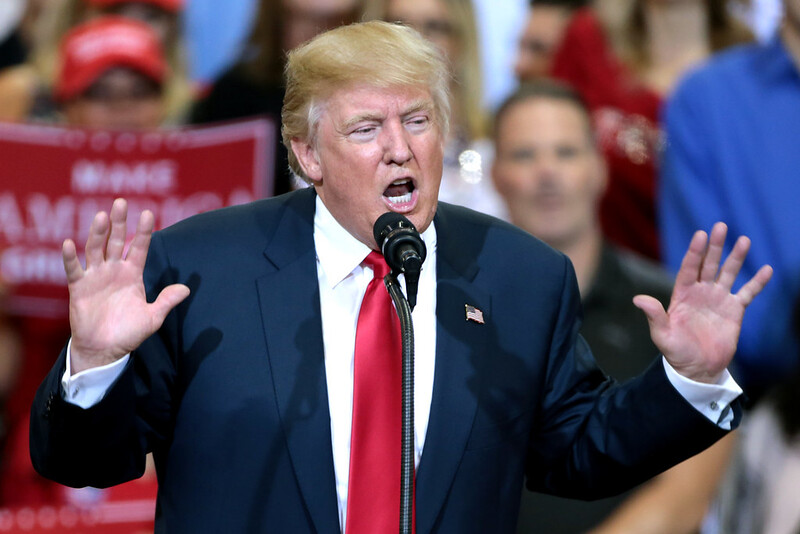
FILE: Former US President Donald Trump at the Phoenix Convention Center in Phoenix, Arizona. (Photo: Gage Skidmore/Flickr, CC BY-SA 2.0)
Donald Trump is campaigning for the presidency of the United States the same way that Adolf Hitler in Germany and Benito Mussolini in Italy campaigned almost 100 years ago.
Trump recently travelled to New Hampshire and delivered a speech that included a pledge to “root out the communists, Marxists, fascists and the radical left thugs that live like vermin within the confines of our country that lie and steal and cheat on elections.”
This was just the latest in a long string of Trump’s dehumanizing, violent rhetoric.
Rhetoric of fascism
The use of the word “vermin” was particularly noteworthy. It was the same language that Mussolini used in his 1927 Ascension Day speech.
Trump’s recent comment about undocumented immigrants “polluting the blood of our country” is in the same style, as are the ideas emanating from his campaign team to deport millions of immigrants and quarantine others in massive camps. This is the rhetoric of fascism, and it inevitably leads to violence.
Trump’s staff and supporters have denied that his rhetoric is fascist. And the media has struggled over how to cover his comments.
Often, journalists will say that Trump is “echoing” fascist talking points. Echoing means to hear a sound again, and the sound that we hear is a copy of the original. The implication is that the echo is not the real thing, or is somehow an imitation of an original, perhaps slightly weaker.
That leads to arguments about whether Trump is truly fascist, giving his supporters and staff an opportunity to use pedantic distinctions as an excuse.
Repetition is powerful
The media should not debate whether Trump is an American Hitler. That allows him to leverage the appeal of Hitler among his far-right base, and provides him with fresh allegations about how the media treats him unfairly. The debate itself plays right into his rhetoric and his followers’ grievances.
Instead, the media, historians and political commentators should make clear that Trump is repeating and amplifying fascist rhetoric — and explain why he’s doing so. Trump’s intent is seemingly to grab the public’s attention and ultimately persuade them to believe that certain people in society deserve to be dehumanized.
Media reporting and commentary should focus on what repeating a word like “vermin” is meant to achieve, and not whether its use makes Trump the new Mussolini.
When journalists report that Trump is echoing fascism and engage in the debate over what constitutes fascism, they end up circulating that rhetoric more widely.
Disseminating this rhetoric, even if it’s aimed at pointing out Trump’s unsuitability for re-election, has consequences. It normalizes the use of dehumanizing, objectifying rhetorical tropes. More importantly, it amplifies those tropes, allowing them to reach ever-wider audiences.
Attention-seeker
Trump’s rhetorical skill is in commanding attention. He knows that repeating fascist phrases will get the media to take notice and will result in the amplification of his message.
Avoiding further amplifying Trump’s fascist messages could go some distance in stopping their circulation, at least through mainstream broadcast outlets. When those news organizations tie Trump to Hitler or Mussolini, they may actually strengthen his appeal with his base, who see him as a stronger leader than he really is.
So how should the media report on Trump’s use of this rhetoric? By making clear he’s repeating fascist phrases in order to dehumanize people and make violence against fellow citizens seem justifiable. That would undermine Trump’s goal of associating himself with Hitler.
Circulating and amplifying Trump’s fascist rhetoric runs the risk of further eroding democracy by normalizing fascist modes of talking about, and thinking about, our political opponents and fellow citizens.
Threatening democracy
In a fundamental way, we all learn to communicate through imitation. Trump wants his followers to imitate his rhetoric so it spreads and becomes a normal feature of our everyday lives.
But democracies cannot survive if it becomes commonplace to talk about our fellow citizens as vermin or infestations or impure. To the extent that the media plays an essential role in the health of democracy, repeating and amplifying fascist rhetoric threatens the very system that makes a free press possible and democratic norms achievable.
Trump has already normalized fascist rhetoric and a disdain for democracy.
The media shouldn’t be unwittingly helping him further advance his fascist goals. Instead of giving his remarks a wider audience, news organizations must plainly point out that Trump uses this language to dehumanize his fellow citizens, create a path to violence and destroy democracy.
Robert Danisch, Professor, Department of Communication Arts, University of Waterloo
This article is republished from The Conversation under a Creative Commons license. Read the original article.




















