
News
Being homeless means not being free − as Americans are supposed to be

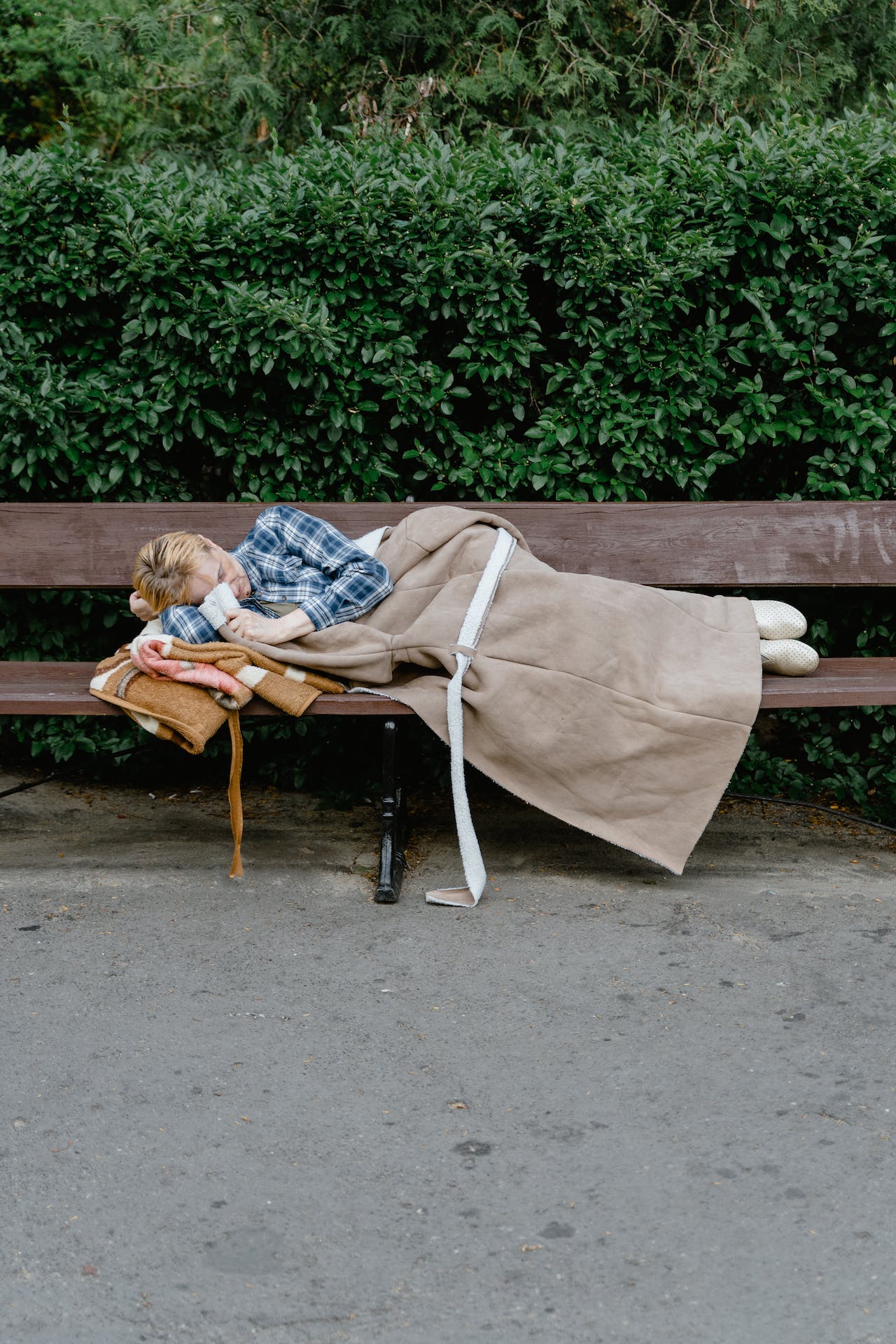
Those who are homeless need shelter to be safe; they don’t have it. (Pexels Photo)
Homelessness is a state of deprivation. Those who are homeless need shelter to be safe; they don’t have it. They need a toilet for basic bodily functions; they don’t have one. They need a shower to keep clean; they don’t have that, either.
Because such deprivation dramatically affects the well-being of people who are homeless, public discussion of homelessness tends to focus on whether and to what extent the government should carry out anti-homelessness policy as a way of improving people’s overall quality of life.
Some philosophers have argued that while homelessness is clearly a state of deprivation, it is also a condition in which a person’s freedom is profoundly compromised.
These theorists insist a society that cherishes freedom – such as the U.S. – must implement anti-homelessness policy as a way of liberating people who lack housing.
Because the number of people experiencing homelessness continues to rise at a record rate, these academic ideas have become increasingly relevant to the real world. I am a philosopher interested in exploring the moral dimensions of homelessness, as well as shining a light on underdiscussed aspects of it. I believe that public debate would benefit greatly from increased attention to the ways homelessness limits Americans’ freedom.
Freedom to be somewhere
Since homelessness is usually discussed in terms of deprivation, the claim that homelessness has much to do with freedom can seem surprising.
Freedom is commonly understood as the ability to do what one chooses without being interfered with. My freedom is limited if you lock me in a cell or place a boulder on the street I want to drive down.
Homelessness, on the other hand, seems at first glance like a condition in which a person is mostly able to do as they choose, albeit without important resources that would make their life better.
The philosopher and legal theorist Jeremy Waldron sees things differently. Waldron says that private property often serves to interfere with people’s choices. If a person wants to walk in New York City from midtown Manhattan to Harlem, others’ property interferes with their ability to choose the most direct route. If a person wants to see a particular Andy Warhol painting, the fact that it is kept at a private residence interferes with their ability to choose to view it.
In itself, this isn’t a problem, as no one should be free to go anywhere and do anything they want. The trouble, says Waldron, comes when a person who is homeless does not have private property that they are able to occupy, free from interference. In such instances, the person will be confined to public spaces, such as sidewalks and parks.
But public spaces themselves are highly regulated through local ordinances, limiting who may use them and for what purposes.
A person who is homeless and sleeps on a public bench will often be told by the police to move. Someone who sets up a tent on a sidewalk will usually have it confiscated. Someone who urinates or defecates in a park can be arrested.
Now you can see why some think that homelessness compromises a person’s freedom. Sleeping and relieving oneself are necessary, life-sustaining tasks.
But as Waldron points out, “Everything that is done has to be done somewhere. No one is free to perform an action unless there is somewhere he is free to perform it.”
Given the way society protects private property and regulates public spaces, it seems that people who are homeless are left with no space at all in which they are free to do the things they need to do in order to live. This is about as severe an infringement on freedom as you can imagine, and Waldron’s point is that a society that loves freedom simply cannot tolerate it.
Anti-homelessness is not just about benevolence and generosity, then. It is about protecting liberty.
Freedom from others
Of course, people who are homeless do sleep and relieve themselves. So, in what sense do they actually lack the freedom to do so?
The political philosopher Christopher Essert argues that Waldron’s analysis should be taken one step further by considering its implications for interpersonal relations.
Since a person who is homeless has nowhere to freely perform life-sustaining tasks, typically they will either seek permission from someone to use their property, use the property and hope to not be noticed or, at worst, seek forgiveness. Either way, they depend upon the grace of another in order to do the things they need to do.
This puts people who are homeless at the mercy of those who have property.
Whether a homeless person has a place to sleep or whether they are arrested for sleeping somewhere without permission is completely determined by the wishes of others. Keesha might sleep on Felix’s couch for a few nights. But as soon as Felix is in a bad mood, he can throw her out. Or Felix might make access to his couch conditional upon her attending church services, supporting his preferred political candidate or performing sexual acts. What she does and does not do is now up to Felix.
Essert connects this set of observations to what is called a “republican” conception of freedom. This way of understanding freedom is less about whether a person is actually interfered with and more about the way they are placed under the arbitrary power of another.
The intuitive idea is that if someone else always has the power to determine your choices, then you aren’t free. Since a homeless person is always on property over which someone else has authority, they are always, writes Essert, “under the power of others, dependent on them, dominated by them, unfree.”
In the U.S. especially, arguments that appeal to freedom are taken very seriously. Even those who insist that it is not the government’s job to ensure everyone a good quality of life believe that it must ensure freedom. Even those whose ears close when they hear calls for charity and beneficence seem to pay attention when freedom is at stake.
By proposing this way of seeing the life of someone who is homeless, then, philosophers have raised the possibility that allowing homelessness to persist contradicts values that are, at heart, fundamentally American.
Paul Schofield, Associate Professor of Philosophy, Bates College
This article is republished from The Conversation under a Creative Commons license. Read the original article.




















