
Canada News
Canada must stop treating climate disasters like unexpected humanitarian crises

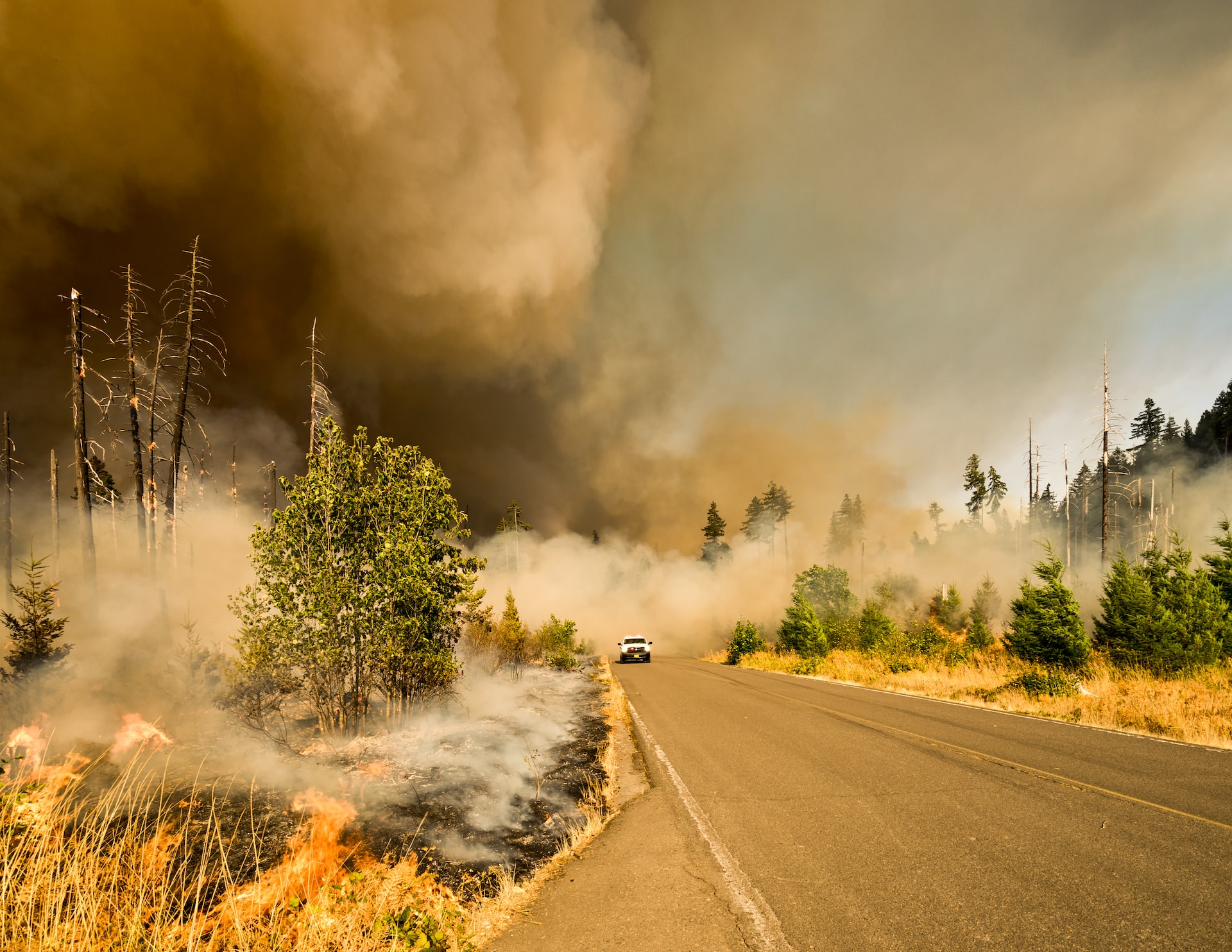
Canada’s response to climate-related disasters follows a familiar pattern — local authorities and provincial and territorial resources become overwhelmed, prompting the federal government and the Canadian Armed Forces to intervene. (File photo: Marcus Kauffman/Unsplash)
Two years after devastating wildfires razed 90 per cent of Lytton, B.C., reconstruction is slow and residents remain displaced and angry about it.
This summer, 65 per cent of the Northwest Territories’ 46,000 residents evacuated, including almost the entire population of Yellowknife, due to a wildfire.
The year 2023, in fact, marked Canada’s worst-ever wildfire season, with nearly 19 million hectares of forest scorched by mid-October.
Unfortunately the cycle of disaster and displacement is not new in Canada, according to the Canadian Disaster Database. It indicates 351 disasters took place from 2000-2020, resulting in the displacement of an estimated 569,224 people and almost $20 billion in costs.
Humanitarian approach
Canada faces a growing list of climate-related crises, and the impact and financial costs of these crises are expected to worsen.
In 2022, Canada saw $3.1 billion in insured losses, more than five times higher than the annual average over 1983 to 2008. This “new normal” includes annual multi-billion-dollar insured losses following increasingly destructive climate-driven events.
Canada’s response to climate-related disasters follows a familiar pattern — local authorities and provincial and territorial resources become overwhelmed, prompting the federal government and the Canadian Armed Forces to intervene.
This reliance on the army as a “force of first resort” for domestic emergencies is costly and logistically challenging.
Essentially, Canada’s approach mirrors the humanitarian approach to international crises. However, these recurring disasters are straining the armed forces’ capacity to respond effectively, leading to questions about the adequacy of how Canada currently handles environmental disasters.
Fundamentally, humanitarianism involves saving lives and safeguarding vulnerable populations. Internationally, humanitarian aid focuses on immediate necessities during emergencies, sometimes in contrast to international development aimed at enhancing long-term human well-being.
Unfortunately, investments in long-term international development have been underfunded for years, while global spending on short-term humanitarian assistance reached nearly US$50 billion in 2022.
Deferring investments
Many governments apparently prefer responding with humanitarian aid after disasters, rather than supporting development activities that would reduce disaster impacts. That’s problematic.
Federal and provincial governments have deferred expensive investments that would reduce the impact of extreme weather events, just as they continue to avoid climate action policies related to urban land use, mass transit and emissions from oil and gas extraction.
This “climate adaptation gap” is the impetus behind Canada’s first National Climate Adaptation Strategy introduced earlier this year. The gap is evident in the ongoing resistance from high-emitting provinces over the federal government’s clean electricity targets and its goal of reaching net-zero emissions by 2050.
Despite the fact that a large majority of Canadians support increased investments in climate action, governments continue to pass the buck on climate policy. Instead, endless debates over carbon pricing monopolize much of the public discussion on climate policy.
In doing so, governments are in effect creating different classes of Canadian citizens. Rural, remote, northern and Indigenous communities located further from southern cities and emergency management resources will remain reliant on the Canadian Armed Forces to come to their aid in times of crisis.
If the frequency of such disasters increases while the army’s capacity to respond is already strained, then these communities will continue to experience humanitarian responses that do little to protect their communities in advance and fail to support reconstruction or strengthen community resilience for the future.
Policy choice
This shortfall in climate adaptation and preparedness is a policy choice that has significant implications for Canadians.
The current humanitarian model for responding to environmental disasters is politically expedient, but it’s neither cheap nor effective. It is also contrary to our understanding of sovereignty.
Sovereignty involves a social contract in which governments pledge to protect their citizens in exchange for their loyalty to its institutions and constitutional order.
Protecting citizens requires defending them when threats arise and preparing for those threats. When governments fail to adequately safeguard their citizens, respond only after crises have already begun or neglect long-term needs, they fall short of their responsibilities.
As residents of one of the world’s wealthiest nations, Canadians should demand greater accountability from their governments to reduce the need for last-minute humanitarian efforts in the face of climate-related disasters in their communities.
Will Greaves, Associate Professor of International Relations, University of Victoria and Yvonne Su, Assistant Professor in the Department of Equity Studies, York University, Canada
This article is republished from The Conversation under a Creative Commons license. Read the original article.




















