
Business and Economy
How secrecy and regulatory capture drove Alberta’s oil and gas liability crisis

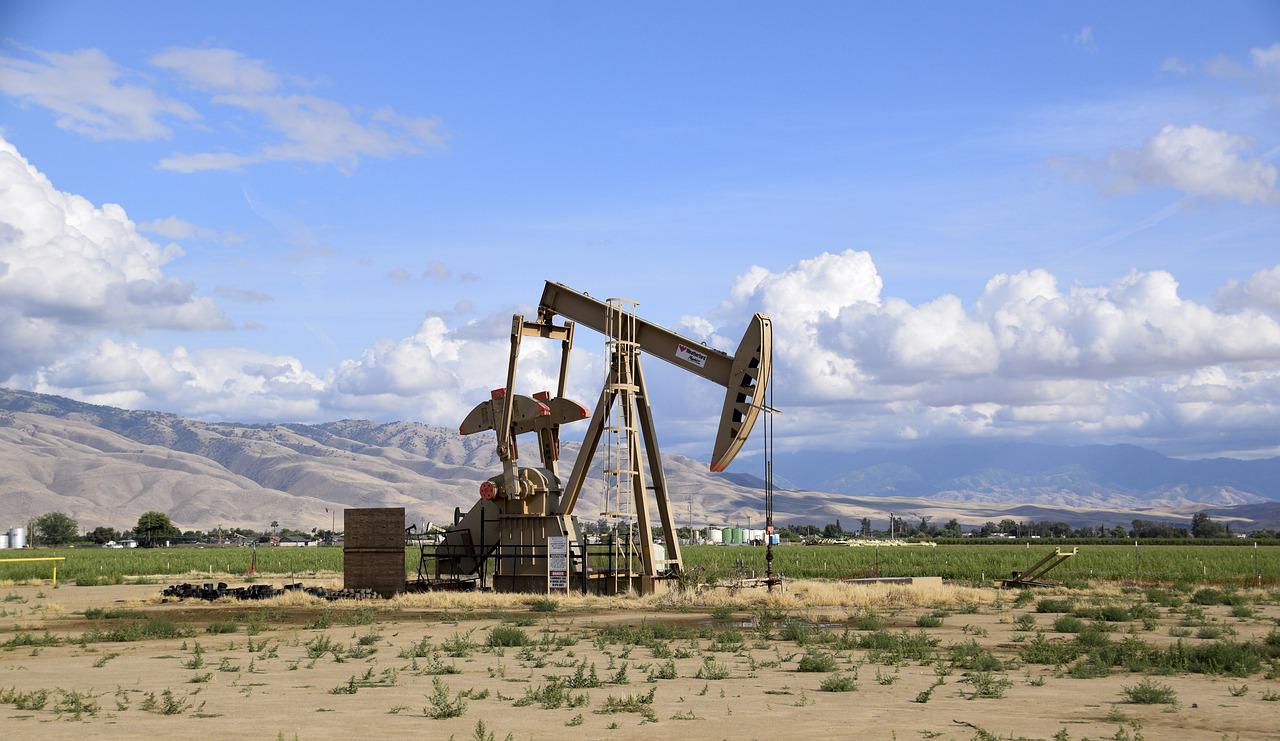
To make matters worse, bankruptcies in the oil and gas industry have left thousands of wells without responsible owners throughout Alberta and Saskatchewan (known as orphan wells). (Pixabay Photo)
“A hustle in the oil patch”, a “dirty legacy”: These are just a couple of the ways that the escalating costs of abandoning and reclaiming non-producing oil wells in Canada have been described.
In a new paper, we look back over 40 years and identify three factors that have led to this unprecedented regulatory failure.
A looming crisis
In Alberta, roughly 237,000 drilled wells will need to be abandoned and the land remediated and reclaimed. About 80,000 of these wells are currently non-producing (referred to as inactive wells), while another 90,000 abandoned wells still await remediation and reclamation.
To make matters worse, bankruptcies in the oil and gas industry have left thousands of wells without responsible owners throughout Alberta and Saskatchewan (known as orphan wells). Inactive wells that have not been properly abandoned and reclaimed pose a significant environmental risk, including from methane emissions (a potent greenhouse gas).
The looming financial and environmental crisis is Canada-wide, but its epicentre is in Alberta.
Alberta’s auditor general has recently reported estimates of $60 billion in closure liabilities in the conventional (non-oil sands) sector. Meanwhile the province holds less than $295 million from industry in security — 0.5 per cent of official estimates.
And $60 billion is the low estimate — leaked documents from a joint industry-regulator project in 2018 estimated liabilities upwards of $130 billion. In other words, taking on these liabilities will at least double and possibly triple Alberta’s current debt of $80 billion.
How did we get here?
Various explanations have been put forward to justify this appalling state of affairs, including downturns in the oil and gas industry. Alberta’s auditor general has shown, however, that the province’s closure liability has grown steadily over the past decades — in good times and in bad.
The slight drop in the number of inactive wells in the past few years is due to the federal government providing $1.7 billion to Alberta, British Columbia and Saskatchewan for abandonment and reclamation work in April 2020. Alberta received the majority of this funding in exchange for a commitment to make regulatory changes and ensure adherence to the polluter pays principle.
Subsequently, Alberta announced a new Liability Management Framework, committed to reducing inactive wells, preventing them from becoming orphans, and ensuring timely reclamation.
At the time, the then-minister of energy admitted that successive governments had long been aware of the growing closure liability problem and notes “we’re looking at decades where no government has been willing to move on this file.”
In our new paper, we show how this massive regulatory failure is best understood as the predictable result of three historic deficiencies in Alberta’s regulatory regime. These failures include a lack of transparency, excessive regulatory discretion and pervasive regulatory capture by industry.
Lack of transparency: The Alberta Energy Regulator and its predecessors have cultivated a culture of secrecy and non-transparency that has stymied accountability, democratic scrutiny and discouraged penalties for non-compliance.
Excessive discretion: Alberta’s governing laws and regulations have been — and remain — far too reliant of the regulator’s discretion which can be co-opted by short-term political, economic, and social pressures that favour business as usual.
Regulatory capture: The Alberta Energy Regulator and its predecessors have a long history of allowing industry to influence the design and administration of the liability management regime. Some illustrations of this regulatory capture include the regulator’s refusal to require adequate security deposits for closure work and grossly underestimating actual closure liabilities.
Because we find that these three core deficiencies persist in Alberta’s new Liability Management Framework, we conclude that it too is unlikely to succeed in ensuring that the polluter pays for the sector’s closure work.
In addition to the $1.7 billion referred to above, Canadian taxpayers have already started paying for closure work on orphan wells. This is the case despite the fact that entities such as Alberta’s Orphan Well Association (OWA) were established on the understanding that industry would collectively bear responsibility for their clean-up.
What started as a trickle of public funds – a $30 million grant from the provincial government in 2009 and a $50,000 contribution from Alberta Energy in 2012 — has ballooned into hundreds of millions of dollars in interest-free government loans to the OWA, with loan repayment scheduled to run until 2035.
A public inquiry
Given the scale of this liability problem and the unprecedented financial and environmental risks it poses to the public, we recommend that a public inquiry — led by principles of deliberative democracy — be struck with a mandate to undertake a full and transparent accounting for policies implemented over the past several decades.
Canada is on the path to having the vast majority of its oil and gas cleanup liabilities become the public’s problem. A public inquiry and serious reform are the only things that can turn things around.
Shaun Fluker, Associate Professor of Law, University of Calgary; Drew Yewchuk, Lawyer at the Public Interest Law Clinic, University of Calgary, and Martin Olszynski, Associate Professor, Faculty of Law, University of Calgary
This article is republished from The Conversation under a Creative Commons license. Read the original article.




















