
News
New ‘healing’ prison in Ireland points to long history of progressive penal reform

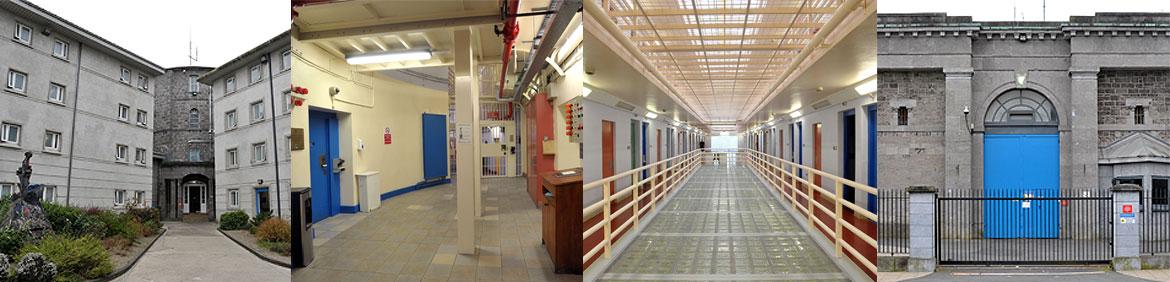
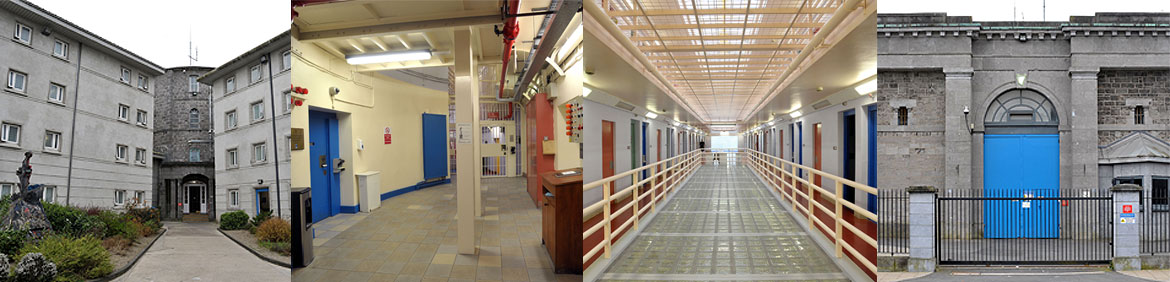
The Limerick medium-security prison. (Photo: Irish Prisons/Website)
Ireland has formally opened the new women’s wing of the Limerick prison.
This expansion was desperately needed. The former wing was at 164% capacity, with women reportedly sleeping on mattresses on the floor of what were already inadequate conditions of a dilapidated 19th-century building.
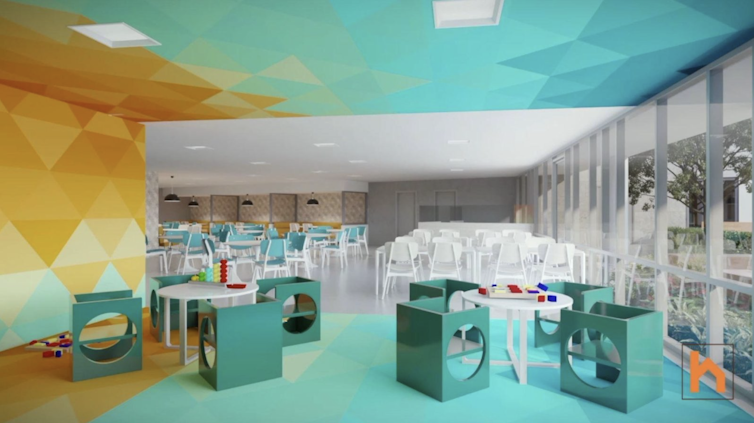
The new build now offers space for 50 women, an increase in capacity of 78%. It also eschews the dehumanising cliches of the traditional prison environment.
Corridors follow gently bending routes into skylight-lit spaces. Rooms are painted in what has been described as a “calming colour palette” of lilac and pale blue.
The windows don’t have bars. The prisoners’ cells look like student accommodation. In place of a prison yard, there is a garden and a children’s play area.
Department of Justice|Louise Brangan, CC BY-NC-ND
Like anyone in the care of the state, prisoners should expect clean and humane living conditions. More than good conditions, though, this design project has been hailed as an “architecture of hope”, providing a healing space in which the prisoners might be “thrive and flourish”.
This is not Ireland’s first experiment in progressive incarceration. My research shows that in the 1960s and 1970s, the nation cleaved to the idea that the best kind of penal system is when there is the least amount of imprisonment.
Policies to avoid imprisonment
Before the 1970s, prison policy in England and much of the western world was underpinned by a rehabilitative ambition. The idea was that by employing the likes of criminologists, social workers and psychologists, prisons could transform people and ultimately reduce crime.
In Ireland, things were a little different. The prison system was managed by the Prison Division, a small group of generalist civil servants who were unconvinced by the new prison professionals and their individuated schemes.
The Division held that prisoners were not inherently criminal. Poverty in Ireland at the time was endemic. Officials assumed that prisoners’ crimes had socio-economic, not pathological, causes.
Contrary to other nations, the Division also worried that prison was, in fact, fundamentally damaging. In 1963, Minister for Justice Charles Haughey stated in an internal memo that “the institutionalisation, psychological deterioration and disruption to family and individual life, consequent on imprisonment”, must be avoided.
This was a widely held view. During a debate on prisons in 1970, TD (member of the Irish parliament) for Fine Gail John Bruton said that prison was “basically unsuitable” as a tool for encouraging people to become responsible members of society.
Wikimedia
Ireland’s humane penal reforms
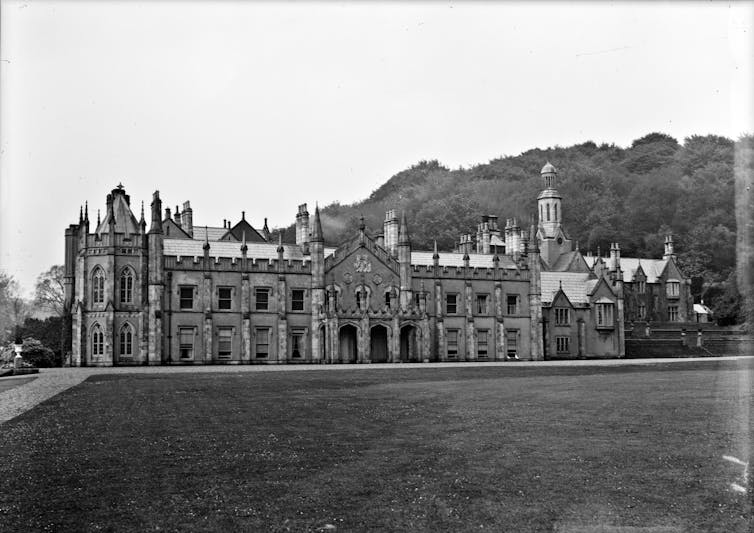
It was in this sceptical spirit that the Irish government would go on to implement significant reform. In 1973, the Republic of Ireland’s first open prison, Shelton Abbey, was established in a former country manor. A maximum of 90 prisoners spent their days tending to the gardens.
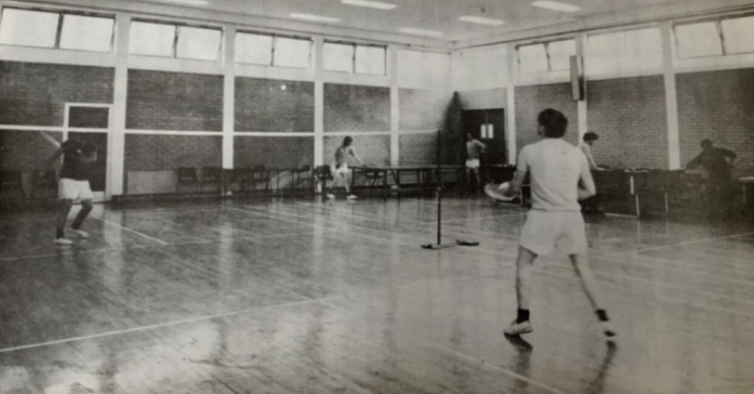
In 1975, the Training Unit, the nation’s first purpose-built prison, opened on the site of Mountjoy prison in Dublin. Modernist in style, it was lauded for its semi-open regime. Its 90 prisoners wore their own clothes and came and went during the day for work and training purposes.
Perhaps the most radical of these changes was the permissive and liberal use of temporary release. Established in Ireland in 1960, this allowed an increasing number of prisoners to return home for days, weeks and sometimes permanently, serving the end of their sentence at home.
None of this was undertaken with the central ambition of reducing crime. That kind of rehabilitation was beyond the prison, they believed. The Division hoped that by being released more frequently and by having access to more engaging activities and less austere spaces, it might help prisoners develop as people, but at least it would reduce the pains of imprisonment. As an internal 1981 Prison Division report put it:
[The aim is] to equip the offender with educational, technical and social skills which will help him to turn away from a life of crime, if he so wishes. However, even if the offender on release does not turn away from a life of crime, those services can be regarded as having achieved some success if they bring about an improvement in the offender’s awareness of his responsibilities to himself, his family and the community.
Success, they concluded, was impossible to measure. Best to be lenient, first and foremost.
Department of Justice|Louise Brangan, CC BY-NC-ND
The damage prison causes
The temporary release system still operates today, though in a much more restricted form. As Ireland changed, so too did public and political attitudes.
By the 1990s, it was felt that prisons in Ireland should do a little more confining and a little less releasing. In 1995, 21% of prisoners served their sentence on temporary release, that figure has now dropped to 9%.
In the decades since these innovative regimes were instituted, a formidable body of research has amassed, proving that the Prison Division’s scepticism of imprisonment’s benefits was well founded.
Being deprived of liberty and cut off from society puts a person at greater risk of poor mental health, homelessness and poverty after imprisonment. It also contributes, as research in Scotland has found, to a greater risk of dying prematurely.
Prison officials in the 1960s and 1970s saw incarceration as inescapably repressive – a site of harm for individuals, their communities and the wider society. Their bold new policies (open facilities; the temporary release scheme) sought to reduce the use and impact of the prison. The Irish Prison Division thought the prison was the problem, not the prisoners.
Limerick’s new women’s unit embodies the opposite idea: that prison can fix damaged prisoners and help reduce crime, all while expanding the size of the prison estate.
The Prison Division was right. Humane penal policy has to be about much more than buildings, design and physical spaces. Using incarceration sparingly – cautiously, leniently – is better for individuals and society at large.
Louise Brangan, Chancellor’s Fellow | Senior Lecturer, University of Strathclyde
This article is republished from The Conversation under a Creative Commons license. Read the original article.




















.jpg#/media/File:%22Church,_Interior,_Arklow,_Co._Wicklow%22_is_in_Arklow,_but_definitely_exterior_(35740556981).jpg)