
News
Donald Trump’s truth: why liars might sometimes be considered honest – new research

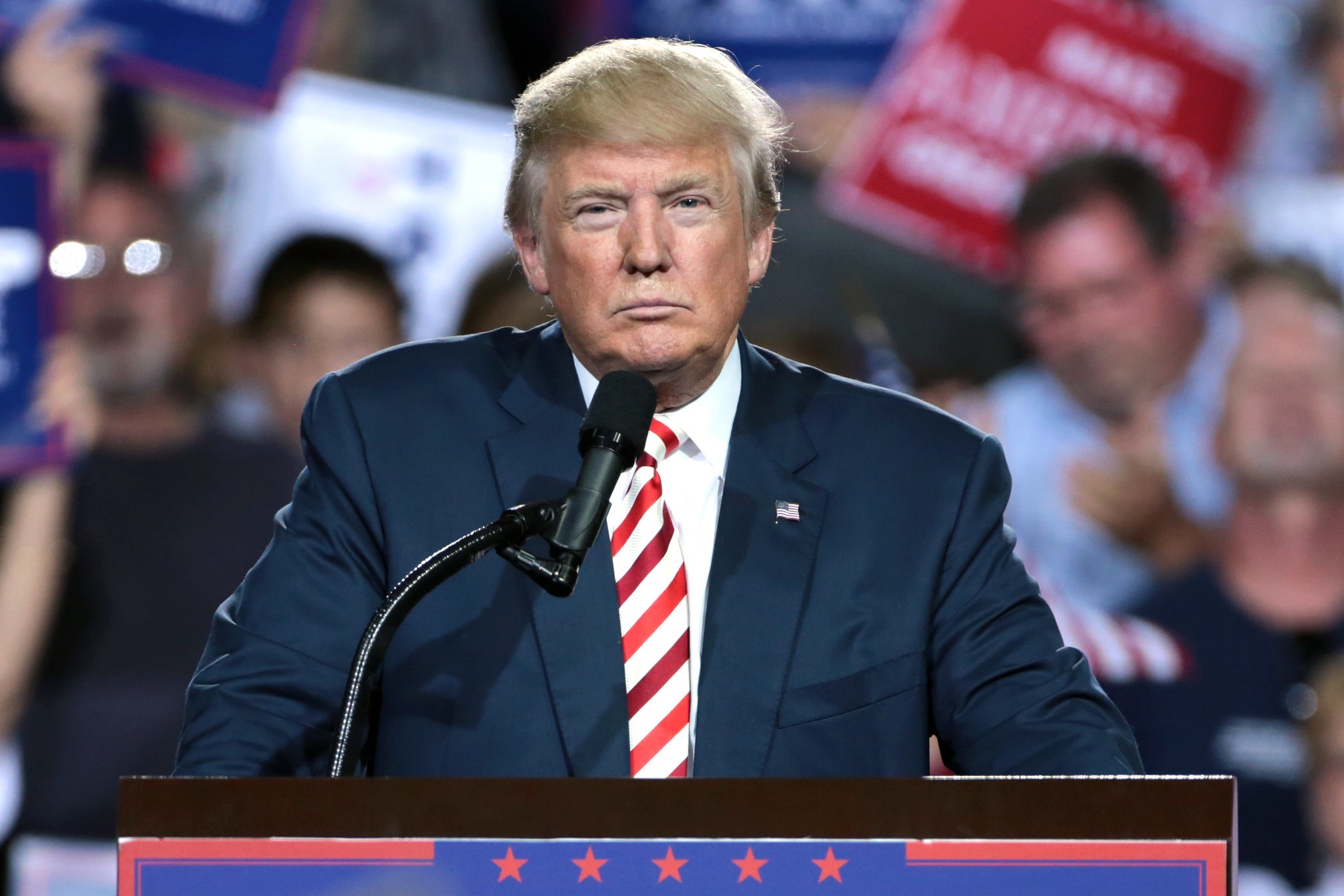
Does Donald Trump believe every word he says? (File Photo: Gage Skidmore/Flickr, CC BY-SA 2.0)
According to fact checkers, Donald Trump made more than 30,000 false or misleading claims during his presidency. That’s around 20 a day. But, according to several opinion polls during his presidency, around 75% of Republican voters still considered Trump to be honest.
It seems incredible that a serial liar – whose biggest lie about the 2020 election results led to a violent insurrection and nearly brought American democracy to its knees – is still considered honest by so many people.
We began to tackle this question in a recent article that examined the political discussions of all members of the US Congress on Twitter between 2011 and 2022. To do this, we analysed nearly 4 million tweets. Our approach was based on the idea that people’s understanding of “honesty” involves two distinct components.
One component can be referred to as “fact-speaking”. This form of speech relies on evidence and emphasises veracity and seeks to communicate the actual state of the world. Most of us probably consider this an important aspect of honesty. By this criterion, Donald Trump cannot be considered honest.
The other component can be referred to as “belief-speaking”. This focuses on the communicator’s apparent sincerity, but pays little attention to factual accuracy. So when Trump claimed that the crowds at his inauguration were the largest ever (they were not), his followers may have considered this claim to be honest because Trump seemed to sincerely believe the claim he was making.
Healthy political debate involves both fact-speaking and belief-speaking. Political ideas often cannot be contested based on facts alone, but also require beliefs and values to be taken into account.
But democratic debate can be derailed if it is entirely based on the expression of belief irrespective of factual accuracy.
One of Trump’s senior advisers, then US counsellor to the president, Kellyanne Conway, coined the phrase “alternative facts” in order to back her boss by persisting with the falsehood about the largest inauguration crowd. This allowed viewers to choose whose “facts” to accept.
Within two years Trump’s senior lawyer and adviser Rudy Giuliani was insisting on national TV that “truth isn’t truth”. He was defending Trump’s feet-dragging over submitting to an interview with special counsel Robert Mueller and the likelihood that Trump’s testimony would conflict with sworn testimony offered by another witness.
These are examples of an extreme form of belief-speaking that goes beyond the bounds of conventional democratic debate.
Whose ‘truth’ are we talking about?
We wanted to know the extent to which either belief-speaking or fact-speaking have become more prevalent in political speech, in this case in Twitter posts by Republican and Democrat members of the US Congress since 2011. To do this we set up and validated two “dictionaries” that captured those two components of honesty. To capture belief-speaking, we used words such as “feel”, “guess”, “seem”. To capture fact-speaking we used words such as “determine”, “evidence”, “examine”.
Using advanced mathematical analysis, we were able to measure the extent to which each tweet represented belief-speaking and fact-speaking, and how the two trended over time.
The figure below illustrates the results of our analysis with examples of tweets that involve a lot of belief-speaking (top) and fact-speaking (bottom), separately for members of the two parties, red being Republican and blue Democrat.
Our analysis first considered the long-term trend of belief-speaking and fact-speaking. We found that for both parties, both belief-speaking and fact-speaking increased considerably after Trump’s election in 2016. This may reflect the fact that topics concerning misinformation and “fake news” became particularly prominent after 2016 and may have resulted in opposing claims and corrections – involving belief-speaking and fact-speaking, respectively.
When we related the content of tweets to the quality of news sources they linked to, we found a striking asymmetry between the two parties and the honesty components. We used the news ratings agency NewsGuard to ascertain the quality of a domain being shared in a tweet. NewsGuard rates the trustworthiness of news domains on a 100-point scale based on established journalistic criteria, such as differentiating between news and opinion, regularly publishing corrections, and so on, without fact-checking individual items of content.
We find that for both parties, the more a tweet expresses fact-speaking, the more likely it is to point to a trustworthy domain.
By contrast, for belief-speaking we observed little effect on the trustworthiness of sources in tweets by Democratic members of Congress. There was, however, a striking association between belief-speaking and low trustworthiness of sources for Republicans: A 10% increase in belief-speaking was associated with a 12.8-point decrease in the quality of cited sources.
The findings illustrate that misinformation can be linked to a unique conception of honesty that emphasises sincerity over accuracy, and which appears to be used by Republicans – but not Democrats – as a gateway to sharing low-quality information.
Why does this happen? Another aspect of our results hints at an answer. We found that belief-speaking is particularly associated with negative emotions. So if Republican politicians want to use negative emotional language to criticise Democrats, this goal might be more readily achieved by sharing low-quality information because high-quality domains tend to be less derogatory of the main parties.
Finally, we also found that the voting patterns during the 2020 presidential election in their home state were not associated with the quality of news being shared by members of Congress. One interpretation of this result is that politicians do not pay a price at the ballot box for misleading the public. This may be linked to their convincing use of belief-speaking, which large segments of the public consider to be a marker of honesty.
Stephan Lewandowsky, Chair of Cognitive Psychology, University of Bristol and Jana Lasser, Postdoc Researcher, Graz University of Technology
This article is republished from The Conversation under a Creative Commons license. Read the original article.




















