
Environment & Nature
Five jellyfish species you may encounter more often in UK’s warming seas

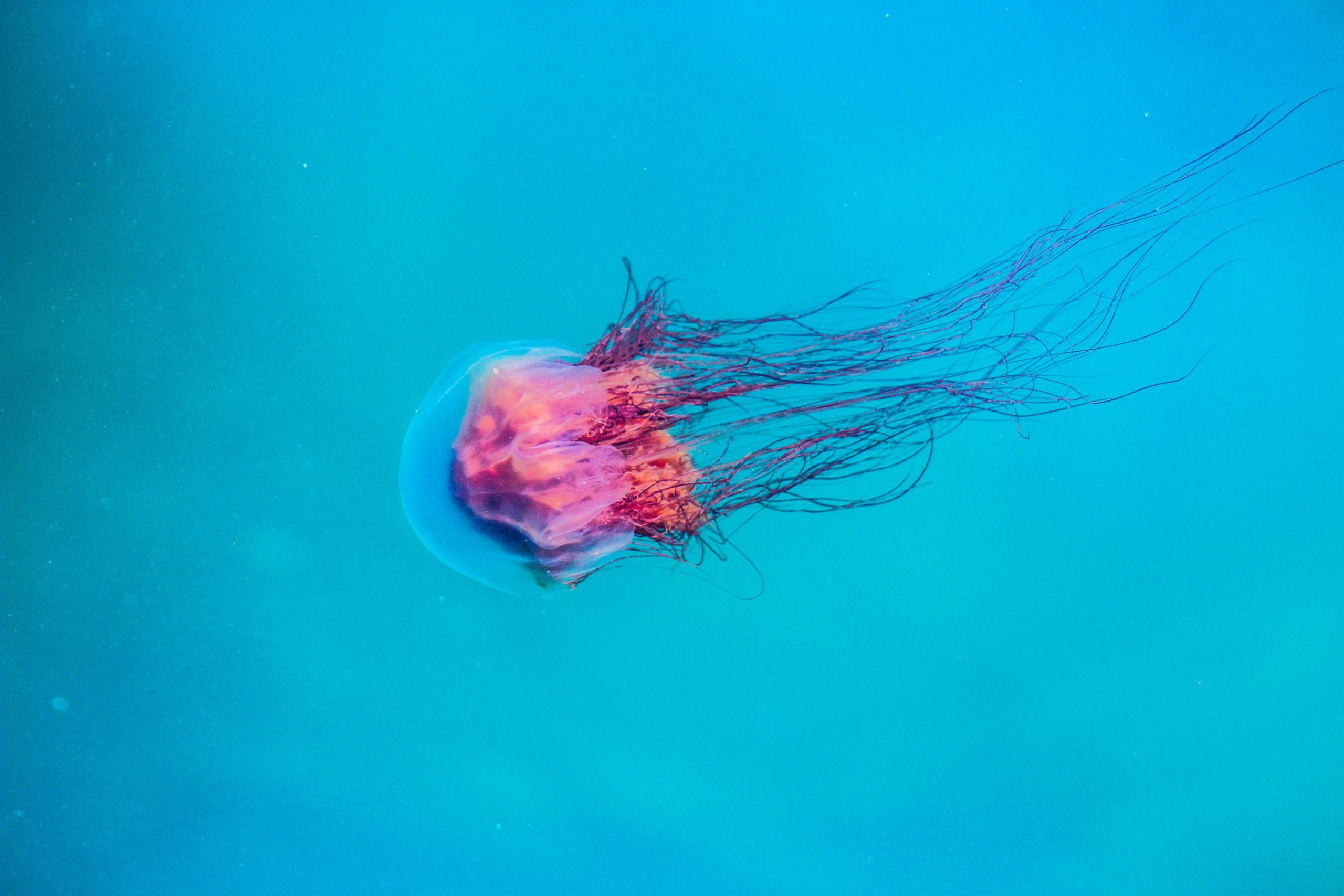
Both the abundance and the diversity of jellyfish around the UK may be on the rise. (Pexels Photo)
While scuba diving off the south-west coast of England this summer, I was lucky to encounter several different species of jellyfish in just a matter of weeks. Many of these, including the compass jellyfish (Chrysaora hysoscella), are already common to UK waters. But among them was one that I had never laid eyes on before – the crystal jelly (Aequorea victoria) – a creature capable of glowing in the dark.
The good news for fellow jellyfish enthusiasts is that both the abundance and diversity of jellyfish around the UK may be on the rise. Warmer sea temperatures mean that jellyfish can now inhabit a wider range of habitats, with some species moving polewards into waters that were once too cold for them.
Research carried out by the Marine Conservation Society (a UK conservation charity) suggests that there is a growing trend in sightings of certain species along the UK’s coastlines. Crystal jellies made up just 1% of UK jellyfish sightings in 2021. By 2022, this had risen to 3%.
Meanwhile, there is evidence suggesting that jellyfish blooms (where the jellyfish population rises suddenly) are increasing in certain regions worldwide, including the UK. This phenomenon is potentially connected to the effects of climate change.
As the waters surrounding the UK continue to warm, it’s possible that people will have even more of an opportunity to watch and admire these diverse and strange animals.
Jellyfish often have an unfairly negative reputation. While it’s true that some jellyfish sting, they never intentionally harm humans. In fact, jellyfish can’t even swim – they are part of the plankton: a group of mostly tiny animals and algae that drift through the sea on currents.
If we observe jellyfish from a safe distance, as we do with other potentially harmful animals, we can admire their intricate body shapes and their rhythmic movement at no risk whatsoever. So, here are five common jellyfish species that people may well see more of as the seas around the UK continue to warm.
1. Compass jellyfish
Compass jellyfish are easy to identify by the dark stripes on their pale bells. These jellyfish can grow to 30cm in diameter, boast long tentacles and are a favourite food for turtles.
This species is often the most commonly reported jellyfish in UK waters. In 2022, almost one-quarter of the UK jellyfish sightings that were reported to the Marine Conservation Society were compass jellies. Compass jellyfish have a very painful sting.
2. Moon jellyfish
Moon jellies (Aurita aurita) have a distinctive appearance. They have relatively short tentacles and are transparent with four purple rings on the top of their bells. They can grow to 40cm in diameter.
These jellyfish can be found almost anywhere in the world, but they are most commonly encountered in coastal waters. Moon jellies have only a mild sting that most people don’t react to.
3. Barrel jellyfish
Barrel jellyfish (Rhizostoma pulmo) are huge compared to most of the other jellyfish species found in the UK. They can grow to up to 1 metre in diameter and have earned the nickname “dustbin lid” jellies due to their size.
Their bell is thick and can be light pink, blue or yellow, but it is usually rimmed with dark purple. Instead of tentacles, barrel jellies have long frilly arms.
Barrel jellies have a relatively mild sting and are even eaten in some parts of the world, including Asia.
4. Lion’s mane jellyfish
Lion’s mane jellyfish (Cyanea capillata) are usually around 50cm in diameter, though they can grow to around 2 metres. These jellies are reddish brown in colour and have both thin tentacles and thick frilly arms.
Due to their size, only young lion’s mane jellies are eaten by fish and turtles. Lion’s mane jellyfish have a painful sting.
5. Mauve stinger
Mauve stingers (Pelagica noctiluca) are small – less than 10cm in diameter – and a beautiful pink or mauve colour. They glow in the dark and can form aggregations, known as a “smack”, that are so large they can clog fishing nets.
Not only do their tentacles sting; their bells can also sting too, which is uncommon among jellyfish.
The UK is fortunate to have such a diversity of jellyfish, only some of which pose any sort of threat to humans. Water-lovers can peacefully enjoy swimming and diving in the sea around the UK if they keep an eye out for jellies and try to avoid touching them – as we should do with all wildlife. Wearing a wetsuit when swimming will also help to prevent stings.
If you do get stung by a jellyfish, rinse the sting in seawater (not freshwater), scrape off any spines and soak in hot water or with hot cloths for at least 30 minutes.
The Marine Conservation Society provides an excellent guide to identifying common UK jellyfish. If you do see a jellyfish in UK waters, whether it’s one of the species above or a more uncommon one, please report your sighting. Jellyfish are hard to catch and count, so this data will improve our understanding of the impact climate change has on UK biodiversity.
The next time you see a jellyfish, don’t be afraid. Instead, take a moment to appreciate its strange, soft beauty.
Abigail McQuatters-Gollop, Associate Professor of Marine Conservation, University of Plymouth
This article is republished from The Conversation under a Creative Commons license. Read the original article.




















