
Environment & Nature
We need urban trees more than ever – here’s how to save them from extreme heat

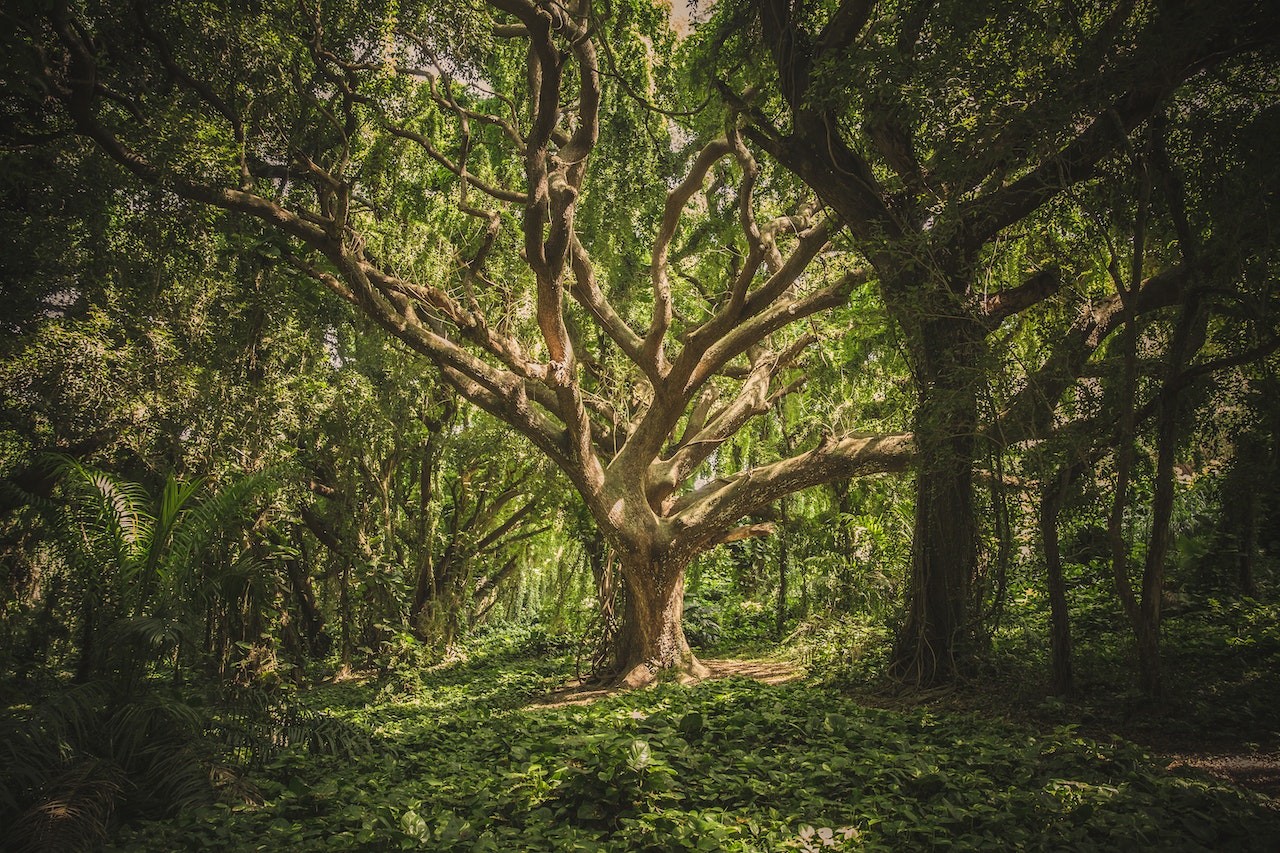
Much like sweating in humans, trees lose water to keep cool. If there’s not enough water, dieback or tree death occurs. (Pexels Photo)
Australians are bracing for a hot spring and summer. The Bureau of Meteorology has finally declared El Niño is underway, making warmer and drier conditions more likely for large parts of the country. And we’ve just watched the Northern Hemisphere swelter through their summer, making July 2023 Earth’s hottest month on record.
We studied the effects of extreme heat on urban trees in Western Sydney during Australia’s record-breaking summer of 2019–20. So we hold grave concerns for the survival of both native Australian and exotic species in our urban forest. These stands of trees and shrubs – along streets and in parks, gardens, and yards – play vital roles in our cities. Trees improve people’s mental health and wellbeing, lower energy use, and reduce temperatures through shading and evaporative cooling.
In previous research, we compared the heat tolerance of different species. Our new research, published in the journal Global Change Biology, assessed their water use. Most of the trees we measured lost more water on hot days than models predicted.
Much like sweating in humans, trees lose water to keep cool. If there’s not enough water, dieback or tree death occurs. This means access to water will be crucial for the survival of our urban forests during the hot summer ahead.
Trees during heatwaves in Sydney
During December 2019 and January 2020, Western Sydney had 12 days over 40℃. The city’s record maximum temperature of 48.9℃ was set on January 4, 2020.
We measured carbon uptake and water loss from urban tree leaves on these hot summer days.
We found some species had low heat tolerance. Those most vulnerable to heatwaves included both native Australian and exotic species. Some trees died, including red maple (Acer rubrum), tulip poplar (Liriodendron tulipifera), coast banksia (Banksia integrifolia) and water gum (Tristaniopsis laurina). Others did not die but suffered to such an extent they were later removed.
In contrast, Chinese elm (Ulmus parvifolia) and ash (Fraxinus excelsior) avoided excessive dieback or death, as did the native weeping bottlebrush (Callistemon viminalis) and kurrajong (Brachychiton populneus).
Why are some species more vulnerable?
Some species are inherently less heat and drought tolerant. For example, species with large, thin leaves are particularly vulnerable. Large leaves have thicker insulating boundary layers and so release heat more slowly. Thin leaves are less able to buffer against overheating on hot, sunny days when the wind lulls.
But it can be hard to predict how individual trees will respond to heat stress. That’s because access to water is important, but changes over time.
Trees with enough water can usually tolerate high temperatures. Microscopic pores in the leaves called stomata open up, allowing water vapour to pass through. This cools the plant down.
In drought, trees conserve water by closing these pores. This causes tree leaves to heat up. When hot days occur during drought, tree leaves can reach lethal temperatures above 45℃.
Our research found most urban tree species –- even those under drought stress –- opened their pores to cool leaves on hot summer days. This results in rapid water loss but may help prevent tree leaves from scorching.
Why is water so important during heatwaves?
As part of the latest research, we grew seedlings in a glasshouse to test how access to water affected heat tolerance. We kept half the plants well watered and exposed the rest to drought conditions.
We found water loss was higher than predicted during heatwaves for all plants.
For well-watered trees and shrubs, water loss was 23% higher than predicted. This kept leaves nearly 1℃ cooler than the air temperature.
Thirsty plant leaves were more than 1℃ hotter than the air temperature.
In urban trees, leaves reached lethal temperatures of 49–50℃ for species with the lowest rates of water loss. But when species with low rates of water loss had access to water, there was little heat damage or scorched leaves. For trees that lost foliage due to overheating, their recovery took multiple years after the end of drought and return of average temperatures.
Preserving our natural air conditioners
Our research shows access to water is crucial for the survival of urban trees during heatwaves.
That means urban greening programs need to find ways to provide trees with enough water when rainfall is unreliable.
It’s worth exploring new techniques such as passive irrigation storage pits and raingardens. Passive irrigation pits capture and store stormwater in underground trenches. This both decreases runoff during storms and provides water for trees. Raingardens also naturally reduce stormwater runoff and use plants to filter pollutants from rainfall.
Providing trees with the water they need to keep cool on hot summer days will not only improve their chances of survival, but also protect people. Cities need trees now more than ever, as these natural air conditioners take the edge off the extremes. 
Renée M Prokopavicius, Postdoctoral Researcher in Plant Ecophysiology, Western Sydney University; Belinda Medlyn, Distinguished Professor, Ecosystem Function and Integration, Western Sydney University; David S Ellsworth, Professor of Plant Eco-physiology, Western Sydney University, and Mark G Tjoelker, Professor and Associate Director, Hawkesbury Institute for the Environment, Western Sydney University
This article is republished from The Conversation under a Creative Commons license. Read the original article.




















