
Environment & Nature
Net zero emissions targets are everywhere – we need to sort the genuine from the greenwash

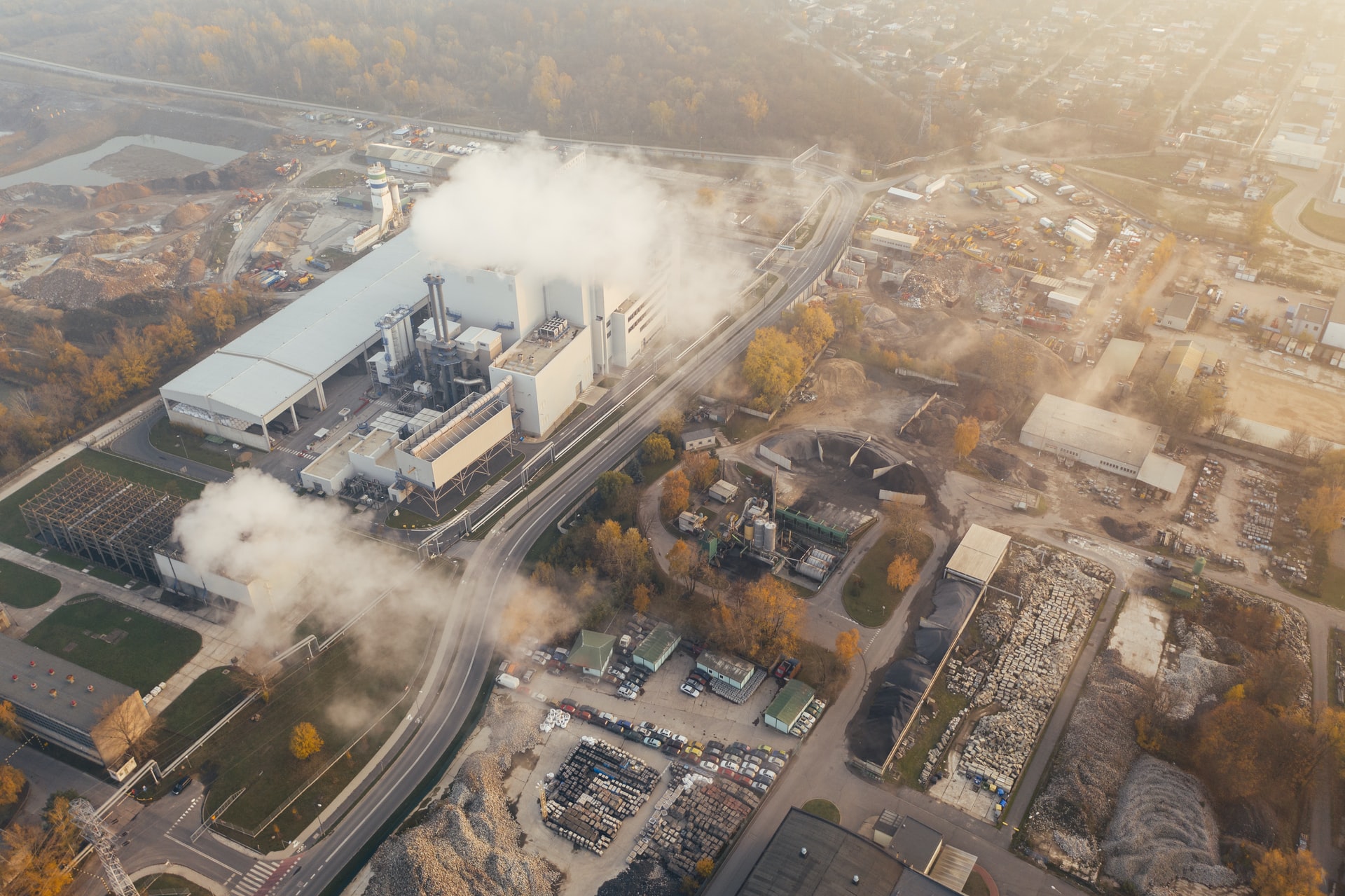
For the first time, all the members of the G7 – who between them account for more than two-thirds of the world economy and over half of emissions – are committed to achieving net zero emissions by 2050. (File photo: Marcin Jozwiak/Unsplash)
The last 12 months have been marked by the misery of the pandemic and the accompanying economic contraction. But for 2021 there are reasons for hope. Not just the welcome news of vaccines that could release us from a cycle of lockdowns, but also the prospect of significant progress in addressing the climate crisis.
The UK government has just published a ten-point plan for getting to net zero emissions, while the election of Joe Biden heralds a welcome change in the direction of US climate policy. For the first time, all the members of the G7 – who between them account for more than two-thirds of the world economy and over half of emissions – are committed to achieving net zero emissions by 2050.
In addition, China has recently announced its commitment to achieve carbon neutrality by 2060 – a major shift from the largest national emitter. Well over 100 countries have announced some kind of net zero commitment, as have over 1,500 companies, representing US$11.4 trillion (£8.6 trillion) in revenue.
However, the profusion of net zero targets from countries, cities and businesses is outpacing guidance on best practice. Put plainly, we should be sorting the genuine from the greenwash. With colleagues, we have developed the minimum criteria – or “starting line” – for the UN-backed Race To Zero. Through this campaign, over 2,000 organisations have committed to “four Ps”: not only to pledge net zero, but to set a plan to deliver it, proceed with immediate action and publish their progress.
We have also offered principles to help forward-thinking organisations navigate the tricky terrain of compensating for their own emissions by paying for climate action elsewhere, known as carbon offsets. At the moment there is a menagerie of different offsets on offer, generally cheap and with real risk of not adding genuine benefit to the climate. Not only do offset markets need to squash these risks if they are to continue, they also need to shift towards permanent CO₂ removal to be net zero compatible.
What the world needs now is pace runners to show how net zero should be done, and referees to call out the cheaters and laggards. Finish lines are only worth the action they drive. There is much more to do to help leaders in politics and business understand what it really means, and what it will take to get there.
Many of the required actions are clear. And, as Joe Biden and many others have observed, there is an opportunity to “build back better” – directing the stimulus needed to get the economy back on its feet in a way that also enables a more sustainable society.
In the UK, we have worked with a group of MPs across parties to develop a ten-point plan of our own, which would drive towards net zero and rebuild post COVID-19. Published shortly before the government’s strategy, it includes measures such as overhauling buildings to cut energy waste, supporting CO₂ removal, aligning corporate finance, reskilling workers and engaging society with a clear net zero narrative.
But there remains a lot of work to properly define net zero and get us all the way there. For one thing, the “net” in net zero may be doing a lot of heavy lifting. We may be optimistic about fully carbon-free electricity and road travel by 2050, but complete zero would also require an end to any emissions from international travel, agriculture, and the making of cement and steel.
More likely, net zero will involve removing greenhouse gases from the atmosphere to balance out some residual emissions. Getting the balance right between action on removals and emissions will be critical.
Reaching net zero by 2050 will also need a step-change in global cooperation. Currently, most net zero targets have been set in places with the greatest responsibility for past emissions, such as Europe and the US. That is entirely as it should be.
But global net zero will require effort everywhere, and the historically industrial countries by no means have a monopoly on good ideas. Consider the fact that the only two nations to have already achieved net zero are Suriname and Bhutan.
We’re part of a new initiative, Oxford Net Zero, that will draw on a wide range of expertise to assess and advise on what will be a defining redirection of resources over the coming decades. 2021 should be the year in which we deliver not just a commitment to global net zero, but also a plan that will enable us to achieve that ambition. As we struggle through a winter in lockdown, there is much to be gloomy about, but we can hope – and plan – for a brighter spring.
Steve Smith, Project Manager, Greenhouse Gas Removal Hub, Smith School of Enterprise and the Environment, University of Oxford and Tim Kruger, James Martin Fellow, Oxford Martin School, Environmental Change Institute and Institute for Science Innovation and Society, University of Oxford
This article is republished from The Conversation under a Creative Commons license. Read the original article.





















