Lifestyle
Bringing ‘Poogie’ Home: Hospice In The Time Of COVID-19

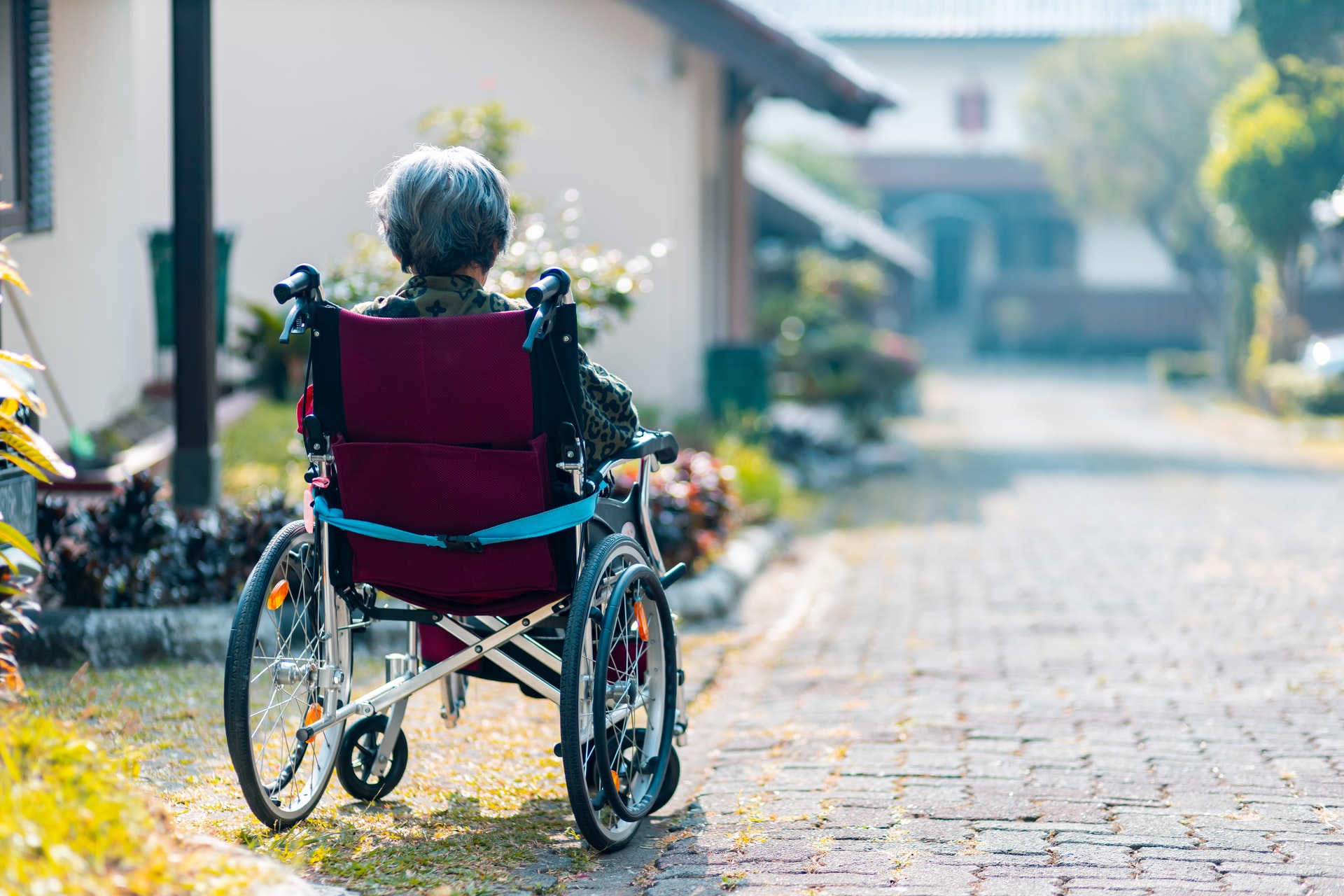
Her request came as hospital patients around the world were dying alone, separated from their loved ones whether or not they had COVID-19, because of visitation restrictions aimed at curbing the spread of the virus. (File Photo: Steven HWG/Unsplash)
After she landed in the hospital with a broken hip, Parkinson’s disease and the coronavirus, 84-year-old Dorothy “Poogie” Wyatt Shields made a request of her children: “Bring me home.”
Her request came as hospital patients around the world were dying alone, separated from their loved ones whether or not they had COVID-19, because of visitation restrictions aimed at curbing the spread of the virus.
Bringing home a terminally ill patient with COVID-19 bears extra challenges: In addition to the already daunting responsibility of managing their loved one’s care, families must take painstaking precautions to keep themselves safe.
Julia Shields, 53, one of Poogie Shields’ four children, said she had reservations about the risk of infection and how it might affect her family’s health and ability to care for her mother. “I didn’t want to bring my mom here, and have it where we’re all of a sudden collapsed in bed ourselves and can’t give her pain medicine and can’t take care of her,” she said.
But she and her siblings were determined to honor their mother’s wishes. So they stocked up on personal protective gear and converted the mudroom of Julia’s Greenwood, Virginia, home west of Charlottesville into a solarium where her mother could be closer to family.
Julia said she wasn’t sure how long her mother would survive; it could have been a few days or even a few months at her home. “She’s such a fighter,” she said.
Poogie Shields, a former guidance and addiction counselor, had an appetite for adventure, be it camping on the Appalachian Trail or moving her family to Paris for a year while writing a master’s thesis. After raising her children in Virginia, she set off to do volunteer work, helping homeless teenagers in Florida and pregnant women facing addiction in Washington, D.C.
But over the past 20 years, Parkinson’s disease gradually limited what she could do, and three years ago she moved into an assisted living community in Crozet, Virginia, about 5 miles from Julia’s home. At first, she walked all over the campus, taking yoga classes and playing trivia with friends. But in recent years, she could manage only short distances with a walker, and Parkinson’s, a progressive nervous system disorder, was affecting her voice, according to her daughter.
“She was the person who had the most interesting thing to say in the room,” Julia said. “It was sad. You just couldn’t hear what she had to say.”
In mid-March, as the pandemic spread, Shields spiked a fever and got tested for the coronavirus. On March 22, while self-isolating and awaiting her test results, she broke her hip and was taken to the UVA Health System University Hospital.
In the hospital, a rapid-results test came back positive for COVID-19.
The coronavirus wasn’t killing her: Her symptoms had largely subsided, and she wasn’t in respiratory distress, said Dr. Lily Hargrove, a private practice physician who had treated Shields for 15 years and advised her family.
The biggest problem was her hip. Surgery was an option, but Shields had already endured “an excruciating loss of independence” over the past two years, Hargrove said. Recovery from surgery — two to three months in a rehab center with no visitors because of efforts to slow the virus in most facilities — “would have been a nightmare,” Hargrove said, and would not have returned her to normal functioning. She said she and Shields had reached an understanding during the past year that her disease had progressed so far that “we were beyond the point of fixing things.”
Julia and her siblings consulted a palliative care specialist and decided to pursue hospice. The hospital and hospice staffs told the family “this was not to be taken lightly — not only her dying, her potential pain, and also us getting sick,” Julia said.
The family signed up with Hospice of the Piedmont, which is one of about 75 community-based, not-for-profit hospices in the National Partnership for Hospice Innovation (NPHI). Dr. Cameron Muir, NPHI’s chief innovation officer, said most hospices in the group have treated or prepared to treat COVID patients, despite the added risks for workers.
Many hospices are facing shortages in staffing and protective equipment due to the pandemic, prompting concern from some advocates that patients won’t get the care they need. Muir said hospices in his group have bulk-ordered protective equipment together.
With the pandemic, most NPHI hospices are seeing an increase in the number of people they’re caring for at home, Muir said, because hospitals are “eager to get people with advanced illness home if possible” to make room for COVID patients.
“Absolutely the safest place for frail elderly without COVID is in the home,” said Muir, who is also chief medical officer of Hospice of the Piedmont, and “if you’re COVID-positive, the best place to be quarantined is at home.”
Hospice of the Piedmont has shifted to telehealth when possible and has stocked up on protective gear so that staff and families can safely treat COVID patients, said CEO Ron Cottrell.
While the hospice gathered equipment, Julia and her family set to work creating a sterile-yet-welcoming solarium in her home. They cleared out the raincoats and lacrosse sticks from Julia’s mudroom. They rolled in a hospital bed next to a window overlooking the deck and hung a picture Julia’s daughter had painted.
They filled the windowsill with fresh daffodils. Julia’s husband and two children, 18 and 20, went to stay at a friend’s empty house, while one of her sisters moved in to help her care for their mother.
On March 25, Poogie Shields came home, sedated with pain medication. Out the window, she could see a redbud tree in bloom and, soon, the faces of her visiting grandchildren and other relatives.
Julia, a tax preparer, and her sister, an archaeologist, got into a rhythm of suiting up like hospital employees — in scrubs, gloves, shoe covers, masks and eye protection — every time they entered the room.
Their time together was peaceful, Julia said. Other family members hung out on the deck, 6 feet apart, just outside the window. Her sister brought an iPad to coordinate video calls and read aloud dozens of emails and cards.
“There was a fairly reasonable feeling of normalcy,” Julia said.
Over the course of several days, Poogie Shields became unable to eat, drink or swallow medication. With Hargrove’s advice, Julia and her sister managed her fentanyl patches and slipped morphine under her tongue.
As her mother began to lose awareness, Julia softly sang Episcopal hymns — “Abide With Me,” “Breathe on Me, Breath of God” — to comfort herself and her mother, just in case she could hear.
Poogie Shields’ last day “was very peaceful,” Julia said. “It was such a beautiful day.” Relatives had all come by to see her. There was “no anxiety about anything that we needed to figure out,” no last unburdening of unresolved feelings.
Julia said she and her sister were with their mother as she took her last breath at 8:30 p.m. on March 28. Hospice staff came to the house about three hours later. In the meantime, Julia said, “nothing needed to be done. It was just very calm.”
Hargrove said that in her 20 years of practice, “I’ve never had a patient die with such reported ease and grace.”
“The two daughters were extraordinarily brave,” she said. “They were committed to honoring their mom’s wishes.”
After their mother’s death, Julia and her sister disinfected the house before Julia’s family moved back in. No one in the family has become sick with COVID-19.
For other families, bringing COVID patients home might not be possible, especially if someone in the house is at a higher risk of serious complications from the virus, Hargrove noted.
“I would hate to have someone who was unable to bring someone home, who was dying of COVID-19, to think that they had somehow failed that person,” Hargrove said. “I would ask that people find grace and compassion for themselves if this is not available for them.”