Canada News
Anxiety high as Canada, U.S. prepare to turn away casual travellers at midnight

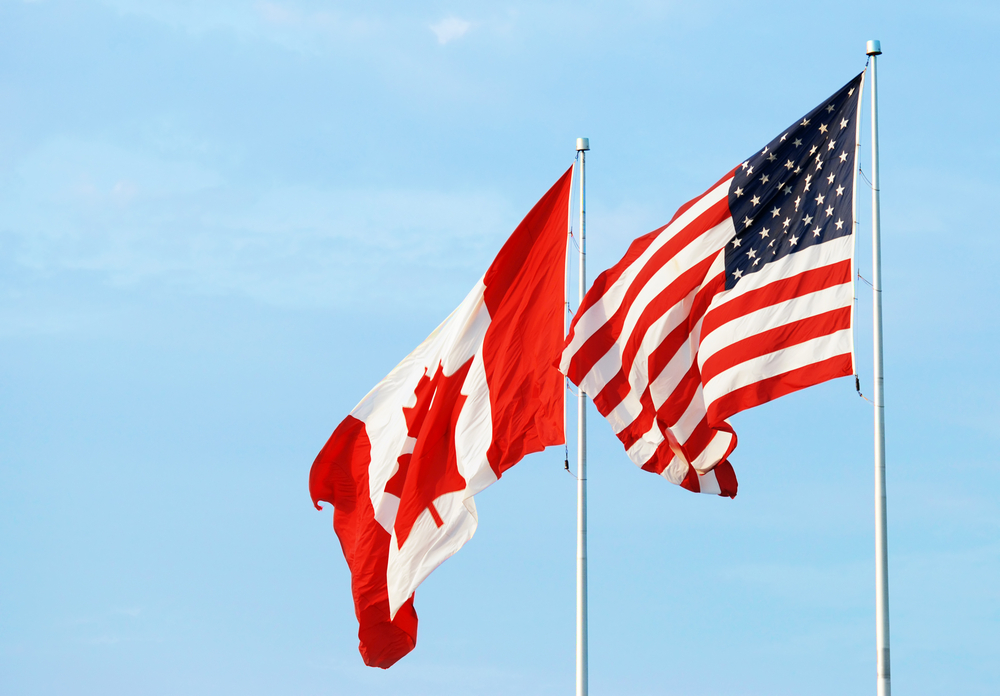
The two countries spent days negotiating a mutual ban on recreational travel without restricting the flow of two-way trade and commerce, which are widely considered critical to the economic — and in some cases physical — health of people on both sides of the border. (Shutterstock photo)
WASHINGTON — New restrictions in effect at midnight Friday along Canada’s shared border with the United States focus more on blocking tourists and bargain-hunters than on clearing the way for so-called “essential” travel such as truckers hauling freight, health professionals and others who live on one side and work on the other.
Deputy Prime Minister Chrystia Freeland on described it as a “negative-list approach” — identifying travellers who should not be allowed to cross, rather than those who should — as she urged Canadians and Americans alike to take a breath and give the new bilateral agreement a chance to take effect.
Freeland pleaded for “patience and understanding” as she acknowledged that the government’s agreement with the U.S. has been rushed into place, given the life-threatening urgency required in curbing the spread of COVID-19.
“These are extraordinary times,” she told a news conference in Ottawa, describing the pace of federal action now as “neither possible nor advisable” under normal circumstances as officials make public announcements about their plans, then “fill in the details afterwards.”
“This is a global pandemic, so we need to act with agility and alacrity,” Freeland said.
“I think people will agree: better to act with speed than to wait for the perfection, which could mean that our country’s response to this pandemic could be delayed — with truly fatal consequences.”
The two countries spent days negotiating a mutual ban on recreational travel without restricting the flow of two-way trade and commerce, which are widely considered critical to the economic — and in some cases physical — health of people on both sides of the border.
Public Safety Minister Bill Blair said truckers, nurses and others being allowed over the border are being encouraged to take all the necessary precautions against being exposed to the novel coronavirus, which include extensive hand-washing, steering clear of groups of people and monitoring for symptoms.
In Washington, President Donald Trump, Secretary of State Mike Pompeo and Chad Wolf, the acting homeland-security secretary, detailed the U.S. government’s plans to secure both the northern and southern borders, including by sending would-be asylum seekers back to their countries of origin. Canada is now doing the same, just 24 hours after saying so-called “irregular” border-crossers would be quarantined north of the border.
The sombre, businesslike tone of Friday’s briefings in Ottawa stood in stark contrast to the overheated display at the White House, where Trump appeared to contradict the country’s foremost expert on infectious diseases about the effectiveness of certain medications and picked a fight with one reporter who accused him of giving people a false sense of security.
“I say that you’re a terrible reporter. That’s what I say,” Trump hissed at NBC’s Peter Alexander at one point. “I think that’s a very nasty question and I think it’s a very bad signal that you’re putting out to the American people.”
Len Saunders, a U.S.-based immigration lawyer in Blaine, Wash., texted a photo of himself at his new office: a park bench in Peace Arch Park, a sort of neutral zone at the border with B.C. where he can meet with clients who live on the Canadian side without either party needing to cross.
Almost all of the traffic this week has been northbound, Saunders noted — most likely Canadian snowbirds heeding the call home or leaving for fear of their travel insurance being cancelled. “There’s literally a steady flow of RVs going north.”
Businesses that depend on being able to get into the U.S. are still anxious about the unknowns, said Mark Agnew, the senior director of international policy for the Canadian Chamber of Commerce.
“I have never had just the sheer volume of emails, phone calls, text messages from members, flagging concerns,” Agnew said. The chamber is urging both governments to keep a close eye on operations at the border to ensure bottlenecks are kept to a minimum, he added.
“The contours are there, but there’s still some uncertainty about how it then gets applied in practice … there is going to be an element of probably getting it wrong along the way.”
Of particular concern, Agnew said, are service providers — particularly technicians who keep high-tech health equipment in working order, as well as business executives who can’t do everything over the internet and rail and shipping personnel who often have to “reposition” by travelling by car over the border to operate a train or a vessel.
Students who hold valid visas, temporary foreign workers and anyone with valid work responsibilities is allowed to cross, Freeland said.
Pompeo said the border restrictions will be in place for the next 30 days, subject to change depending on the state of the pandemic, and do not apply to those travelling “for work or other essential purposes.”
“This will last as long as it has to, to protect the American people,” he said.
That’s probably bad news for local businesses like those in Blaine that are dependent on cross-border business — gas stations, grocery stores and services that provide U.S. shipping addresses for Canadian online shoppers, to name just a few.
“Blaine has basically become a ghost town,” Saunders said. The popular Edaleen Dairy ice cream shop, for instance, has lines out the door.
“There’s nobody. It’s not like they have less customers, they have no customers. So you can see a lot of the local businesses will go out of business.”