
News
Lebanon PM seeks foreign support for reforms amid protests

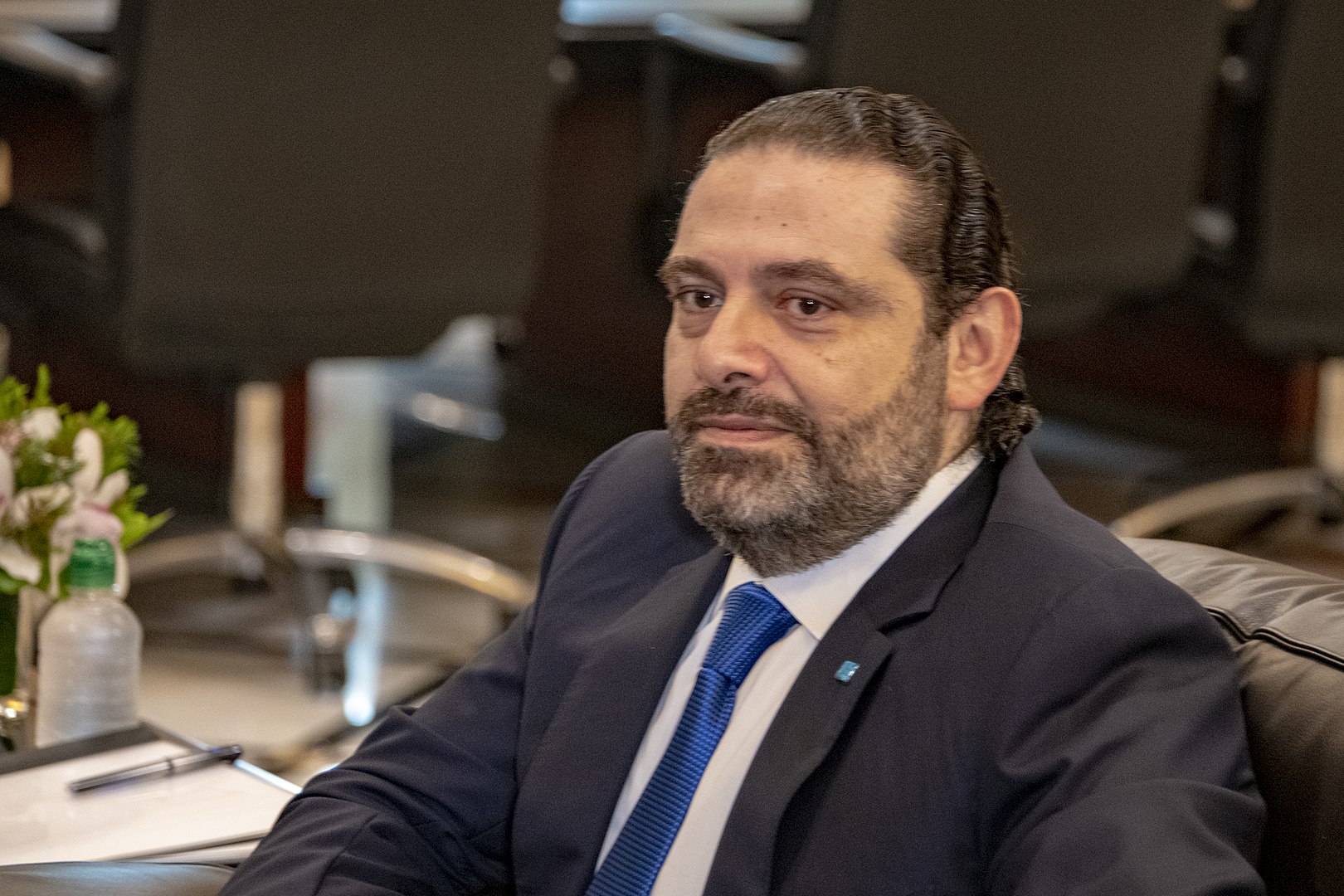
Saad Hariri hopes the reform package will increase foreign investments and help Lebanon’s struggling economy. (File Photo By U.S. Department of State from United States – Secretary Pompeo Meets With Prime Minister Hariri, Public Domain)
BEIRUT — Lebanon’s embattled prime minister sought international support Tuesday for economic reforms announced a day earlier, which were intended to pacify massive protests calling for his government to resign.
Saad Hariri hopes the reform package will increase foreign investments and help Lebanon’s struggling economy. But the nationwide demonstrations that began last week only grew larger Monday after the reforms were announced, with protesters dismissing them as more of the same “empty promises” seen in past decades that never materialized.
Lebanon’s biggest demonstrations in 15 years have unified an often-divided public in their revolt against status-quo leaders who have ruled for three decades and brought the economy to the brink of disaster. Rampant corruption has also hollowed out the country’s infrastructure and basic services.
In downtown Beirut, thousands of protesters were digging for a sixth day of demonstrations, insisting Hariri’s government resign. Scores of other protesters held a sit-in outside the central bank, while protests in other cities and town continued as well.
Hariri held meetings Tuesday with ambassadors from the U.S., Russia, China, the European Union and the 22-member Arab League to explain the reform package.
“These measures are only the first step,” Hariri told the envoys, as quoted in a statement released by his office. He said the package came after being “unanimously agreed upon by the government because of the young men and women who demonstrated over the past days for the sake of national dignity.”
Hariri was also studying a possible government reshuffle, to be “determined in the coming few days,” according to the prime minister’s economic adviser, Nadim Mounla.
The Cabinet approved the 2020 budget with a 0.63% deficit on Monday. The government also approved a series of reforms that would cut the budget deficit, with the central bank and the banking sector helping to reduce the deficit by about $3.4 billion next year. Lebanon has one of the highest debts in the world that stands at more than $86 billion, or more than 150% of the gross domestic product.
Mounla said restoring the people’s confidence in their government “is not going to be an easy job. It’s going to be an uphill battle.”
He told reporters that the plan would include cutting debt servicing costs, privatizing no more than 40% of the telecoms sector, improving the dysfunctional power sector and cutting salaries of top officials in half.
Lebanese officials hope that plans to fix the electricity sector — which costs the state around $2 billion annually — would lead to the release of $11 billion in loans and grants made by international donors at the CEDRE conference in Paris last year.
Mounla said international companies like Siemens, General Electric or Mitsubishi will have a two-month window to make bids for constructing new power stations, with the winning bid announced two months later.
He said the plants — which will take years to build — should increase Lebanon’s power production by 1,000 megawatts by mid-2020. Lebanon currently produces about 2,000 megawatts, while its peak demand is nearly 3,500 megawatts. Residents rely on private generators to cover the deficit.
Walid Joumblatt, a powerful politician who has representatives in the government, criticized the reforms as “weak drugs” that aim to buy time.
France’s Foreign Ministry said in a statement that Paris is closely following the developments in Lebanon, adding that the protests should remain peaceful and the right of Lebanese to protest should be respected. It said France encourages the Lebanese government to carry out reforms in order for the CEDRE conference resolutions to be implemented. France, Lebanon’s former colonial ruler, remains a major player in Lebanese politics.
Earlier Tuesday, Information Minister Jamal Jarrah removed Lor Suleiman from her post as director of state-run National News Agency. She’s been running the agency for 11 years. Anti-government activists said her removal was politically motivated because of her coverage of the ongoing protests.
Later in the day, some activists stormed state-run television, Tele Liban, accusing the station of pro-government bias in its coverage of the protests. The station only began reporting on the protests Tuesday, after airing normal programming for five days. That’s in contrast with private TV stations, which had live coverage of the protests around the clock.
From 2007 until 2010, Lebanon’s economy grew at an average of 9% annually. But it hit a major downturn in 2011, when a political crisis brought down the government and the uprising in neighbouring Syria stoked unrest among Lebanese factions.
Since then, growth has averaged a mere 1.5%, according to government estimates. Munla said there will be no economic growth in 2020.
Nearly three decades after the end of the 1975-1990 civil war, Lebanon still experiences frequent cutoffs of water and electricity. With public transport networks virtually non-existent, its aging roads are clogged with traffic. Chronic problems with waste management have sparked mass protests in recent years.
Local banks will remain closed on Wednesday for the sixth day because of the protests, the country’s banks association said. Some reports say there are concerns by the government that people might rush to local lenders to withdraw their money, worsenening the economic crisis.




















