
News
German government agrees $60 billion climate policy package

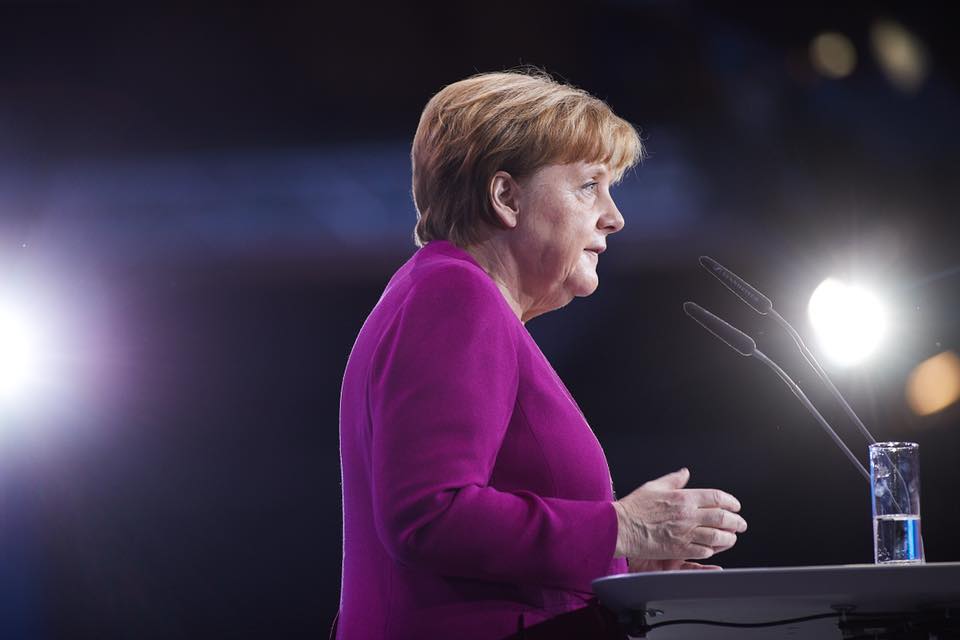
German Chancellor Angela Merkel said the deal hammered out by governing parties during marathon talks overnight would boost the country’s contribution to fighting global warming. Europe’s biggest economy aims to cut its greenhouse emissions by 55% by 2030 compared with 1990 levels. (File Photo: Angela Merkel/Facebook)
BERLIN — Under pressure from environmental protests and growing support for the opposition Green party, the German government agreed Friday on a 54 billion euro ($60 billion) package of measures for tackling climate change.
German Chancellor Angela Merkel said the deal hammered out by governing parties during marathon talks overnight would boost the country’s contribution to fighting global warming. Europe’s biggest economy aims to cut its greenhouse emissions by 55% by 2030 compared with 1990 levels.
“We believe that we can achieve the goals and that we’ve truly laid the foundations for this,” Merkel told reporters in Berlin.
But Ottmar Edenhofer, one of Merkel’s top climate advisers, slammed the proposals and accused the government of “political faintheartedness.”
Edenhofer, who heads the Potsdam Institute for Climate Impact Research, said the planned charge for carbon emissions from transport and heating fuels — starting at 10 euros ($11.07) per ton of carbon dioxide in 2021, and rising to 35 euros ($38.73) in 2025 — was too low to be effective.
According to the Paris-based Organization for Economic Development and Cooperation, OECD, an effective tax on fuels that reflects the climate costs of carbon emissions would need to be above 30 euros per ton of CO2.
Environmental campaigners accused Merkel of surrendering to the interests of Germany’s powerful automaker lobby by failing to set a deadline for phasing out fuel combustion engines as some other countries have already done.
“We think this is a huge mistake, including for the industry itself,” said Martin Kaiser, the executive director of Greenpeace Germany. “Because adjusting to the global market means ending the burning of gasoline and getting into electric mobility.”
Germany has long been a leader on environmental protection, but in recent years it has fallen behind many European neighbours in part due to persistently high emissions in the transport sector.
The government’s cautious climate policy contrasts with the view among most German voters that curbing global warming is the most pressing issue of the day.
A poll released Friday by ARD television showed 63% of voters saying the government should prioritize climate protection over economic growth. Only 24% said economic growth should take priority.
German students have embraced Swedish teenager activist Greta Thunberg’s weekly protests, and on Friday they staged rallies in hundreds of cities across the country. According to police, Berlin alone saw 100,000 people take to the streets — with organizers claiming 1.4 million nationwide — as Merkel outlined her plans nearby.
“We had minimal expectations and still we were disappointed,” the youth campaign group Fridays for Future said in a statement. It criticized the government for failing to bring forward the 2038 deadline for phasing out the use of coal, one of the most polluting fossil fuels, and calling the plan a “declaration of bankruptcy.”
Merkel acknowledged the pressure her government has come under from protesters, saying young people were justified in demanding “that we do something so they, too, have good chances in life.”
The 65-year-old old trained physicist said she agreed with Thunberg that was time to “unite behind the science” and there was no point in denying the evidence for global warming. But she also admitted that the climate plan was a compromise.
“Politics is (doing) what’s possible, and we explored those possibilities,” Merkel said.
Germany’s climate policy is being closely watched elsewhere. The country has the sixth biggest greenhouse gas emissions in the world, with a 2.1% share of the global total.
Failure to meet its emissions reduction targets would cost Germany financially; under European Union rules, the country could be fined billions of euros from 2021 if it doesn’t meet the bloc’s emissions reduction targets.
Aside from the carbon pricing, the government’s new plan envisages substantial subsidies for consumers who buy cleaner cars and home furnaces. The installation of oil furnaces will be banned entirely from 2026.
Other measures agreed include raising the climate charge on airline tickets and investing more in low-emission rail travel, including by reducing the tax on train tickets.
Economists warned that a proposal to raise tax deductions for commuters and cut the cost of electricity in Germany — one of the highest in Europe — would undermine the government’s effort to get people to save fuel and energy.
Germany’s opposition Green party was muted in its criticism. The party, which came second in May elections for the European Parliament, stands a strong chance of entering government if its current poll numbers hold until the next national vote.
Merkel, who was environment minister during the first United Nations climate conference in 1995, said she plans to tell fellow world leaders at a U.N. summit in New York on Monday that Germany stands by its long-term goal of cutting emissions to net zero by 2050.
But she admitted that her government can’t guarantee the latest plan will achieve the 2030 target, let alone the more ambitious long-term goal.




















