
Canada News
What’s in a name? How Canada’s national birthday as we know it came to be

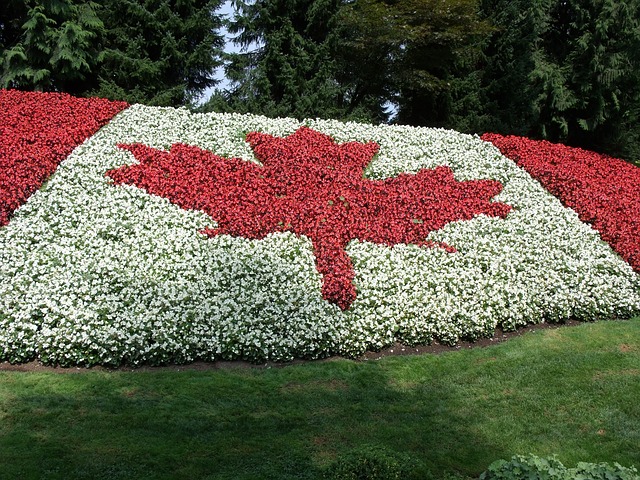
“Canada Day … is part of a broader continuum of symbolic ways in which our national identity is presented,” he said. “It’s this long-simmering controversy that has attracted interest, and where people care about it, they can care quite passionately.” (Pixabay Photo)
Many hail July 1 as Canada Day, others may hearken back to when the nation’s birthday was labelled Dominion Day, and some may wish to ignore it altogether, just like those who refused to celebrate the country’s founding for the first dozen years of its existence.
No matter the approach, the official celebrations of Canada’s creation are arguably more controversial than many realize.
Matthew Hayday, a University of Guelph history professor who has studied the celebrations through the years, said squabbles over Canada’s birthday became mired in some of the hottest political issues in the country’s history and mirrored efforts to carve out a distinct national identity.
“Canada Day … is part of a broader continuum of symbolic ways in which our national identity is presented,” he said. “It’s this long-simmering controversy that has attracted interest, and where people care about it, they can care quite passionately.”
This year marks the 140th anniversary of a public holiday honouring Confederation, said Hayday, noting the festivities have evolved considerably from their earliest incarnations.
No official celebrations took place during the first 12 years of Canada’s existence, he said, due in part to Nova Scotia politicians who felt they had been forced into Confederation against their will and believed July 1 ought to be treated as “a day of lamentation.”
When Dominion Day was officially declared and made a public holiday in 1879, Hayday said it was done over the objections of a faction from British Columbia aggravated by the failure to complete a cross-country railroad.
The earliest Dominion Day gatherings were grassroots affairs, he said, noting the federal government had no hand in the festivities.
That did not change until 1958 when then-prime minister John Diefenbaker decided Ottawa should play a more direct part in the nation’s birthday.
At the time, Hayday said calls had already begun to abandon the name Dominion Day and replace it with one that better reflected Canada’s growing autonomy from the British government. But while Diefenbaker may have been in favour of honouring Canada’s formation, Hayday said he had no interest in weakening ties with its imperial past.
“From the end of the Second World War onwards, you had the Liberals doing things to subtly remove the word ‘dominion’ from various government institutions because ‘dominion’ was seen as being … a particularly British designation,” he said. “Diefenbaker was very pro-British, so celebrating Dominion Day was a way of celebrating that.”
The earliest government-sponsored celebrations were relatively modest, Hayday said, noting events grew more elaborate throughout the 1960s. The government of Lester B. Pearson began incorporating more bilingual elements into the festivities, he said.
The tide turned again in the 1970s, he said, as government celebrations grew more subdued and were eventually cancelled altogether in 1976.
A shift in Canada’s political winds, however, re-energized efforts to commemorate Dominion Day when Quebec’s sovereigntist movement helped bring Rene Levesque to power later that year.
“There’s a sense of panic that goes through official Ottawa about what’s going to happen to national unity,” he said. “They decided they needed to do some big, massive show.”
A resulting four-hour broadcast, aired on nearly every television and radio station in the country, placed some Quebecois performers in the position of fending off criticism from residents who viewed them as betraying the separatist cause, he said.
Even as Dominion Day festivities evolved, several politicians lobbied to see its name changed to Canada Day. Hayday said numerous bills were tabled only to be defeated or die on the order paper without undergoing debate.
That changed in the summer of 1982, days after what would prove to be the final Dominion Day celebration.
Hayday said 13 members of Parliament remained in the House of Commons one July day and began debating a private members bill tabled by Quebec Liberal MP Hal Herbert.
“No one actually asked the Speaker of the House to verify that there was still quorum,” Hayday said. “Unless someone asks, it’s assumed that it still exists. But there was some doubt as to whether, in fact, there were enough members of Parliament in the House.”
Undaunted, the MPs held first, second and third reading in a single day. While the bill did receive Senate scrutiny later that summer, it encountered no significant hurdles and became law later that year.
The public holiday may now be officially known as Canada Day, but Hayday said changes to the federal festivities have been relatively subtle in recent years.
One notable addition is a more culturally sensitive inclusion of Indigenous traditions, he said.
Early performances featuring residential school students clad in kilts and playing bagpipes have been replaced by artists donning clothing of their choosing and performing in a variety of Indigenous languages.
Anthony Wilson-Smith, chief executive of Historica Canada, said the colourful history that has shaped modern Canada Day celebrations has enhanced the country’s sense of national identity.
Both he and Hayday acknowledge that many purists still prefer the Dominion Day concept, but Wilson-Smith is not among them.
“There’s a virtue to simplicity,” he said. “The day is what it is — it’s the day we celebrate our country.
”




















