Canada News
Sustainable finance: Canada risks being left behind in low-carbon economy

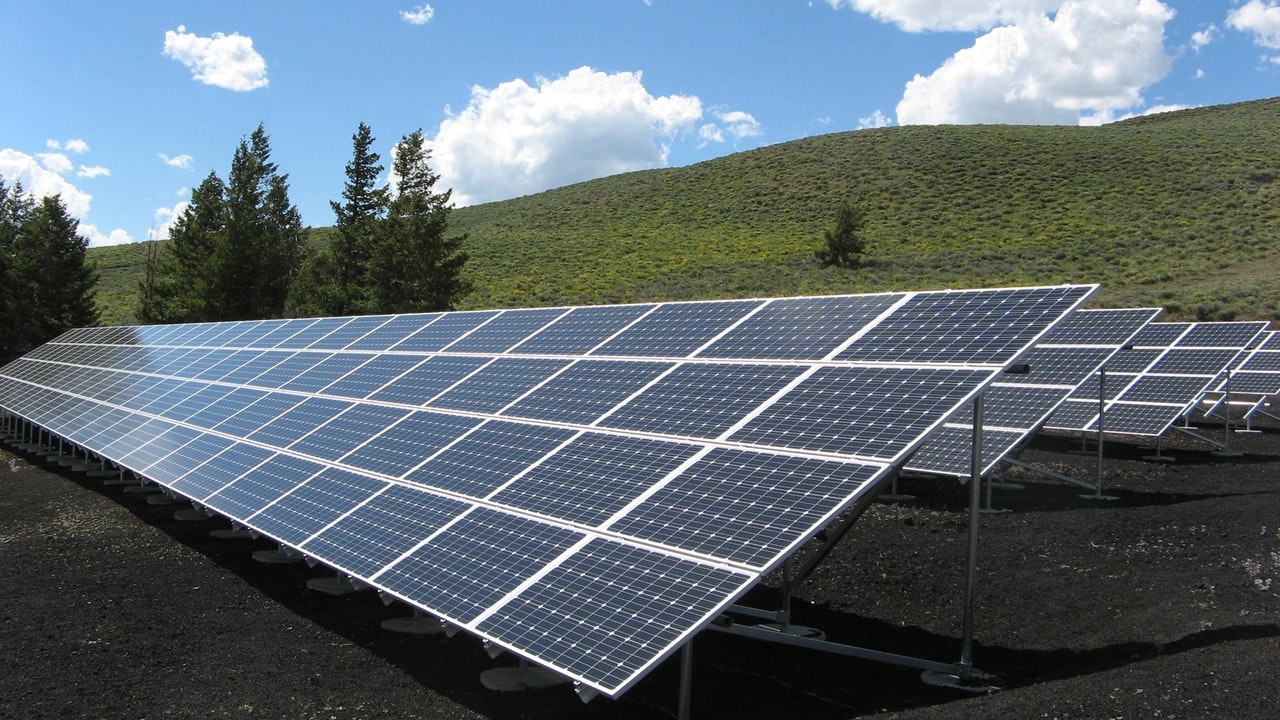
Canada has the talent, resources and institutional muscle to define sustainable finance for our economy. We need to grow and harness that capacity now, if we want to captain our own ship through one of the most significant global economic transitions in history. (Pexels Photo)
Earlier this spring, the most in-depth analysis to date on Canada’s changing climate provided clear evidence that Canada is warming twice as fast as the global average. As we increasingly experience the physical impacts (flooding, extreme weather, forest fires), we will experience the financial impacts as well in the form of both increasing market risks and unprecedented investment opportunities.
For the financial sector, this is a pivotal moment where it can realign its structures to ensure global capital flows toward solutions that will protect Canada’s economy and our prosperity, more broadly. However, Canada’s financial community has yet to fully grasp the numerous challenges and opportunities that climate change presents for us in the transition to a low-carbon economy.
On June 14, an independent panel of experts released recommendations on what Canada’s financial system needs to do to support this transition. The key message: we must empower our financial sector to design a made-in-Canada sustainable finance system so that Canadian firms can compete successfully among their global peers over the long term.
In its simplest definition, sustainable finance means aligning all of our financial systems and services to promote long-term environmental sustainability and economic prosperity. That includes channelling investments toward climate solutions and managing climate-related financial risks.
Canada has the talent, resources and institutional muscle to define sustainable finance for our economy. We need to grow and harness that capacity now, if we want to captain our own ship through one of the most significant global economic transitions in history.
Much to lose, but more to gain
According to the Economist Intelligence Unit, a 2C global warming scenario will trigger global financial losses of roughly US$4.2 trillion. With 6C of warming, those losses balloon to $13.8 trillion. That represents about 10 per cent of the global assets currently under management.
Losses at this scale will have wide-reaching implications for investors and the asset-management industry. Everyday people who are depending on investment income for their retirement will find themselves in dire straits. That includes every Canadian counting on the Canada Pension Plan.
On the flip side, there is tremendous value — some $26 trillion worth — to be gained by shifting economies to avoid worst-case climate scenarios. This represents massive and economy-wide investments in climate-smart infrastructure, emissions-reducing technology, updated electricity grids, to name just a few examples. Global investors are already mobilizing capital to take advantage of these opportunities.
The question for Canada is: how do we attract global investment while, at the same time, protecting Canadian assets, investors and firms from risk?
In essence, this is what sustainable finance is about — harnessing our financial systems to help accelerate the activities, decisions and structures that will put Canadian industries and our economy ahead of the curve without ignoring the environment.
We can’t afford to fall behind
Other global players are already acting. The European Commission has spent the past two years mobilizing expertise to build a financial system that supports sustainable growth. It has made significant progress in establishing disclosure rules for climate-related financial risk and creating unified definitions (a taxonomy) on what can be considered environmentally sustainable economic activity.
For example, this includes defining the labels and criteria for green financial products, which will, among other things, significantly shape the direction of the rapidly expanding green bond market.
The problem is these rules and definitions are being pioneered elsewhere and are unlikely to benefit Canada. They may even penalize us, because they are designed for economies significantly different from our own.
For example, there is a current gap, and huge opportunity, to pioneer financial mechanisms and incentives could be created to expedite the sustainable transition of higher-emitting sectors like oil and gas and agriculture.
This requires our leadership.
If we allow others to direct the innovations in sustainable finance, we will find ourselves without the financial tools and structures that Canada’s resource-rich economy needs to determine its own path through a global transition.
The expert panel’s report is our wake-up call. It is time to catch up and get ourselves to the table. Our financial sector — and the broader ecosystem including our accountants, lawyers and actuaries — needs to start answering some big questions.
What does meaningful, responsible and consistent disclosure look like in a Canadian context? How do we create incentives and opportunities to draw in private capital to boost clean tech innovation across our economy and to invest in climate-resilient infrastructure? How do we better assess risk and the value of assets through a climate-smart lens?
We must, and we can, build the knowledge, understanding and capacity of our financial system to rise to these challenges. We can do this by investing in the research, education, professional training and the collaboration necessary to lift our current generation of professionals to the next level, while preparing an emerging generation to lead.
For those of us in the financial sector, this is about the future of our industry. For all Canadians, it’s about the future of our economy and well-being. Let’s get started now.
———
This article is republished from The Conversation under a Creative Commons license. Disclosure information is available on the original site. Read the original article:
https://theconversation.com/sustainable-finance-canada-risks-being-l