
Health
Canadian study finds no mental health benefits to eating human placenta

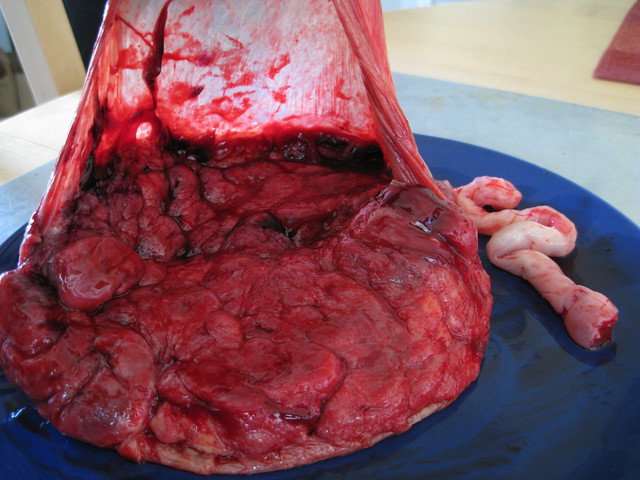
New research debunks the supposed mental health benefits of eating your own placenta. (File Photo: moppet65535/Flickr, CC BY-SA 2.0)
VANCOUVER — New research debunks the supposed mental health benefits of eating your own placenta.
The University of British Columbia and the BC Mental Health and Substance Use Services’ Research Institute released a study Thursday that found no difference in the mental health outcomes of mothers who had eaten their placenta versus those who had not.
The data came from a broader 10-year genetic study involving 138 women with a history of mood disorders, including depression and bipolar disorder.
Lead investigator Jehannine Austin said moms who had consumed their placenta did not have more energy, had no increase in their vitamin B12 levels, and required no less help breastfeeding than those who had not consumed their placentas.
“People are taking them because they see celebrities in the news doing it and they talk about their experience with doing it and so other women think, ‘Oh that sounds like a good idea,”’ Austin, executive director of the research institute and a professor in medicine at UBC, said by phone in Vancouver.
“There’s no evidence from our study to suggest that this actually helps in any way. It doesn’t help with mood, it doesn’t help with energy, it doesn’t help with nutrition levels and it doesn’t help with breastfeeding.”
Eating one’s placenta also did not appear to worsen mental health, Austin allowed, but she discouraged the practice in light of a Health Canada warning that it could lead to bacterial or viral infections in mothers or their babies.
In November, Health Canada cited a case reported by the U.S. Centers for Disease Control about an infant who was hospitalized for an infection from bacteria found in the placenta pills his mother had been taking.
The federal agency also warned that no placenta products made by a third party are authorized for consumption in Canada.
Nevertheless, it’s easy to find several clinics and individuals who offer such preparations to new moms, often in a capsule form made from a placenta that has been steamed and dehydrated.
Proponents believe ingesting the organ helps prevent postpartum depression, overcome anemia, increase energy levels and boost breast milk production.
Celebrities including Kim Kardashian, Alicia Silverstone and Hilary Duff are among the famous moms who have popularized the trend, but it has drawn increasing scrutiny in the medical community.
Austin said this is the biggest study to date to look at the impact of consuming human placenta.
Her analysis focused on women who had prior mental health issues because they have a higher chance of experiencing postpartum mental health issues.
While it’s possible women with no history of mental health issues might have different outcomes, Austin said there’s no data or biological reason to suggest it would be any different.
The comparisons took into account a mother’s psychiatric diagnosis and medication use, as well as age and income level.
The data came from a broader study into how genetics and environmental factors interact in a woman’s risk for developing post-partum depression.
“This is a very new area of study,” Austin said of the field.
The study was published online in the Journal of Obstetrics and Gynaecology Canada.




















