
Canada News
Refugee advocates ‘shocked and dismayed’ over asylum changes in budget bill

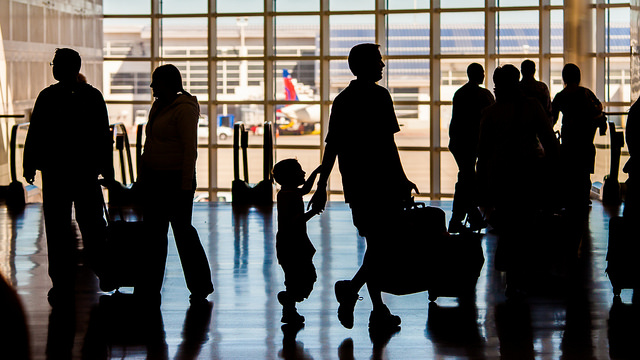
The Trudeau government is proposing to prevent asylum seekers from making refugee claims in Canada if they have made similar claims in certain other countries, including the United States. (File Photo: Thomas Hawk/Flickr, CC BY-NC 2.0)
OTTAWA — Lawyers and advocates who work directly with refugees say they are dismayed by proposed changes to asylum laws included in the Liberals’ new budget bill, calling them a devastating attack on refugee rights in Canada.
The Trudeau government is proposing to prevent asylum seekers from making refugee claims in Canada if they have made similar claims in certain other countries, including the United States.
Border Security Minister Bill Blair says the measure aims to prevent “asylum-shopping.”
“I can tell you we’ve been working very hard over the past several months to significantly reduce the number of people who are crossing our borders irregularly,” Blair told reporters Tuesday. “There’s a right way to come to the country to seek asylum and/or to seek to immigrate to this country, and we’re trying to encourage people to use the appropriate channels and to disincentivize people from doing it improperly.”
The proposed changes blindsided refugee advocates and lawyers, who say they would strip human-rights protections from vulnerable refugee claimants.
“In terms of the effect on refugees, the effect is really immeasurable, because we’re now giving refugee claimants a degraded process to go through,” said Maureen Silcoff, the chair of the Canadian Association of Refugee Lawyers’ litigation committee.
The new provision in the Immigration and Refugee Protection Act — which was tucked into 392-page omnibus budget bill tabled Monday evening — introduces a new ground of ineligibility for refugee protection. If an asylum-seeker has previously opened a claim for refugee protection in another country, his or her claim would be ineligible for consideration, alongside people who have already made unsuccessful claims here, been deemed inadmissible because of their criminal records, or been granted refugee protection elsewhere.
The provision is based on the belief that Canada’s refugee system is similar enough to that of the U.S. that anyone rejected there is likely to be rejected here as well.
Under Canada’s “Safe Third Country Agreement” with the U.
S., would-be refugees who arrive at official border crossings from the United States and try to claim asylum will be turned back to the U.S. But the agreement doesn’t apply to people already on Canadian soil when they make their claims.
This has led to over 40,000 asylum-seekers crossing into Canada “irregularly” through unofficial paths along the Canada-U.S. border since early 2017, coinciding with U.S. government efforts to expel people who had had temporary permission to stay in the United States.
Under the new provisions introduced Monday, asylum-seekers deemed ineligible to make claims in Canada will not necessarily be deported to their homelands.
They will still undergo pre-removal risk assessments to determine if it is safe to send them back to their countries of origin.
But this takes away their legal right to have their refugee claims heard by an independent tribunal or a court — something that could be subject to a Charter challenge.
A 1985 Supreme Court ruling, known as the Singh decision after the group of Sikh refugee claimants involved in the case, ruled that asylum-seekers have the right to full oral hearings of their refugee claims. The decision is considered one of the most significant in Canadian refugee law and was instrumental in the formation of the Immigration and Refugee Board — the arm’s-length agency that hears refugee claims in Canada.
Janet Dench, executive director of the Canadian Council for Refugees, said she suspects refugee lawyers are already starting to look closely the legalities of the government’s proposed changes.
“For sure there are serious Charter issues that may be raised,” she said.
The pre-removal risk assessment, which asylum-seekers in Canada will retain access to, can include a hearing, but Dench says it is not the same and, in practice, is usually more like an interview.
The hearing is not automatic.
Dench says she and her members, which include over 100 Canadian organizations that work directly with refugees and immigrants, were “in a state of shock and dismay and great disappointment” over the proposed changes.
“This is really a devastating attack on refugee rights,” she said. “We’ve been urging the government to drop the existing ineligibility provisions, which already leave some people without the protection that they need from Canada. This is going a huge step further in creating another whole category of people who will be denied access to the refugee determination system on an arbitrary basis.”
That the changes were included as part of an omnibus budget implementation bill is even more upsetting to the refugee advocates.
Substantial changes to immigration laws like the ones being proposed ought to be given a more thorough treatment in Parliament rather than being rushed in a budget bill, Silcoff said.
“CARL (the Canadian Association of Refugee Lawyers) believes that human rights have no place in a budget bill. It’s undemocratic.”
NDP immigration critic Jenny Kwan echoed these concerns, calling the proposed changes “unconscionable” and the fact they were introduced in a budget bill “shocking.”
“These are standalone bills and they should be dealt with as such, and to try and bury in the budget bill is absolutely contrary to what (Prime Minister Justin) Trudeau himself promised in the 2015 election.”
The Conservative party has frequently demanded that the Liberal government keep people from getting into the country to make asylum claims. Conservative immigration critic Michelle Rempel said the changes indicate that Trudeau has “effectively admitted that he has failed to manage our border.”




















