Breaking
50-M poorest of the poor Filipinos now PhilHealth members

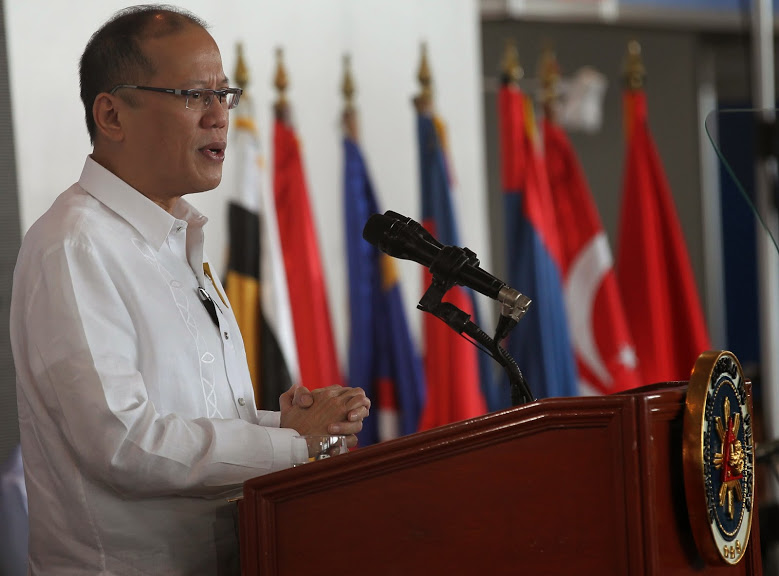
President Benigno S. Aquino III delivers his congratulatory message to the organizers of Asian Defense, Security and Crisis Management Exhibition (ADAS) during the opening ceremonyThursday, July 17, 2014 at the World Trade Center in Pasay City, Manila, Philippines. ADAS 2014 is the first and only dedicated Defence, Security & Crisis Management Exhibition in the Philippines to serve the Republic and the Asia Pacific Region. (Photo by Ryan Lim / Malacanang Photo Bureau)
MANILA — The Aquino administration has made significant strides toward achieving Universal Health Care (UHC) for having enrolled 14.72 million families which translate to almost 50 million individuals belonging to the poorest of the poor and the not-so-poor in the country under coverage of the Philippine Health Insurance Corp. (PhilHealth).
UHC, also referred to as Kalusugan Pangkalahatan (KP), is the “provision to every Filipino of the highest possible quality of health care that is accessible, efficient, equitably distributed, adequately funded, fairly financed, and appropriately used by an informed and empowered public.”
The administration of President Benigno S. Aquino III has considered UHC as a government mandate aiming to ensure that every Filipino shall receive affordable and quality health benefits. This involves providing adequate resources –- health human resources, health facilities, and health financing.
PhilHealth President and Chief Executive Officer (CEO) Alexander Padilla said that after having covered almost 50 million individuals under PhilHealth, it is safe to expect that they can declare universal coverage for the poor before 2015.
“Right now, 82 percent of the whole population are covered by PhilHealth, meaning they can avail of the benefits,” Padilla said.
Likewise, these 14.72 million poor families benefit from the “No-Balance Billing” policy in government hospitals, he added.
Under PhilHealth’s NBB scheme, Sponsored Members confined in government hospitals will not be required to shell out for hospitalization.
The 14.72-million family-beneficiaries of PhilHealth at present almost tripled from the 5.2 million families being subsidized by the national government in 2012.
The beneficiaries were identified through the Department of Social Welfare and Development’s (DSWD) National Household Targeting System for Poverty Reduction (NHTS-PR), the mechanism to identify the poorest families in the country.
The expansion of the PhilHealth coverage is the answer to the earlier sad observation of President Aquino that 30 percent of Filipinos were dying without seeing a health professional.
During his first year in office, the President had to instruct DSWD to identify the correct number of Filipinos who sorely need PhilHealth coverage, as there were reports that PhilHealth beneficiaries increased during elections and the agency was used as a tool for dispensing political patronage.
The passage of the National Health Insurance Act of 2013 amended the outdated 1995 version to provide full national subsidy of premiums for the poor.
In 2014, the national government-sponsored members covered 14.72 million families or an additional 9.52 million families, including those who belong to the 2nd “quintile” of the population (i.e. next poorest and previously sponsored by the local government units or LGUs).
“Quintile” is a statistical value of a data set that represents 20 percent of a given population. The first quintile represents the lowest fifth of the data (1-20%); the second quintile represents the second fifth (21%-40%), etc.
To capture the un-enrolled poor not covered by the NHTS-PR, the Point of Care scheme was pilot-tested in several government hospitals, where hospitals pay for an indigent patient’s one-year membership premium upon his/her admission, in order to immediately cover his/her hospitalization.
As of December 2013, a total of 9,164 indigents have been enrolled in the eight pilot hospitals. The Point Care scheme is now being made available to all Department of Health (DOH)-retained facilities and other government hospitals as well.
The “No Balance Billing” Policy launched in September 2011 prohibits government health facilities from charging the poor any fee exceeding the 23 case rates package which includes treatment for dengue, pneumonia, asthma, cataracts, as well as treatments for catastrophic diseases like breast cancer, prostate cancer, and acute leukemia.
The NBB Policy was later applied to the “Z Benefit” which was launched on July 2, 2012, which covers catastrophic diseases (i.e., early stage breast cancer, standard risk childhood acute lymphoblastic leukemia, and low to intermediate risk prostate cancer). It is implemented in 22 government hospitals nationwide to help defray the high cost of treatment that usually causes severe financial burden to patients’ and their families. The amount of support ranges from P100,000 to P600,000.
This has been expanded to include some cardiac operations (Expanded Z Benefit Package) which was launched in February 2013 to further improve financial risk protection by covering additional catastrophic diseases. The amount of support ranges from P175,000 to P550,000.
Last October 2013, the Z-Morph Benefit Package was launched, providing the first PhilHealth benefit package for persons with disabilities (PWDs), along with all Case Rates, expanding the coverage of the case rates system to 4,662 medical conditions and procedures.
With more Filipinos covered by PhilHealth, the Aquino administration has gone all-out in funding the upgrading of government hospitals and health facilities, giving access to quality health services that every Filipino or “boss” wants in times of needs.