
Health
Updated mammography guidelines consider woman’s preference, not only age

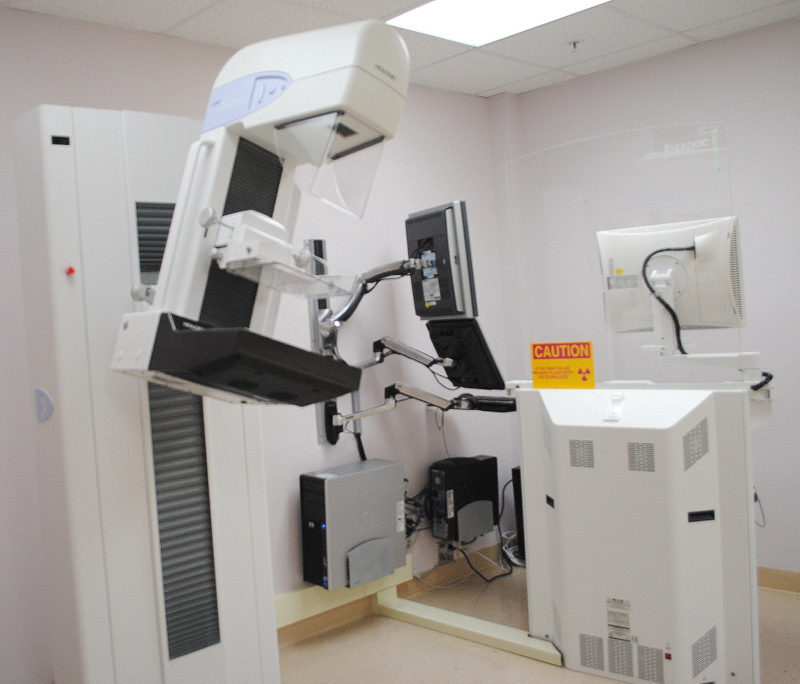
The previous guidelines from 2011 recommended against women aged 40 to 49 having routine mammograms, while those aged 50 to 74 were advised to get the screening test every two to three years. (File Photo VCU CNS/Flickr, CC BY-NC 2.0)
TORONTO — New guidelines for breast-cancer screening are intended to give women more of a voice in their health-care decisions, taking into account their personal values and preferences rather than age and risk factor alone.
The guidelines, released Monday by the Canadian Task Force on Preventive Health Care, encourage women aged 40 to 74 to discuss breast cancer screening with their doctors and make a shared decision about whether to get a mammogram based in part on a woman’s preferences.
The previous guidelines from 2011 recommended against women aged 40 to 49 having routine mammograms, while those aged 50 to 74 were advised to get the screening test every two to three years.
The new guidelines are “intended for an empowered position, which puts the decision-making in the hands of the individual woman in terms of what she prioritizes,” said task force vice-chair Ainsley Moore, a family physician at McMaster University in Hamilton.
“I think there was in the past a lot of confusion about how the recommendations were interpreted,” she said.
While mammography offers the benefit of somewhat reducing the risk of death from breast cancer, the test can also result in significant harms, she noted.
False positives, which can cause women unnecessary distress, are common and can lead to additional testing and possibly an invasive biopsy.
For instance, the task force found that for every 1,000 women aged 40 to 49 screened over a seven-year period, there were 294 false-positives, resulting in 43 unnecessary biopsies; even in the age 70-74 group, there were 219 false positives and 30 biopsies per 1,000 women screened.
Moore said there’s also a risk of overdiagnosis and overtreatment, with potential complications from radiation, chemotherapy and surgery.
The latest medical evidence, on which the updated guidelines are based, suggests there can be a narrow margin between benefits and harms, leading the task force to make “conditional” recommendations based on patient preferences. They include:
—Women 40-49: The task force recommends against screening, but if a women wants a mammogram, she should discuss with her health provider the potential harms and benefits related to her age group.
Those in their 40s face a higher risk of harm from false positives, overdiagnosis and overtreatment, compared with other age groups. But the benefit is smaller: only one breast cancer death is prevented for every 1,700 women who have mammography, compared to one death for every 645 women aged 70 to 74 who get screened.
—Women 50-74: The task force recommends that women in this age range get mammograms every two to three years. This advice is also conditional, as some women may choose not to be screened if they are concerned about overdiagnosis and associated harms.
—There is no screening recommendation for women aged 75 and older, and the guidelines do not apply to high-risk women, such as those who carry a BRCA1 of BRCA2 genetic mutation.
Moore said overdiagnosis is a major concern that relates to the nature of cancers: some are slow-growing tumours, while others are more aggressive and progress at a faster rate.
“The issue is that these slow, turtle-growing cancers will be detected on screening, but they wouldn’t cause symptoms in a woman’s lifetime. They wouldn’t become palpable lumps … they certainly wouldn’t cause death,” she said.
“The challenge is that physicians can’t tell at the time they’re diagnosed which of these cancers will progress and which will not. So the tendency is to treat them all … because the consequences of not treating can also be significant.
“And so those are the issues that women are facing. Those are the issues that physicians are facing.”
Dawn Stacey, a senior scientist at the Ottawa Hospital Research Institute, welcomed the changed advice to women. “I’m excited about this new guideline because they’re actually now acknowledging women’s preferences.
“The guidelines up until now have been directives, so they said this is what you should do,” she said. “The new guidelines coming out are saying this is what we would suggest, but really we need to discuss this with women in both age groups.”
So if having a mammogram is important to a woman in her 40s, said Stacey, “then that’s OK.”
The guidelines are published in the Canadian Medical Association
Journal and can be accessed by visiting:
http://www.cmaj.ca/lookup/doi/10.1503/cmaj.180463.




















