
News
SC upholds validity of K-12 basic education law

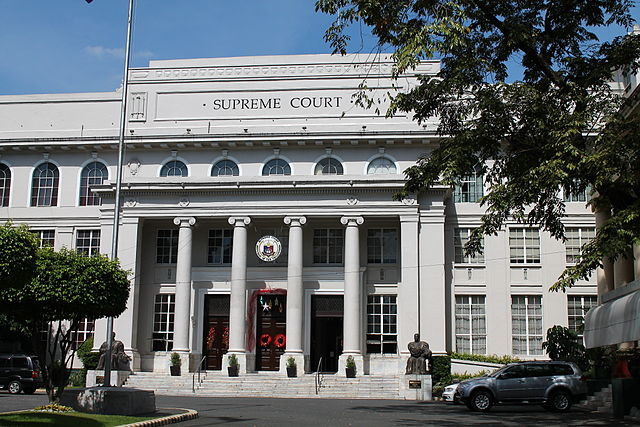
The tribunal added that the Supreme Court “should not be thought of as having been tasked with the awesome responsibility of overseeing the entire bureaucracy,”. (File Photo By Aerous/Wikimedia, CC BY-SA 3.0)
MANILA– The Supreme Court (SC) has upheld the constitutionality of two laws overhauling the country’s basic education system and expanding basic education from 10 to 13 years.
In a 94 page decision dated October 9, the high court en banc, through Associate Justice Alfredo Caguioa, declared “constitutional” Republic Act No. 10533 (K to 12 Law), Republic Act no. 10157 (Kindergarten Education Act) and pertinent executive department’s implementing orders and guidelines. The SC denied the consolidated petitions questioning them.
“(T)he courts accord the presumption of constitutionality to legislative enactments,not only because the legislature is presumed to abide by the Constitution, but also because the judiciary, in the determination of actual cases and controversies ,must reflect the wisdom and justice of the people as expressed through their representatives in the executive and legislative departments of government,” the SC said.
RA 10157, or the Kindergarten Education Act insitutionalized kindergarten education, which is one year of preparatory education for children at least five years old, as part of basic education and is made mandatory and compulsory before entering Grade 1.
The law was passed in fulfillment of the country’s commitments to improve education standards in the country during the 2000 World Education Forum in Dakar, Senegal, where 164 governments – including the Philippines – pledged “Education for All” goals.
Likewise to adjust to international standards, the K to 12 Law was enacted. Prior to this, the Philippines, along with Djibouti and Angola, were the only countries in the world with a 10-year basic education system.
Under the law, basic education is expanded to 13 years encompassing at least one year of kindergarten education, six years of elementary education, and six years of secondary education. Secondary education includes four years of junior high school and two years of senior high school education.
The law, which took effect on June 2013, sought to decongest the curriculum, prepare the students for higher education and for the labor market, and comply with global standards as well.
Ruling for the legislation’s validity, the court said that “after a careful (scrutiny) of the records of the case, we find that this jurisprudential element of abuse of discretion has not been shown to exist,”
The tribunal added that the Supreme Court “should not be thought of as having been tasked with the awesome responsibility of overseeing the entire bureaucracy,”.
“Unless there is a clear showing of constitutional infirmity or grave abuse of discretion amounting to lack or excess of jurisdiction, the Court’s exercise of the judicial power, pervasive and limitless it may seem to be , still must succumb to the paramount doctrine of separation of powers,” it added.
Associate Justice Jose C. Reyes Jr. was on wellness leave, while Associate Justices Alexander G. Gesmundo and Lucas Bersamin were on official business.




















