
Canada News
Plan to create a national securities regulator is constitutional: Supreme Court

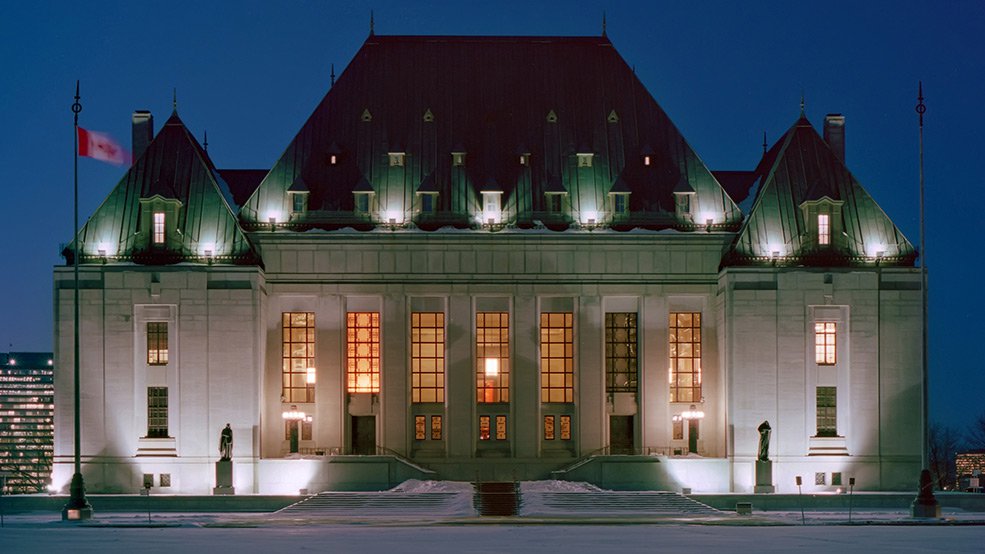
“When and whether to relinquish a degree of autonomy over the regulation of securities for the purpose of achieving national uniformity is entirely a matter of political choice.” (File Photo: Ottawa Tourism)
OTTAWA — The Constitution allows Ottawa and the provinces to set up a national securities regulator, the Supreme Court says in a ruling that could help advance a plan for countrywide oversight of capital markets.
In its unanimous ruling Friday, the high court also found that federal draft legislation for national regulation of the trade in stocks, bonds and other investments falls within Parliament’s powers, as it does not tread on provincial turf.
The decision provides long-sought legal clarity for an idea under discussion since at least the 1930s.
However, the court stressed it is up to the provinces and territories to decide whether participation in a national regulatory system is in their best interests, calling it a “political choice.”
Quebec Finance Minister Eric Girard swiftly reaffirmed the province’s opposition to a national regime. “We acknowledge the Supreme Court of Canada ruling, but intend to retain our autonomy and keep our expertise in Quebec.”
The division of constitutional powers has made Canada an anomaly — a leading industrialized country with a patchwork of provincial and territorial regulators instead of a national one.
Supporters of a pan-Canadian regulator say it would eliminate duplication, reduce red tape and ensure more consistent enforcement and investor protection.
In an earlier ruling, the Supreme Court said in 2011 that a draft bill to create a national regulator strayed beyond federal jurisdiction, as the provinces and territories have constitutional authority over most elements of securities regulation.
Still, the court said it was open to Ottawa and the provinces to exercise their respective powers over securities harmoniously, in the spirit of co-operative federalism.
With that in mind, British Columbia, Saskatchewan, Ontario, New Brunswick, Prince Edward Island, Yukon and the federal government signed a memorandum of agreement to create a new regulatory system.
The plan includes a common regulator, a council of ministers to play a supervisory role, a model law that provinces and territories could pass, and federal legislation to manage systemic risk, allow for data collection and address criminal matters.
In July 2015, the Quebec government asked the province’s Court of Appeal to consider the proposal’s constitutional validity.
The Quebec appeal court said last year the Constitution does not authorize creation of a Canadian securities regulator under a single body as envisioned in the memorandum of agreement. It also flagged concerns with aspects of the draft federal legislation on the proposed role and powers of the council of ministers.
The federal government appealed to the Supreme Court on both matters.
In its decision Friday, the high court said the proposed co-operative system “does not improperly fetter” the sovereignty of legislatures.
The council of ministers, to be composed of provincial ministers responsible for regulation of capital markets and the federal finance minister, would not have power to unilaterally amend provincial legislation.
In addition, the high court concluded, the draft federal legislation falls within Parliament’s trade and commerce powers under the Constitution.
The federal role in regulating capital markets would be limited to the detection, prevention and management of risk to the stability of the Canadian economy, the decision noted.
While provinces have the capacity to legislate in respect of systemic risk in their own markets, they do so from a local perspective. “The preservation of the integrity and stability of the Canadian economy is quite clearly a matter with a national dimension, and one which lies beyond provincial competence.”
The court cautioned that its ruling is limited to the constitutionality of the planned system, and does not take into consideration many of the political and practical complexities.
The provinces and territories have an “unquestioned and equally sovereign right” to join or reject the plan, the decision said.
“When and whether to relinquish a degree of autonomy over the regulation of securities for the purpose of achieving national uniformity is entirely a matter of political choice.”




















