
Lifestyle
How a new vaccine could save cattle herds and livelihoods

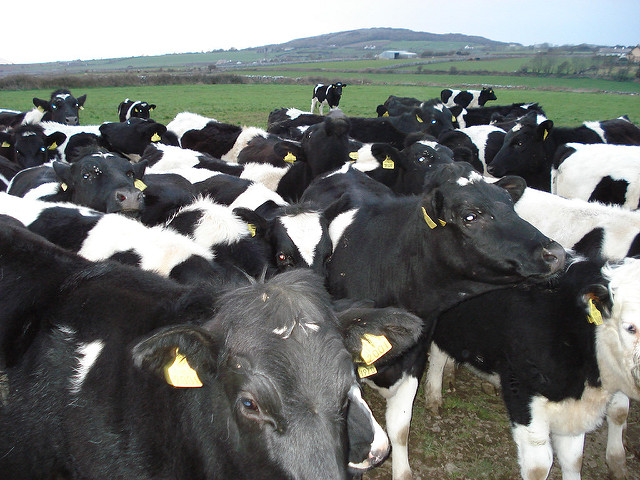
The quickest and most effective way to control lung plague is to cull the infected animals.
But there is another way: vaccination. (File Photo: Karen in California/Flickr, CC BY-SA 2.0)
For 10,000 years, the bacterium Mycoplasma mycoides has infected goats, cows and other livestock, annihilating entire herds in days.
In sub-Saharan Africa, the disease, contagious bovine pleuropneumonia CBPP or “lung plague,” is still difficult to control. It causes more than US$60 million in annual losses to cattle owners and affects the livelihoods of 24 million cattle producers.
Although infected animals can be treated with antibiotics, they can be hard to come by. They often come from illegal sources and are of poor quality, resulting in ineffective treatments and antibiotic resistance.
The quickest and most effective way to control lung plague is to cull the infected animals. But there is another way: vaccination.
Working with researchers in Kenya, we have developed a new vaccine to help fight the spread of Mycoplasma mycoides mycoides (Mmm), an especially lethal subspecies of the bacterium that causes disease in cattle.
Unstable solution
Lung plague was eradicated in North America in the 1890s after an eight-year campaign of quarantine, slaughter and disinfection.
Botswana successfully adopted this approach, but it will not work for other sub-Saharan countries because of the high costs of replacing cattle that are not insured.
To date, there is only one vaccine on the market to control lung plague. It is an attenuated vaccine, which means it is created from a live version of Mmm that has been altered so that it becomes harmless.
The live-attenuated Mmm vaccine is injected into the tail of cattle and, after a few weeks, the animal begins to produce antibodies against the bacteria.
Although this vaccine works well, it does have drawbacks. It deteriorates quickly unless it is kept on ice — a problem in Africa where temperatures often run high — and, in some cases, vaccinated animals develop inflammation and ulcers where the vaccine is injected or even lose their tails due to extreme immune reactions.
New approach
Looking for a better solution, our team applied for and received funding from the International Development Research Centre and Global Affairs Canada through the Canadian International Food Security Research Fund to develop a new vaccine for lung plague.
Vaccines are made up of two parts: an antigen, a substance capable of inducing an immune response, and an adjuvant, a compound that improves the efficacy of the vaccine.
The new lung plague vaccine uses protein antigens from a variety of strains of Mmm found in Kenya which makes the new vaccine safer, easy to manufacture and stable at room temperature.
Our team identified these protein antigens using “reverse vaccinology.”
Reverse vaccinology uses computer programs to analyze the DNA of the bacteria and point out possible antigens, the ones most likely to cause the cattle to produce an immune response. The selected proteins are then manufactured, purified, mixed with the adjuvant and tested.
Increasingly, reverse vaccinology is being used to develop vaccines for diseases when traditional vaccine development has failed. This approach has been used for a human Meningococcal vaccine now on the market.
Better protection
Out of the 66 Mmm proteins we identified, four protected cattle against lung plague. We used them to create a new vaccine that has demonstrated significant potential to be more stable and offer better protection than the current live-attenuated vaccine.
This new vaccine, which is cheaper to produce and more stable at room temperature, may solve many of the challenges faced with the current vaccine and may also protect against multiple bacterial strains. It has been licensed for production by a vaccine manufacturer in Kenya and is currently under production for testing in field trials using large numbers of cattle.
The reverse vaccinology approach could work to develop vaccines for other important livestock diseases, including Johne’s disease and bovine tuberculosis, as well as infections with Histophilus somni, Escherichia coli and Mycoplasma bovis (chronic pneumonia and polyarthritis syndrome).
CBPP has had negative impacts on livestock production in Africa, drastically reducing the contribution of the livestock industry to Africa’s gross domestic product.
This project, which benefits from a partnership between Kenya and Canada, used advanced vaccine development technologies to achieve the ultimate deliverable — a novel vaccine that has the potential to improve food security and mitigate millions of dollars in livestock losses.
This Mmm vaccine was developed in collaboration with Hezron Wesonga of the Kenya Agriculture Livestock Research Organisation (KALRO), Jane Wachira of the Kenya Veterinary Vaccine Production Institute (KEVEPAVI), Jan Naessens of the International Livestock Research Institute (ILRI), Andrew A. Potter, Volker Gerdts and Emil Berberov of the Vaccine and Infectious Disease Organization — International Vaccine Centre (VIDO-InterVac) at the University of Saskatchewan.
———
This article was originally published on The Conversation.




















