
Canada News
Canada’s complicated relationship with international human rights law

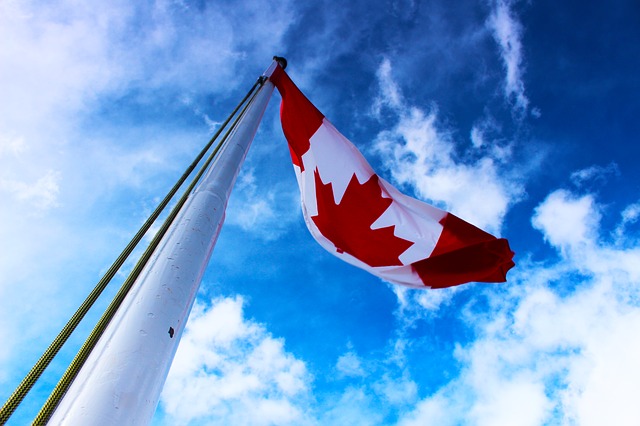
Canada feared that the reserve system governing Indigenous peoples here could be deemed a form of apartheid, and thus be illegal under international law.(Pixabay photo)
Human rights complicate diplomacy. The most recent example of this is the dispute between Canada and Saudi Arabia over the Saudis’ arrest and detention of four women’s human rights advocates.
The current Canadian government is to be commended for its stance. But Canada has not always been an advocate of human rights. Historically, Canada has had a complicated relationship with international human rights law.
International human rights law makes the individual a subject of international protection and prosecution. It was one of the great innovations of the liberal international order, the rules-based system established after the Second World War with the United Nations at its centre. It has reshaped the relationship between states and their citizens.
In the mid-1940s and ’50s, Ottawa actively opposed the UN human rights system. Its position was that the UN had no business interfering in Canada’s domestic affairs.
It feared that it would be criticized for laws such as the 1938 Dominion Elections Act, which prohibited members of several racial and ethnic communities from voting.
Canada was the only liberal democracy to abstain from voting in favour of the 1948 Universal Declaration of Human Rights. And Canadian officials actively opposed efforts to include economic, social and cultural rights in binding international law.
A stand against apartheid
Only in the early 1960s did Canada start to play a more active role at the UN. It convinced allies to support the International Convention on the Elimination of All Forms of Racial Discrimination, despite concerns that the treaty infringed upon freedom of expression.
But the principal reason for doing so had little to do with rights. African states saw the convention as a key tool in the struggle against apartheid regimes in southern Africa. Canadian officials feared that the Soviets would exploit any western opposition in order to gain favour with these countries.
From the mid-1970s to mid-’80s, Canada engaged in some courageous and innovative diplomacy at the UN. Officials drew attention to the plights of the disappeared in Argentina, and of refugees from Cambodia.
They also introduced measures to strengthen the UN’s capacity to enforce international human rights law. But just a few years earlier in 1972, they had opted against supporting the draft Convention and Protocol on the Suppression and Punishment of the Crime of Apartheid.
Canada feared that the reserve system governing Indigenous peoples here could be deemed a form of apartheid, and thus be illegal under international law.
Shameful record on Indigenous rights
Indeed, Canada’s record on the rights of Indigenous peoples is shameful. In the early 1980s, Ottawa first opposed efforts to recognize the distinct rights of Indigenous peoples. It is a practice that continued well into the 21st century.
Canada championed women’s human rights in the late 1980s and early 1990s. It led the charge on the Declaration on the Elimination of Violence Against Women. In response to the atrocities being committed in the former Yugoslavia, it spearheaded efforts to have the “systematic practice of rape” recognized as a form of ethnic cleansing.
But during the mid-2000s to mid-2010s, the government was openly hostile to the UN human rights system. Its view was that the UN should use its resources to highlight the abuses of authoritarian regimes whose records were far worse than Canada’s.
Nowadays, it’s not uncommon for pundits and scholars of international affairs to lament the decline of the liberal international order. Chrystia Freeland, Canada’s minister of foreign affairs, has on several occasions said it’s in Canada’s interests to preserve the current order.
This means standing up for rights even when the costs of doing so are high. This is not something Canadians have always done in the past. But we will need to now if the current rules-based system is to survive another 70 years.
A world in which international human rights law is undermined is not one that will be kind to Canada.
———
This article was originally published on The Conversation.




















