Lifestyle
Researchers feed seaweed to dairy cows to reduce emissions

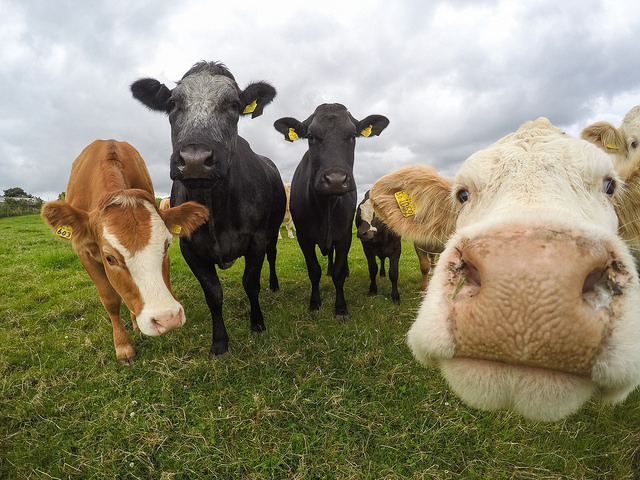
“I wasn’t expecting it to be that dramatic with a small amount of seaweed.” (File Photo: Geraint Rowland/Flickr, CC BY-NC 2.0)
DAVIS, Calif. — University of California researchers are feeding seaweed to dairy cows in an attempt to make cattle more climate-friendly.
UC Davis is studying whether adding small amounts of seaweed to cattle feed can help reduce their emissions of methane, a potent greenhouse gas that’s released when cattle burp, pass gas or make manure.
In a study this past spring, researchers found methane emissions were reduced by more than 30 per cent in a dozen Holstein cows that ate the ocean algae, which was mixed into their feed and sweetened with molasses to disguise the salty taste.
“I was extremely surprised when I saw the results,” said Ermias Kebreab, the UC Davis animal scientist who led the study. “I wasn’t expecting it to be that dramatic with a small amount of seaweed.”
Kebreab says his team plans to conduct a six-month study of a seaweed-infused diet in beef cattle starting in October.
More studies will be needed to determine its safety and efficacy, and seaweed growers would have to ramp up production to make it an economical option for farmers.
Dairy farms and other livestock operations are major sources of methane, a heat-trapping gas many times more potent than carbon dioxide.
Researchers worldwide have searched for ways to reduce cattle emissions with various food additives such as garlic, oregano, cinnamon and even curry — with mixed results.
If successful, adding seaweed to cattle feed could help California dairy farms comply with a state law requiring livestock operators to cut emissions by 40 per cent from 2013 levels by 2030.
“If we can reduce methane on the dairy farm through manipulation of the diet, then it’s a win for consumers because it reduces the carbon footprint, and it’s for dairy farmers because it increases their feed efficiency,” said Michael Hutjens, an animal scientist at the University of Illinois, Urbana-Champaign.