
Canada News
Government considering ‘tiered’ compensation for Phoenix damages, no price tag yet: source

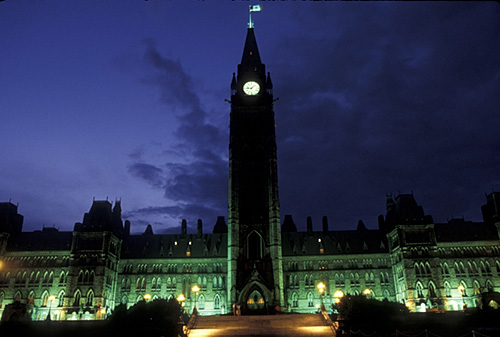
File Photo: The government is looking at a “tiered” approach to compensation (Photo by Mark Goebel/Flickr, CC BY 2.0)
OTTAWA — The federal Liberals are struggling to find a way to properly compensate civil servants who have suffered financially and emotionally as a result of the failed Phoenix pay system, says a government source.
The government is looking at a “tiered” approach to compensation, where every civil servant receives something and those who have been more grievously affected by the pay debacle receive more, said the source who was not authorized to speak on the record.
“Clearly there’s a recognition that all government employees have been affected (by Phoenix),” the source said.
In their 2018 budget, the Liberals promised to work with the unions representing civil servants to deal with the mental and emotional stress caused by Phoenix.
More than half of the roughly 300,000 people employed by federal government departments and agencies have been directly affected by pay problems since the Phoenix system was first introduced more than two years ago. Some have been overpaid, some underpaid and others not paid at all for months at a time.
There have been horror stories reported about people caught up in the pay problems, from having automobiles repossessed or losing their homes to student employees losing study opportunities because they were unable to pay tuition.
But the unions say even civil servants not directly affected by pay issues have endured the mental stress of watching their colleagues suffer and wondering whether they’ll be next to feel the negative effects of Phoenix.
Talks aimed at reaching a damages settlement began shortly after the budget was delivered in February but have since stalled with government negotiators telling the unions they didn’t have a mandate to proceed.
That mandate revolves around money, but coming up with a total damages figure is wrapped in a quagmire — how to put together a compensation package based on impact on workers, when the government is unable to get a handle on the true extent of the problems created by Phoenix.
The government has earmarked $431.4 million over six years to attempt to stabilize the existing Phoenix system and a further $16 million has been budgeted to search for a replacement pay platform.
A joint communique was issued last month by the Treasury Board Secretariat and the Professional Institute of the Public Service of Canada, indicating the government was preparing to work with the union to replace the dysfunctional pay system.
But thousands of civil servants continue to face pay problems in the meantime, making it nearly impossible to say exactly when the pay system will reach what the government considers a “steady state.”
Since the Phoenix system was launched in early 2016, the government has hired an extra 1,150 compensation employees at its main pay centre in Miramichi, N.B., and at regional satellite offices, according to Public Services and Procurement Canada, the department overseeing pay files.
That has helped to slowly reduce the backlog of outstanding pay transactions, a PSPC spokesman said.
But there were still 577,000 files in the backlog in June, according to the government’s latest figures, a reduction of 13,000 files from May.
A slow decline in the backlog seen over the past five months could also be stalled by recently signed contracts and salary increases for federal executives that will mean extra work for compensation advisors dealing with Phoenix.
The government also doesn’t want to publicly put a price tag on compensation over concerns that doing so would weaken its bargaining position with the unions representing its workers, said the source.
Public sector unions have not disclosed the amount of compensation they are seeking, nor has the government said what it’s prepared to offer.
It will be up to the PMO to set a target amount, but the Finance department would have to sign off and include an amount in either the fall fiscal update or next year’s budget.




















