
Canada News
An introduction to Canadian firearm ownership laws

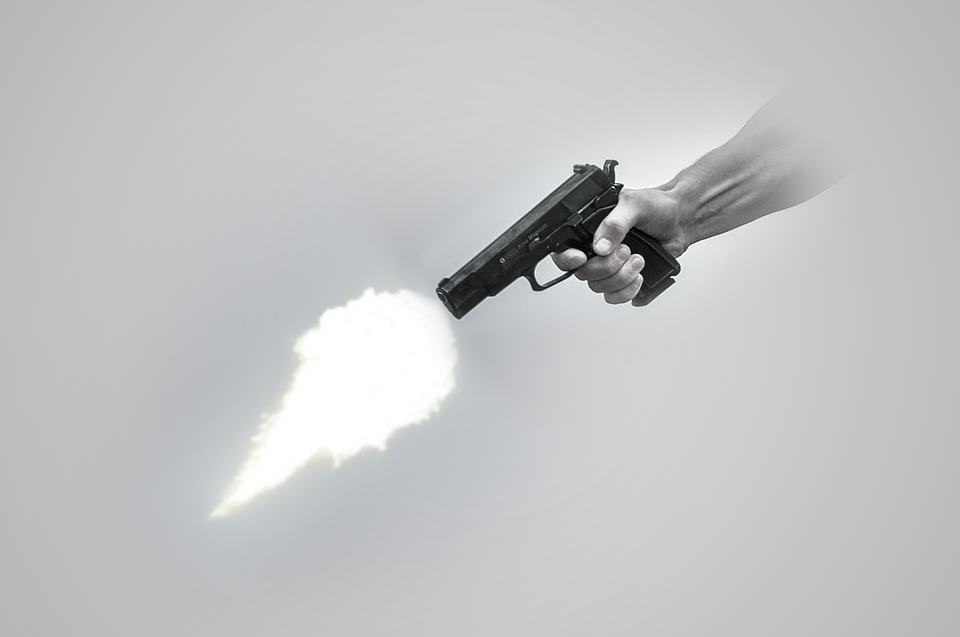
FILE: You must have a licence to possess or acquire a restricted gun or its ammunition. (Pixabay photo)
TORONTO — A look at firearm regulations in Canada:
Types of firearms
Canadian law separates guns into three different categories: non-restricted, restricted and prohibited.
Owning non-restricted guns, which include regular rifles and shotguns, does not require a licence.
Prohibited guns, which include automatic weapons as well as sawed-off shotguns and rifles under a certain length, handguns under a certain length and handguns that fire 25- or 32-calibre bullets, can be possessed by licensed owners who acquired them before current laws came into place. Those dates vary depending on the type of gun. There are some exceptions, however, such as guns made before 1946 and registered on Dec. 1, 1998.
Restricted firearms include any non-prohibited handgun, any gun that can still be fired when folded or telescoped below a certain length, and any semi-automatic gun with a barrel shorter than 470 mm and the capability of shooting centrefire bullets — a type of ammunition that is fired by striking a firing pin or hammer against a cap or primer at the centre of the bullet’s base.
You must have a licence to possess or acquire a restricted gun or its ammunition. You must also register your restricted gun and have it “verified” by RCMP-approved experts.
Gun licences
You have to be at least 18 years old to get a full Possession and Acquisition Licence for restricted firearms.
People under 18 can, however, use a restricted gun if they are under the “direct and immediate supervision” of an adult who has a licence, while kids aged 12 to 17 can get a Minors’ Licence to borrow a non-restricted rifle or shotgun for activities like hunting or target shooting.
You need a licence to possess a firearm, even if you are not the gun’s owner and have never handled it, the RCMP says.
You must have your firearms licence and registration certificate on hand any time you have your restricted gun with you. If a peace officer asks you for your documents and you cannot produce them, they are authorized to seize your gun.
How to qualify for a licence
To get a restricted firearms licence you have to participate in the Canadian Restricted Firearms Safety Course, which covers basic safety practices, handgun operation and firing techniques, and how to safely handle, store, display and transport restricted guns. Licence applicants have to pass multiple tests to complete the Safety Course.
Getting a licence also entails personal reference checks and a “variety of background checks (and) in some cases, in-depth investigations,” the RCMP says. Applicants must provide information on their mental health, employment and marital status when getting or renewing a licence.
Based on that information, the Chief Firearms Officer may decide to interview the applicant, their references or, with the applicant’s consent, their doctor. Once you get a licence, you are subject to continuous screening for criminal behaviour.
People getting a licence for the first time must also undergo a minimum 28-day waiting period.
You can download licence application and renewal forms on the RCMP’s website. Licences cost $80, and must be renewed every five years.
Accepted reasons for owning a restricted gun
The RCMP only accept a handful of reasons for owning a restricted gun, including target shooting and collection.
Target shooters have to show they practise or compete at an approved gun club or range, while collectors must prove they “know the historical, technical or scientific features” of the guns in their collection, consent to occasional inspections and comply with regulations on practices like storage and record keeping.
In a limited number of situations, a person can get legal authorization to have a restricted gun as part of their profession or to “protect life.”
Carrying and transporting a restricted firearm
Once you have a licence to possess a restricted gun, you can get authorization to carry the gun outside of locations it is licensed for if you can prove to officials that you use it as part of your profession, or that you need it to protect your own life or the lives of others.
To transport a restricted gun from one location to another, you must get an authorization from your province or territory’s Chief Firearms Officer.
Storing guns
The RCMP has rules for storing even non-restricted guns safely. Gun owners must put a lock on the gun or remove the bolt, so it cannot be fired. They must also keep it locked in a container or room that is difficult to break into.
Restricted and prohibited guns must also be unloaded before storage or display.




















