Canada News
Selected oilsands projects may avoid new environmental assessment rules

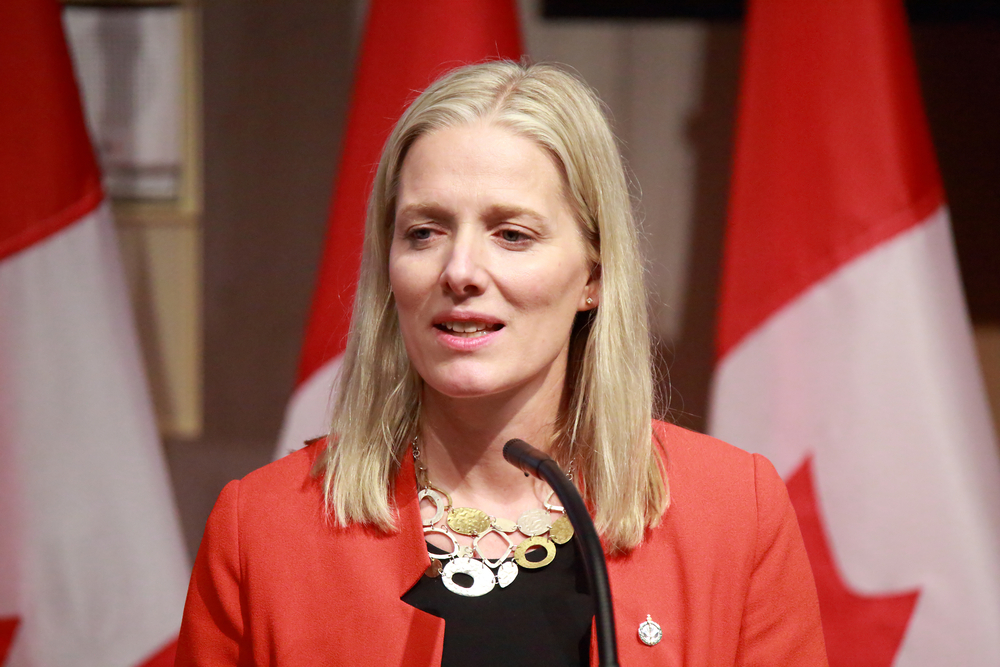
FILE: Environment Minister Catherine McKenna introduced the new Impact Assessment Act in February in hopes of giving more credibility to the federal environment review process (Shutterstock photo)
OTTAWA — Oilsands projects that use steam to release bitumen from deep underground will likely get a pass from new federal environmental assessment rules — but Ottawa is still considering how to deal with those that use solvents instead of water.
Environment Minister Catherine McKenna introduced the new Impact Assessment Act in February in hopes of giving more credibility to the federal environment review process. It sets new timelines for reviews, eases restrictions on participants, adds transparency to the science behind decisions and requires assessments to account for social, health, economic and climate change impacts.
In addition to the legislation, the government also sets regulations that determine what types of projects will be covered by the new act — and environment groups are furious that so-called “in situ” oilsands projects are not on the draft project list.
“We see that as a federal abdication of responsibility,” said Patrick DeRochie, climate and energy program manager at Environmental Defence.
In situ production is one of the two ways of extracting bitumen from the oilsands in Alberta. Pit mining is used for deposits near the surface, but about 80 per cent of oilsands reserves are too far beneath the surface to allow for pit mining.
That’s when steam is injected deep into the ground to liquefy the bitumen, allowing it to be pumped to the surface — a process that requires a lot of energy, resulting in heavy greenhouse gas emissions.
Under Ottawa’s new legislation, projects can only trigger a federal assessment if they could have an impact on areas that fall under federal jurisdiction, which include emissions, as well as fisheries, species at risk and Indigenous rights.
The government says while in situ projects can fall under Ottawa’s jurisdiction because of their potential impact on emissions, they can be exempted when already subject to emissions rules — such as in Alberta, which is planning a hard cap on oilsands emissions at 100 million tonnes.
If the only area of federal concern for a particular project is climate, and that provincial laws exist to address that concern, it only makes sense to exempt those projects, said a government official familiar with the measures.
There’s a wrinkle, however: new in situ technology is emerging that uses solvents instead of steam, requiring less energy and resulting in fewer emissions, but posing different environmental risks that might fall under federal jurisdiction — fisheries, migratory birds, or Indigenous rights, for instance.
“Those still need to be looked at,” said the official, speaking on condition of anonymity since a final decision hasn’t been made.
It’s a catch-22 of sorts: technology that allows in situ oilsands projects to avoid a federal impact study by lowering greenhouse gas emissions could end up triggering just such a review by running afoul of different environmental issues that are also Ottawa’s purview.
No matter, said DeRochie, who wants such projects reviewed federally, no matter what.
Alberta’s plan for a hard cap has yet to be introduced, and could easily be repealed by a future government once it is, he argued.
And in situ projects can impact water, land use and species at risk, whether they use solvents or not, he added.
DeRochie also noted that the government’s language is almost identical to a request made by the Canadian Association of Petroleum Producers last summer, suggesting Ottawa is caving to industry pressure at the expense of the environment.
“It’s really problematic,” he said. “It fits a pattern of industry attempting to delay, stall, block or water down regulations and legislation and they’ve been fairly successful at it thus far.
”
In situ projects shouldn’t require federal permits because existing provincial review processes provide sufficient oversight, said Patrick McDonald, CAPP’s director of climate and innovation.
Investors are already skittish about Canadian energy project prospects, McDonald said, adding that Ottawa’s attempt to find balance between the environment and the economy is tilting towards the former.
“Right now there are challenges in getting major projects built in Canada, and in order to ensure a strong economy, we need to remove those barriers,” said McDonald.
“How do we find the balance to be able to get investment confidence in the industry?”
The whole point of overhauling the assessment rules is to instill confidence to the system for everyone, said McKenna’s spokeswoman Caroline Theriault.
“Our government is strongly committed to changing the way decisions on projects are made so that they are guided by science, evidence, and Indigenous traditional knowledge,” she said.