Canada News
Chinese ban on foreign recyclables hitting municipal governments

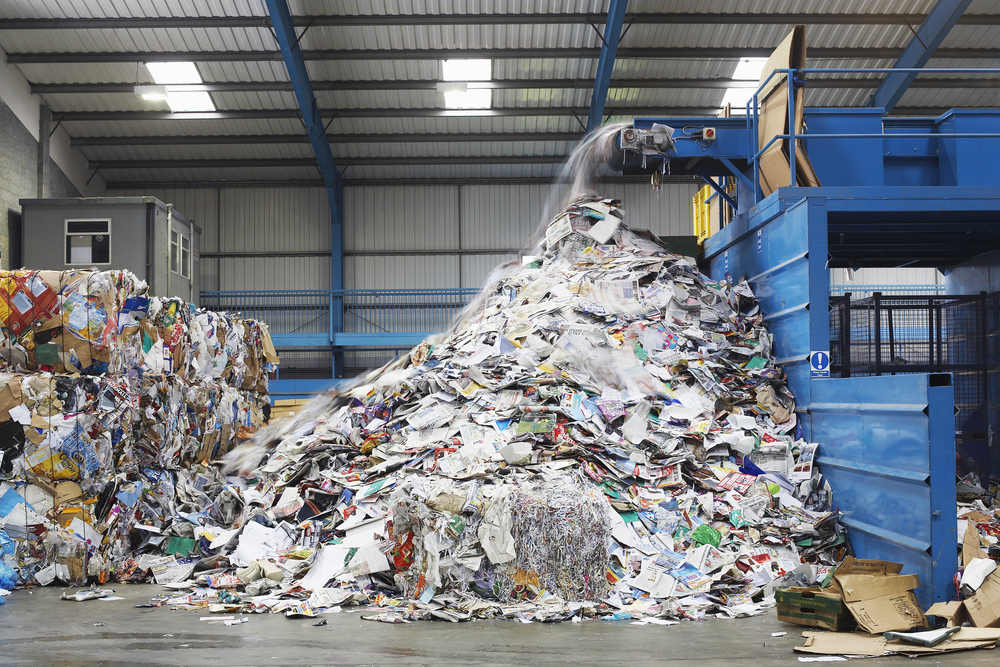
A Chinese ban on most foreign recycling material is leaving some Canadian municipalities with stockpiles of papers and plastics, much of which may eventually end up in the dump. (Shutterstock)
OTTAWA—A Chinese ban on most foreign recycling material is leaving some Canadian municipalities with stockpiles of papers and plastics, much of which may eventually end up in the dump.
The ban is also driving down the revenues cities make off their recyclables because the competition to find a company able to take the materials is stiff.
China used to be the main recipient of the world’s recyclable plastics and papers but has now stopped accepting almost all foreign materials, leaving Canadian cities in the lurch.
Although the ban didn’t take full effect until Dec. 31, many Chinese companies stopped accepting foreign recycling materials months ago, leaving some cities with stockpiles of flattened cardboard and crushed plastic without anywhere to send it.
Matthew Keliher, manager of solid waste for Halifax, said three-quarters of his city’s recyclables used to go to China. He said the city has found new markets for hard plastics and papers but film plastics — grocery bags and food storage bags and wraps — have proved harder to sell. Three hundred tonnes of film plastic amassed in a Halifax warehouse since August is now being sent to the dump.
Calgary, which used to send all of its paper recyclables and half of its plastics to China, has amassed 5,000 tonnes of material over the last few months that it can’t find anyone else to take. It hasn’t yet decided what to do with it.
While Canada has some domestic recycling companies, Christina Seidel, executive director of the Recycling Council of Alberta, said those are almost exclusively for the high-grade plastics like milk jugs and juice bottles.
“That’s a really high-quality material,” she said. “Everyone wants those. There aren’t huge fans of the low grade plastics.”
Sixty per cent of recyclables in Quebec used to go to China. No more.
Tired of tonnes of recyclables contaminated with unusable garbage arriving in its ports and intent on using up its own domestically-produced recyclables, China slammed the door shut to most foreign materials.
Indonesia, Thailand and India are among the countries still accepting foreign recyclables but competition to get them to accept product is stiff.
It’s so tight that Keliher said Halifax is afraid to say where it’s now sending its recyclables for fear another city will hear of it and jump in to push the competition for that outlet even higher.
“Halifax won’t be disclosing the locations of any of our outlets,” he said.
“The recycling market was ruthless before the Chinese ban came in and, now that half that market has dried up and the supply is just overwhelming, it’s even more ruthless to get our material out.”
Halifax used to make $2.1 million a year on the sale of recyclables, with $1.6 million of that coming from China.
Derek Angove, director of processing and resource management for Toronto’s Solid Waste Management Services, said his city did not directly export to China. But it has now entered into longer-term contracts with Canadian outlets to protect Toronto from being crowded out when cities left in the lurch by the Chinese ban come calling with their products.
He said Toronto has already seen the price it gets for paper and plastic-coated materials drop and, unless China can be convinced to re-open its doors to recyclables, he believes the prices are going to keep going down.
Seidel said Canada needs to move nationwide to the extended producer responsibility system in place across British Columbia, which puts the onus on the producers of the materials to pay for and ensure the recycling of its products.
In B.C., that has led to a larger domestic market for recyclables and less pressure on municipalities to pay for the programs.