Health
DOH bats for ASEAN policy on disaster health woes

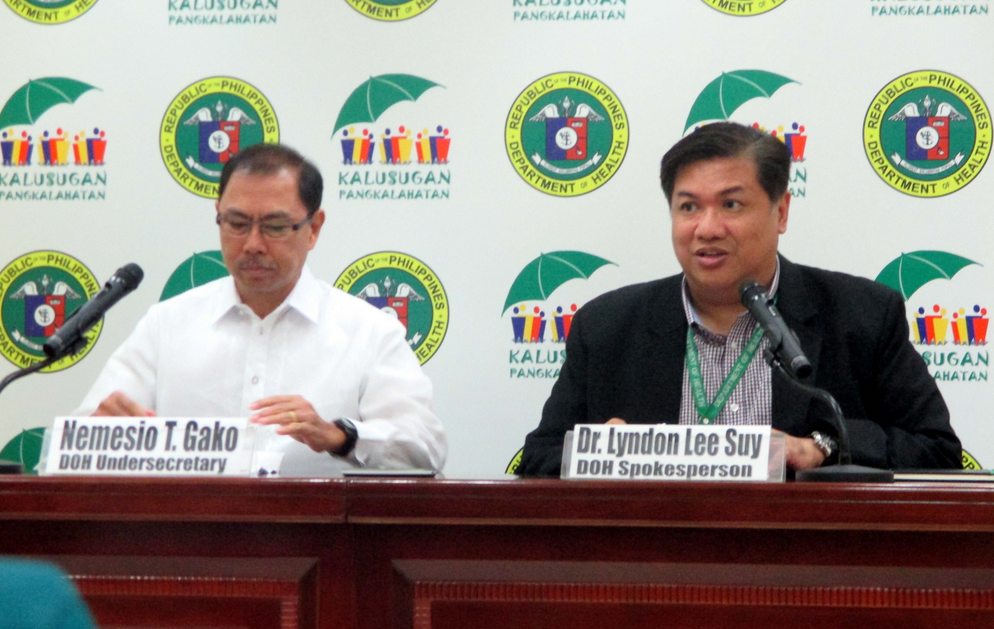
FILE: “We need to come out with a policy among the different ASEAN member states on how to address the problem of AMR, we need to strengthen as well the training and capacitating the professionals, while they’re taking up medicine or nursing for example, or any health related courses to make them realize the importance of proper use of antibiotics. That’s just some of the things that we would want to bring up as far as AMR is concerned,” said DOH Assistant Secretary and Spokesperson Dr. Lyndon Lee Suy. (PNA photo by Leilani S. Junio)
MANILA — The Department of Health (DOH) on Saturday cited the need for ASEAN member states to come up with a policy to address anti-microbial resistance (AMR) and disaster health concerns in the region.
“We need to come out with a policy among the different ASEAN member states on how to address the problem of AMR, we need to strengthen as well the training and capacitating the professionals, while they’re taking up medicine or nursing for example, or any health related courses to make them realize the importance of proper use of antibiotics. That’s just some of the things that we would want to bring up as far as AMR is concerned,” said DOH Assistant Secretary and Spokesperson Dr. Lyndon Lee Suy.
As a way of intervention, Lee Suy stressed the commitment among the different ASEAN member states through their respective Health Ministers.
“Their commitment is to develop an ASEAN strategic plan addressing the concern of AMR,” he said.
Recommended for inclusion in the strategic plan is the formulation and execution of a national action plan adopting a one health approach on combatting AMR.
AMR occurs when microorganisms such as bacteria, viruses, and some parasites become immune to anti-microbial medicine from working against it. As a result, standard treatments become ineffective, infections persist and may spread to others.
Lee Suy said this global health concern is mainly due to self-medication of patients.
“And globally this would be labeled as among the emerging infectious diseases because time will come where in the antibiotics that we’re using will no longer be effective to certain infections because of the indiscriminate use of antibiotics,” Lee Suy told reporters.
He added that indiscriminate use of antibiotics without the prescription of physicians can be harmful.
“The main reason that they would tell us to take antibiotics before consulting is that it’s cheaper, they do not need to pay when they consult. But eventually the bigger problem is that you’ll be spending more because the antibiotics that they’ll be using might be a bigger problem,” he said.
He also emphasized the need to ensure that health workers will be responsible in prescribing medicine that are really needed by the patients.
The recommendations include strengthening of training and capacity building among would be health professionals while they’re taking up medicine or nursing.
“To make them realize the importance of proper use of antibiotics. That’s just some of the things that we would want to bring up as far as AMR is concerned,” he added.
“We need to advocate to our higher ups for us to be able to get high level support featuring different things here, multi sectoral approach, the responsibility of our partners, stakeholders, governance. Promoting awareness and advocacy thru a multi-sectoral and multi-disciplinary commitment with our stakeholders,” he said.
Other recommendations are strengthening of the regulatory system, pharmaceutical system, food and supply chain. through health financing mechanism, engaging the agriculture sector, strengthening national and regional capacity, etc.
The DOH will also in the 31st ASEAN Summit to have a common and solid plan on how to address different disaster health concerns.
Lee Suy said he is hoping that topics on disaster health management will be included in the ASEAN health related outcome documents as well as the ASEAN Leaders’ health declaration on anti-microbial resistance, and ending all forms of malnutrition.
“For disaster health management, we have recognized the critical role of humanitarian assistance in reducing the loss of lives, minimizing disability and preventing infectious disease outbreaks,” he said.
“The different ASEAN member states are all victims of different disaster health problems, that’s why as one group, we all need to be prepared to address the different disasters that would affect the ASEAN member states,” he added.
Suy noted that having a well-prepared plan on how to respond to calamities would be beneficial for all the countries.
“Hopefully they get to discuss on how do we prepare now, the different ASEAN members face on a possible eventuality of disaster and we all know that the way to go for us to be able to respond properly is to be able to promote a good preparedness plan,” the DOH official said.
He added that such plan is needed since not all countries in the region have the same level in responding to calamities.
“We are very concerned that not all ASEAN member states are all at the same level in as far as preparedness is concerned,” Suy said.
“So through ASEAN, capacity building will be provided as well to different states for us to have a common language when we talk about preparedness. And since we’re talking about regional level here, it’s also providing assistance to countries that will be affected by disaster,” he added.
World leaders in the region will be convening in Metro Manila and Clark, Pampanga for the 31st ASEAN Summit and Related Meetings set from Monday to Tuesday.