Canada News
Carney meets Trump at APEC, says Canada-U.S. trade talks more complex than China negotiations

ASM, Philippine Canadian Inquirer
November 19, 2026
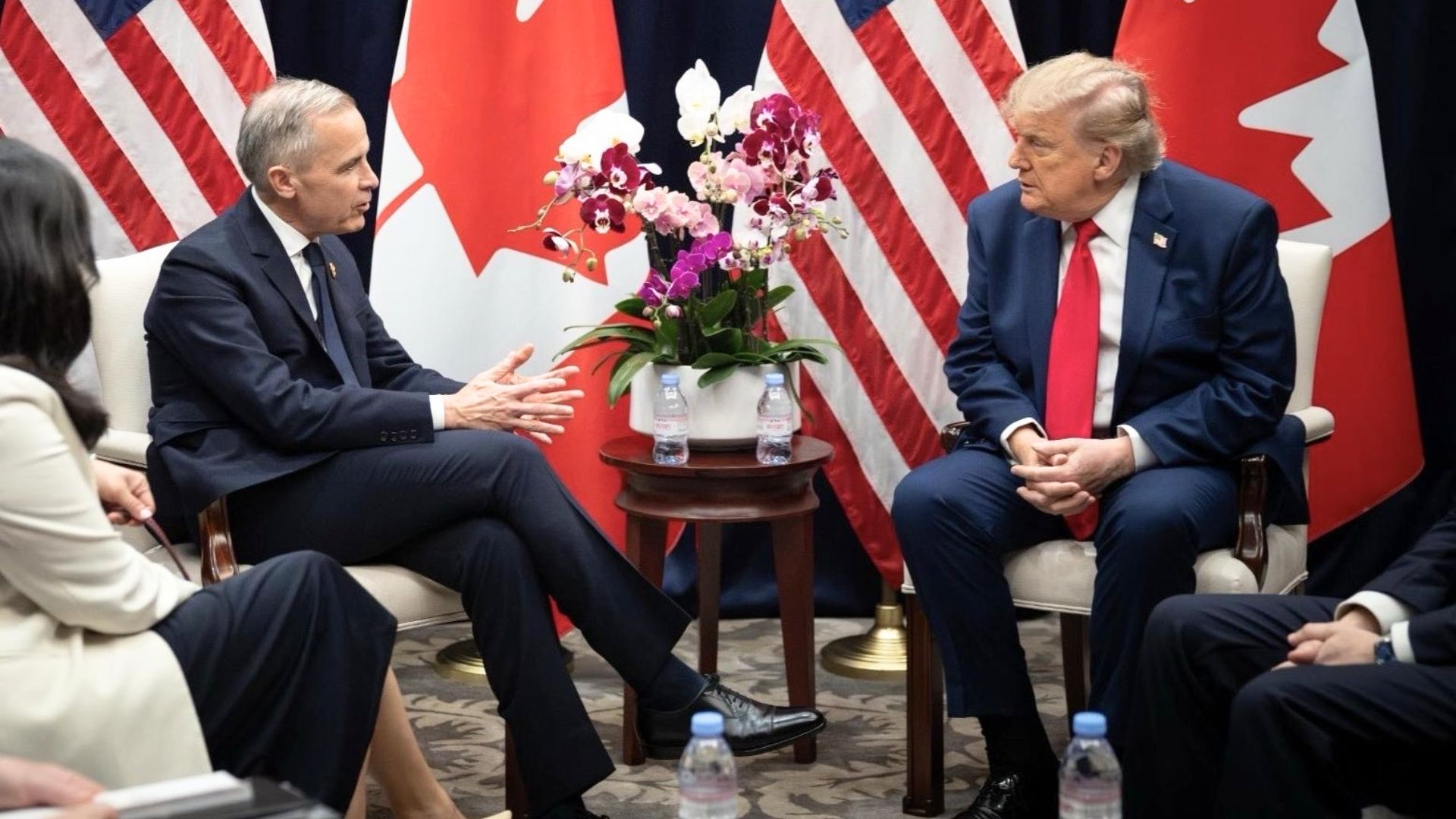
Photo courtesy: Mark Carney | X Account
Canadian Prime Minister Mark Carney met with U.S. President Donald Trump on the sidelines of the Asia-Pacific Economic Cooperation (APEC) summit in Shenzhen, China, as Canada seeks a new trade agreement with Washington while expanding economic ties with Beijing.
The two leaders held talks on November 18 that lasted just under 20 minutes, according to Carney’s office. Their discussion focused on efforts to reach a trade agreement that would support Canadian jobs, improve affordability and protect Canada’s sovereignty.
Both leaders agreed to continue negotiations and maintain close communication, although no new trade agreement was announced following their meeting.
The meeting came shortly after Carney described Canada’s trade negotiations with the United States as considerably more complicated than its discussions with China.
Carney said Washington had fundamentally changed its trade objectives, making it more difficult for Canada to secure an agreement that protects its economic interests.
“The United States fundamentally changed its trade objectives and we are focused on getting the right deal for Canadians,” Carney told reporters.
Despite the challenges, he said progress had been made and reiterated that Ottawa would pursue an agreement only if its terms served Canadians’ interests.
Canada expands trade ties with China
While negotiations with Washington remain unresolved, Canada has made progress in easing trade restrictions with China.
Carney met Chinese President Xi Jinping in Shenzhen on November 17, with both leaders agreeing to expand an existing trade arrangement covering Canadian agricultural and seafood exports.
The agreement provides additional tariff relief for approximately C$400 million worth of Canadian products, including frozen pork, shrimp, prawns and other seafood.
In exchange, Canada agreed to extend and expand tariff relief for certain Chinese steel and aluminum products through December 2028.
The two countries also plan to strengthen business cooperation, with Canada preparing a major trade mission to China in 2027.
Carney presented China’s rapid economic development as an example of how Canada could accelerate investment and infrastructure projects.
Speaking to business leaders during the APEC gathering, he highlighted Shenzhen’s transformation from a small fishing community into a major technology and manufacturing centre.
He pointed to faster government approvals, lower taxes and simpler trade rules as factors that helped attract investment and support the city’s expansion.
Economic opportunities come with safeguards
Carney emphasized that expanding trade with China does not mean opening every sector of Canada’s economy to Chinese investment.
Ottawa intends to maintain restrictions in sensitive areas while pursuing opportunities in sectors where increased trade could benefit Canadian businesses.
The prime minister has also acknowledged concerns about foreign interference and the potential effect of closer Canada-China relations on Canada’s relationship with the United States.
Carney said he did not believe Canada’s expanding commercial relationship with Beijing was among Trump’s leading concerns.
He explained that Canada’s exports to China largely involve commodities such as agricultural products and energy resources rather than sensitive technologies.
The distinction reflects Ottawa’s effort to diversify its international markets without creating additional security concerns or unnecessarily complicating negotiations with Washington.
Trade tensions with Washington remain unresolved
Canada’s relationship with its largest trading partner has faced renewed pressure over tariffs and disagreements on trade policy.
Formal bilateral trade negotiations broke down in August amid disputes over proposed terms. Carney has raised concerns about potential restrictions on Canada’s ability to negotiate agreements with other countries, protections for Canadian language and culture, and tariffs affecting the automotive sector.
Washington and Ottawa have also imposed tariffs on each other’s goods, adding pressure on businesses that depend on cross-border trade.
Despite those differences, Carney has indicated that a mutually beneficial agreement remains possible.
His meeting with Trump in Shenzhen brought the two leaders together as Canada pursued new commercial opportunities across the Asia-Pacific region.
The Canadian government has committed to continuing negotiations with Washington while advancing its expanded trade arrangements with China, including tariff relief scheduled to run through December 2028.