Canada News
Unidentified drones spotted over Canadian military bases, exposing security gaps

ASM, Philippine Canadian Inquirer
November 18, 2026
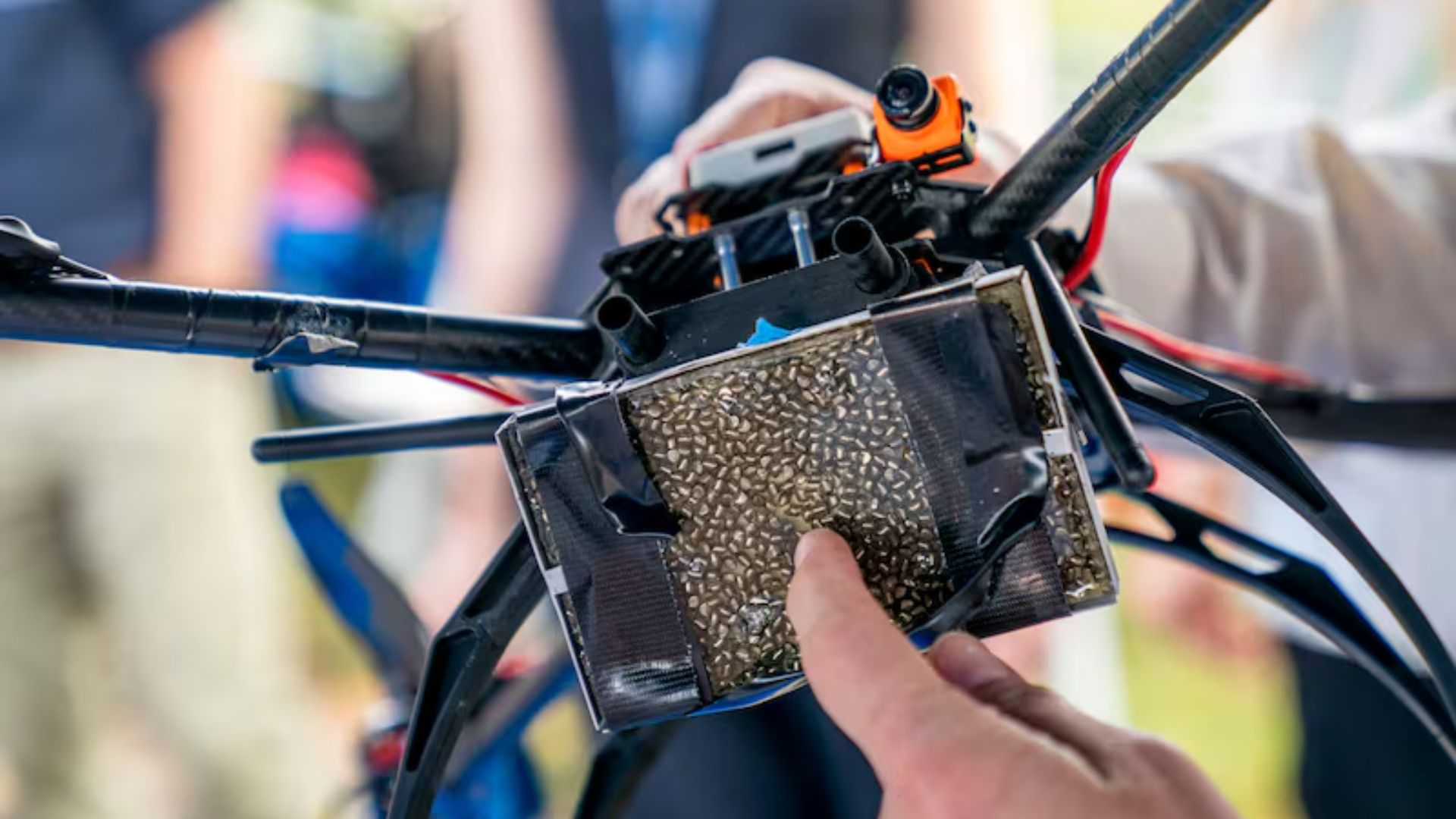
Photo courtesy: CTV News
Unidentified drones were spotted flying over two major Canadian military bases in 2024 and 2025, raising security concerns after newly obtained military reports revealed that none of the aircraft were intercepted and their operators were never identified.
Seven incidents were documented at Canadian Forces Base (CFB) Trenton in Ontario and CFB Cold Lake in Alberta, according to Royal Canadian Air Force (RCAF) records obtained through an access-to-information request and reported on November 17, 2026.
The records revealed shortcomings in the military’s ability to detect and track unauthorized drones, including an incident in September 2025 when a newly installed counter-drone system failed to detect an aircraft spotted over CFB Trenton.
Military records reveal seven drone incidents
CFB Trenton and CFB Cold Lake play important roles in Canada’s military operations.
Trenton serves as a major air transport hub and houses aircraft such as the CC-177 Globemaster III, which supports the movement of military personnel, equipment and supplies.
Cold Lake, meanwhile, is a major fighter jet base and home to a significant portion of Canada’s CF-18 fleet.
The military records documented three incidents at Trenton and four at Cold Lake over the two-year period.
One report described a drone flying over Trenton’s runway on September 17, 2025. Although the aircraft was equipped with a camera, the base’s newly installed detection system was offline because of a planned power outage.
Five days later, another unauthorized drone was spotted at the same base. This time, the detection system was operating but failed to register the aircraft.
The system had become operational in March 2025, months before the two incidents.
At Cold Lake, military personnel reported seeing drones of different sizes and appearances.
One was described as box-shaped, approximately 60 centimetres wide, travelling at an estimated speed of 60 to 100 kilometres per hour. Witnesses reported a yellowish light but no audible sound.
Another was a small white drone carrying what appeared to be a black tube. It was reportedly spotted twice within four days in September 2025.
Military records indicated that Cold Lake did not have the equipment needed to track small unmanned aircraft at the time of the reported incidents.
None of the seven documented cases resulted in an interception attempt, and investigators did not identify the individuals operating the drones.
Experts warn of potential security threats
The findings have prompted warnings about the potential use of drones to monitor military operations, collect intelligence or disrupt critical infrastructure.
Retired Lieutenant-General Christopher Coates, a former deputy commander of the North American Aerospace Defense Command (NORAD), warned that military installations are not the only potential targets.
Coates explained that attacks on supporting infrastructure, including electricity networks, transportation systems and military supply routes, could also disrupt defence operations.
Defence specialists have pointed to the increasing availability of affordable drone technology, which allows aircraft to be operated remotely and can make identifying those responsible more difficult.
However, there is no confirmed evidence that the Canadian incidents were connected to foreign governments, espionage or planned attacks. The identities and intentions of the drone operators remain unknown.
Why stopping unauthorized drones is complicated
Protecting military bases from drones involves more than identifying aircraft entering restricted airspace.
Counter-drone systems can use radar, radio-frequency sensors, cameras and other technologies to detect and track airborne objects. Some systems can also disrupt drone communications or intercept aircraft.
However, deploying these measures within Canada presents legal, technical and public safety challenges.
Military personnel must consider the risks of disabling drones near populated areas, where falling aircraft or debris could endanger people and property.
Canadian regulations also restrict certain methods of interfering with communications or using force against unauthorized aircraft.
Defence experts have stressed that no single technology can reliably detect and stop every type of drone, particularly as newer aircraft become more autonomous and resistant to electronic interference.
Canada proposes $2.3 billion to strengthen drone capabilities
The findings come as the federal government moves to expand Canada’s drone and counter-drone capabilities.
Budget 2026 proposes allocating CAD $2.3 billion over five years, beginning in the 2027–2028 fiscal year, to the Department of National Defence under the Defence Drone Initiative.
The funding would support the development, acquisition and deployment of unmanned aircraft and systems designed to detect, track or counter potential drone threats.
The initiative, launched in July 2026, aims to accelerate the development and testing of Canadian drone technologies while creating new opportunities for domestic defence companies.
Among the capabilities being explored are affordable interceptors designed to stop hostile drones while minimizing the risks associated with explosive weapons.
The Department of National Defence has also pursued additional counter-drone equipment and testing programs.
In October, defence officials invited technology developers from six countries to demonstrate counter-drone systems at CFB Suffield in Alberta, allowing the military to assess emerging detection and interception technologies.
National Defence declines to discuss specific incidents
Canada’s Department of National Defence declined to provide details about the reported drone sightings, citing operational and security concerns.
The department said it does not publicly discuss specific security measures, operational capabilities, threat assessments or vulnerabilities at military installations.
Officials nevertheless acknowledged that counter-drone capabilities remain an important part of defence planning as unmanned aircraft become more widely available and technologically sophisticated.
The seven incidents at Trenton and Cold Lake remain unresolved in the records reviewed, with no operators identified and no confirmed explanation for the unauthorized flights.
Canada’s proposed CAD $2.3-billion investment would expand the military’s capabilities, although its implementation and the effectiveness of future detection systems have yet to be established.