Canada News
Carney, Xi agree to ease trade restrictions as Canada strengthens ties with China, Mexico

ASM, Philippine Canadian Inquirer
November 18, 2026
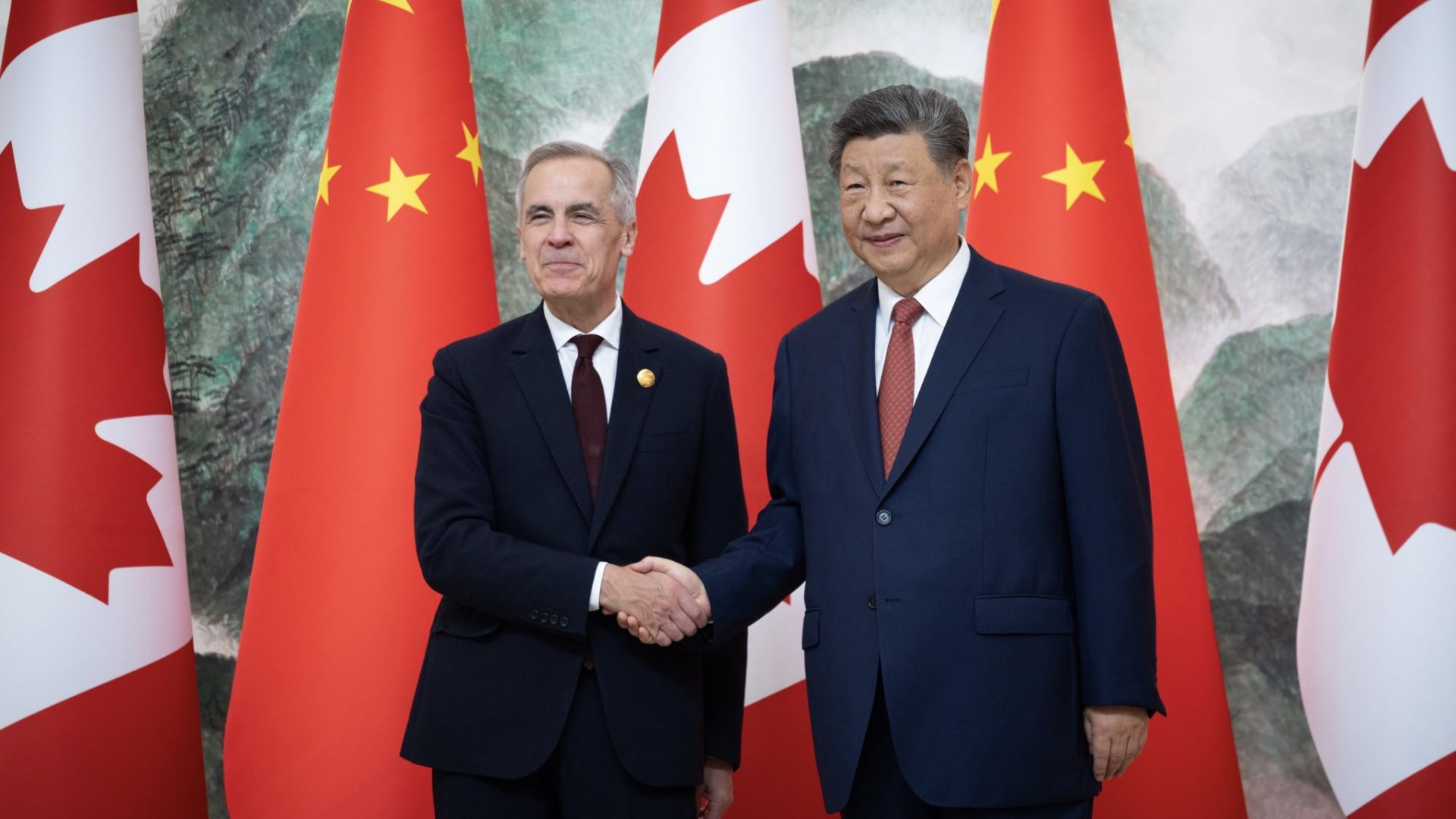
Photo courtesy: Mark Carney
Canadian Prime Minister Mark Carney and Chinese President Xi Jinping have agreed to ease trade restrictions on hundreds of millions of dollars’ worth of Canadian exports, expanding economic cooperation between the two countries as Ottawa seeks to diversify its international trading partnerships.
The agreement emerged from their November 17 meeting in Shenzhen, where the leaders approved additional tariff relief covering approximately CAD $400 million in Canadian agricultural and seafood exports.
The move comes as Carney strengthens economic ties beyond the United States, including with Mexico, whose President Claudia Sheinbaum also met with the Canadian leader in China to discuss trade and the future of their North American trade agreement.
Canada and China expand trade access
Under the expanded arrangement, China will provide tariff relief for approximately CAD $116 million in Canadian frozen pork exports and CAD $285 million in fish and seafood products.
The affected seafood includes certain frozen shrimp and prawns, geoduck, sea cucumber and Greenland halibut.
In return, Canada will extend existing tariff exemptions for selected Chinese steel and aluminum products until December 2028. Ottawa will also expand the exemptions to 32 additional tariff categories, covering 23 steel items and nine aluminum items where Canadian supplies are insufficient or unavailable.
The agreement builds on earlier tariff reductions affecting Canadian canola meal, peas, lobster and crab. The new arrangement extends the countries’ trade cooperation through December 2028.
According to the Canadian government, China has restored market access for more than 90% of Canadian trade previously affected by tariff measures, representing nearly CAD $7.5 billion in exports.
The meeting also marked another step in rebuilding Canada-China relations following years of diplomatic and commercial tensions.
Carney and Xi previously met in Beijing in January 2026, when they established a renewed strategic partnership aimed at improving trade, economic cooperation and investment.
Their latest discussions covered financial services, energy, electric vehicles, education, tourism and cooperation on artificial intelligence.
Canada also announced plans to send a major trade mission to China in 2027 and launch a Canada-China Year of e-Commerce to help Canadian small and medium-sized businesses reach Chinese consumers.
The expanded relationship includes additional educational exchanges, new commercial partnerships and increased direct flights between the two countries, including a planned Vancouver-to-Guangzhou service beginning in May 2027.
China remains one of Canada’s largest trading partners, with bilateral merchandise trade reaching CAD $125.6 billion in 2025, an increase of 5.6% from the previous year.
Carney also meets Mexico’s Sheinbaum
Carney’s diplomatic engagements in China extended to Mexico, where his meeting with President Claudia Sheinbaum focused on strengthening bilateral economic cooperation and preserving their trilateral trade relationship with the United States.
The two leaders met on November 17 on the sidelines of the Asia-Pacific Economic Cooperation (APEC) Economic Leaders’ Meeting in Shenzhen.
During their discussions, Carney and Sheinbaum reaffirmed their commitment to renewing the Canada-United States-Mexico Agreement (CUSMA), which governs trade among the three North American economies.
Their talks came amid continued trade tensions involving U.S. President Donald Trump’s administration, including tariffs that have complicated economic relations with Canada and Mexico.
Beyond their shared relationship with Washington, the leaders highlighted growing trade and investment between Canada and Mexico.
Bilateral merchandise trade increased by 19% during the first nine months of 2026 compared with the corresponding period in 2025, according to the Canadian government.
The leaders also welcomed nearly CAD $1 billion in Mexican investments in Canadian mining and food production, alongside more than CAD $3.7 billion in Canadian investments in Mexico’s manufacturing, renewable energy and mining industries.
Their discussions also covered stronger supply chains, agricultural market access, critical minerals, advanced manufacturing and security cooperation.
Carney and Sheinbaum agreed to accelerate their bilateral action plan, which has launched more than 130 initiatives over the past year.
Canada expands its trade partnerships
The meetings reflect Canada’s broader effort to build economic relationships with countries beyond its largest trading partner, the United States.
Carney has made trade diversification a central part of his government’s economic strategy, with a stated goal of doubling Canadian exports to non-U.S. markets by 2035.
His visit to China follows diplomatic engagements in Southeast Asia, including the 49th ASEAN Summit in Manila, where Canada announced the substantial conclusion of free trade negotiations with ASEAN and progress toward a separate bilateral agreement with the Philippines.
The new Canada-China arrangement provides a further step toward expanding Canadian exports in Asia, while the meeting with Mexico reinforces Ottawa’s commitment to maintaining North American trade ties.
Under the expanded China agreement, tariff relief is scheduled to run through December 31, 2028, while Canada and Mexico have committed to accelerating cooperation on trade, investment and supply-chain development.