Headline
China calls for stronger ASEAN ties as trade surpasses $1 trillion amid global tensions

ASM, Philippine Canadian Inquirer
November 17, 2026
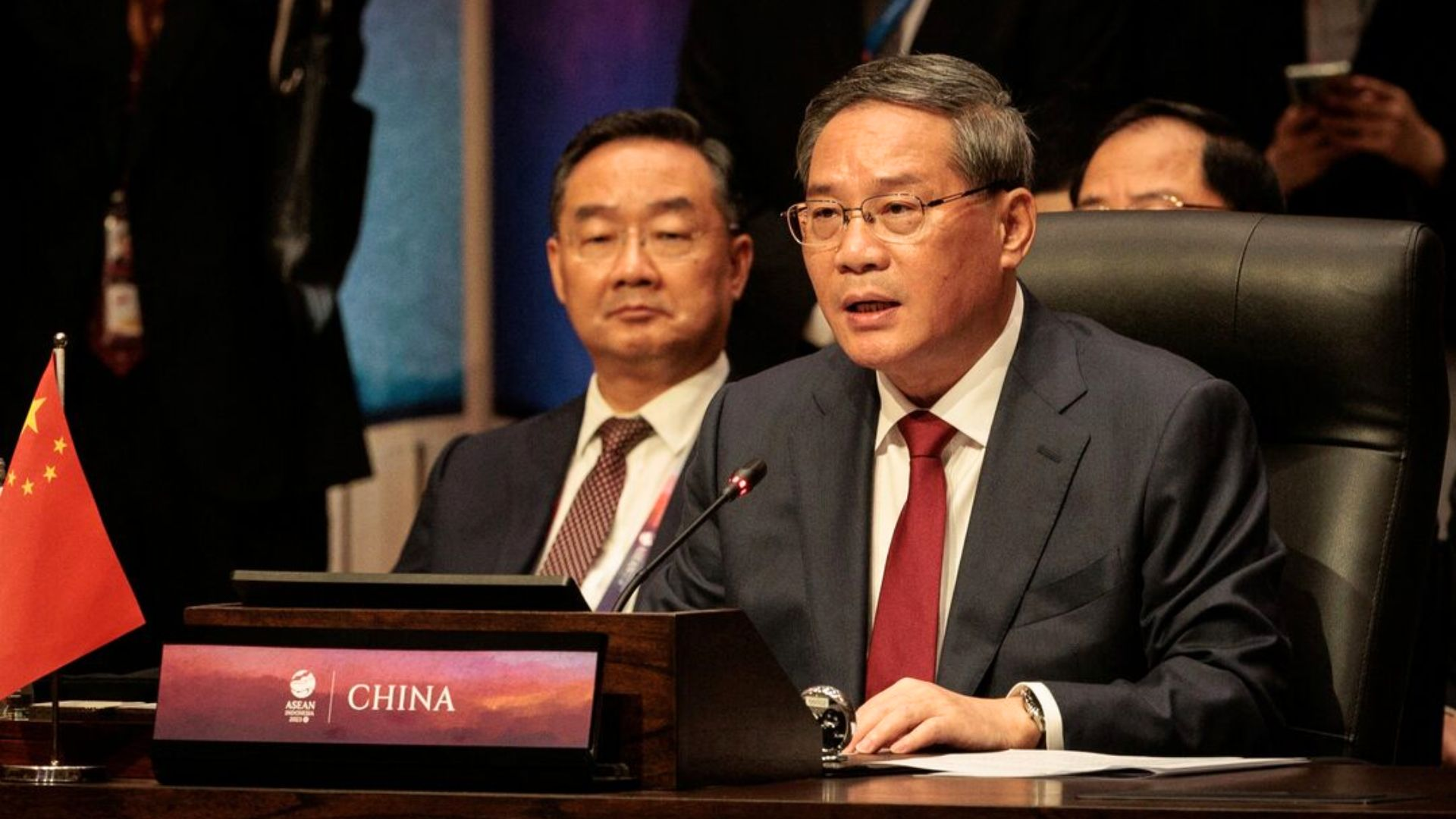
Photo courtesy: Reuters
China has called for closer cooperation with Southeast Asian nations as rising trade restrictions and geopolitical tensions continue to challenge the global economy, highlighting more than US$1 trillion in annual trade with the region.
Chinese Premier Li Qiang delivered the message during the 29th ASEAN-China Summit in Manila on November 16, where he emphasized the importance of free trade, regional stability and stronger economic partnerships.
Speaking before leaders of the 11-member Association of Southeast Asian Nations (ASEAN), Li said China and the regional bloc had expanded their economic relationship despite growing protectionism and international conflicts.
China-ASEAN trade continues to expand
Trade between China and ASEAN exceeded US$1 trillion in 2025, representing a 20.1% increase compared with 2021, according to figures presented by Li.
The momentum continued into 2026, with bilateral trade growing 29.6% during the first 10 months of the year.
Cumulative two-way investment also surpassed US$500 billion, an increase of more than 50% over the past five years.
Li described the achievements as the result of sustained cooperation despite an increasingly uncertain international environment.
“The past five years have been truly extraordinary, and the achievements we scored have not come easily,” he said.
China remains ASEAN’s largest trading partner and an important source of investment for the region, whose combined economic output exceeds US$3.9 trillion.
Beijing pushes for free trade and regional cooperation
Li reaffirmed China’s support for multilateralism and open trade, arguing that cooperation between neighboring economies should continue even as governments around the world impose new trade restrictions.
He highlighted the China-ASEAN Free Trade Area 3.0 Upgrade Protocol, which aims to expand cooperation in supply chains, digital trade, infrastructure and emerging industries.
China also identified artificial intelligence, renewable energy and transportation connectivity as areas for further collaboration.
Li announced plans to work with ASEAN on a Year of Artificial Intelligence Cooperation in 2027, alongside initiatives supporting disaster preparedness, food security and poverty reduction.
The proposed cooperation includes 100 scholarships through the China-ASEAN Digital Academy and training for 1,000 professionals through a regional women and children’s health cooperation initiative over the next three years.
Marcos urges peaceful resolution of regional disputes
Despite expanding economic relations, territorial disagreements in the South China Sea remain a major challenge to cooperation between China and several ASEAN members.
President Ferdinand Marcos Jr., who co-chaired the summit, called for greater respect for international law and peaceful approaches to resolving disputes.
Marcos emphasized the importance of self-restraint, mutual respect and dialogue, particularly as ASEAN and China continue negotiations on a long-awaited Code of Conduct for the South China Sea.
The proposed agreement is intended to establish rules for managing maritime tensions and preventing confrontations in disputed waters.
China has also expressed support for concluding the negotiations, with Li saying a code would help strengthen long-term peace and stability in the region.
However, the agreement remains unfinished.
Philippine Foreign Affairs Secretary Maria Theresa Lazaro said negotiators had reached provisional agreement on approximately 80% of the draft’s paragraphs.
Major questions remain unresolved, including whether the code would be legally binding.
The Philippines had sought to conclude negotiations during its 2026 ASEAN chairmanship, but the remaining issues will need further discussions.
ASEAN navigates relations with China and the United States
Li’s remarks came ahead of US President Donald Trump’s scheduled arrival in Manila on November 17 for meetings with ASEAN leaders.
The United States and China remain important economic partners for Southeast Asian countries, many of which are seeking to maintain commercial relationships with both powers amid growing trade and diplomatic uncertainty.
ASEAN countries are also pursuing broader economic partnerships to protect supply chains, attract investment and reduce exposure to disruptions in international trade.
During the summit, Li called for greater regional unity and cooperation, while Marcos underscored the need to address disputes through established diplomatic processes.
China and ASEAN have already adopted a Plan of Action for their Comprehensive Strategic Partnership covering 2026 to 2030, outlining priorities for economic development, connectivity and regional cooperation.
The next phase of their relationship will include implementing the upgraded free trade framework and continuing negotiations on the South China Sea Code of Conduct, with the latter still lacking agreement on several key provisions.